
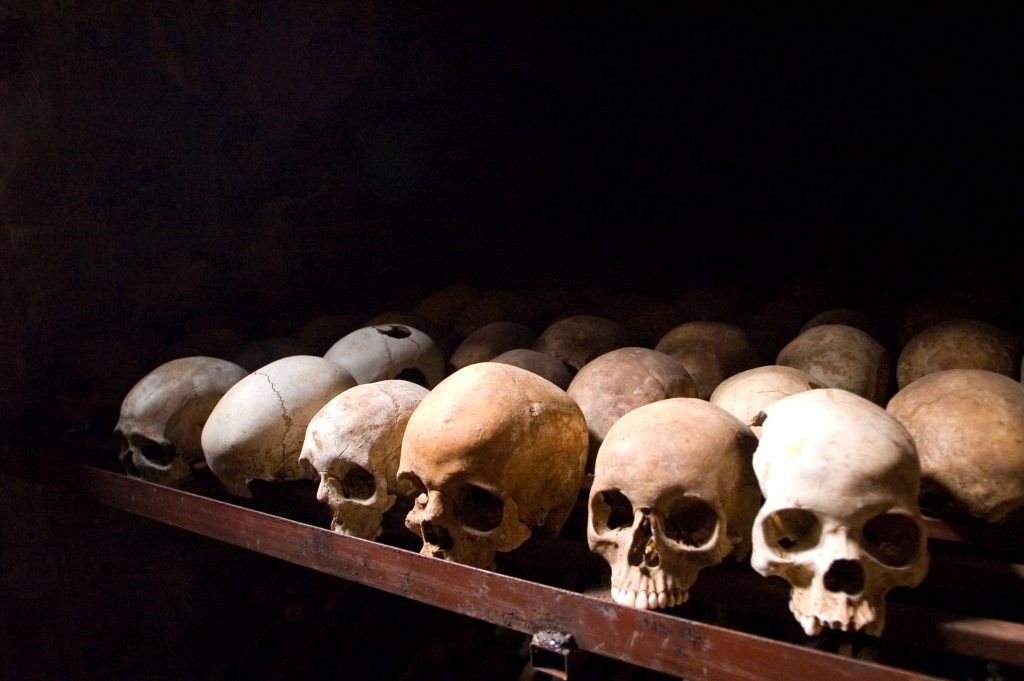
Many people know that the streets of Kigali, the Rwandan capital, are so tidy that one hardly sees or smells dirt in the city. Still, it was interesting to find out just how clean Kigali is, and later, after I had been in the city for nearly a week, it occurred to me that I hadn’t sneezed even once while there, a minor miracle for one whose life is often perched on the verge of one violent sneezing fit after another. But I was spending most of my time reading and writing, or being driven somewhere for interactions with Rwandans who were preparing to mark thirty years since the genocide against the country’s Tutsi minority.
One morning, after eating my breakfast, I set out on a leisurely walk. This was the Saturday before the official genocide commemoration ceremony of April 7, and the streets were numbingly but not surprisingly quiet. As I now also wished to find a Mobile Money agent in whose shop it was possible to send cash from Rwanda to Uganda, I went down the main thoroughfare in the Kisimenti area of Remera, slowing down as I scanned the facades of shops. Nearly all were still shuttered, and I had almost given up when I glimpsed one in whose doorway a woman stood. This woman, who later gave her name as Teta, told me a Mobile Money transaction could be made in her beauty shop, outside which mannequins stood sentry and inside which women’s underpants were strung tight upon hangers.
Teta pointed to a second woman in her shop, who, though she paid me no attention as she sat counting coins, was the one who would serve my Mobile Money needs while she, Teta, bantered with me. “Sit down please,” Teta said, offering me a chair. I took it, grateful for her generosity, and sat across from her. Outside it was cool and, although the sun was not yet out by mid-morning, it did not seem like it was about to start raining. Teta was pleased to hear that I had come from Uganda, that I was a journalist, and that I was in her country to cover its growth thirty years after the genocide. She was as voluptuous as some Rwandan women can be, and her skirt started to ride up when she crossed her legs, disturbing my poise. Besides the fact that she could talk freely, a rare find in Rwanda, the most memorable thing about Teta was that she maintained eye contact throughout our conversation, speaking to me of places in Uganda she had been to and of her own roots. A Tutsi, she was born in 1994 – before or after the massacres she did not say, and I never asked – and her home, from which she came to work each day, was in Gisozi, not far from the well-known genocide memorial site to victims of the 1994 massacres. I could tell that there were things she would have told me if she spoke better English, or if I were fluent in Kinyarwanda, and she flailed her hands repeatedly to make one point or another, adding to the charm of this simple woman who could afford to be talkative with a confessed journalist.
Minutes later, after my transaction had been done, I thanked Teta and was going to take leave of her when I glimpsed the rain falling heavily outside. I was stunned. Teta, who had had a view of the outdoors while we spoke, said it had started raining not long after I had entered her shop. Rain could come stealthily in Rwanda, she suggested, and then she said, “In Rwanda this is the season of the rain.” She said that so flatly, and yet with a childlike innocence on her upturned face, that the words almost took my breath away. It felt as though God had spoken, and I suppressed a natural instinct to get my notebook and scribble.
For Teta, as for shopkeepers everywhere, the rain was unwanted because it kept customers away. Yet her unadorned statement struck me immediately as a metaphor for some cosmic truth about Rwanda: the sudden, persistent rain that was now preventing me from returning to my hotel room was the same sudden, persistent rain that many genocide survivors remember as a backdrop of the 1994 killings. How it pounded the tin roofs of Tutsis cowering in their homes, how it swelled the volumes of streams carrying mutilated bodies. Now, standing at Teta’s doorstep, I wanted the rain to stop, and I chose to leave anyway when it persisted and I felt it wasn’t possible to stay any longer.
Of the hellish matter, to be honest from the beginning, I know practically nothing. I was barely a teenager in April 1994. I first went to Rwanda in 2007 as a political reporter for a national daily, sent there to write mostly positive reports on the Rwandan government’s efforts to rebuild public infrastructure a decade after the genocide. I returned in 2010 to attend a friend’s traditional wedding. Now, as a foreign correspondent, I was mostly interested in the question of whether Rwanda had achieved genuine reconciliation three decades later, not just what it sounded like when people spoke of ubumwe but also what it looked and felt like.
After one had seen the stylish new blocks set in cosy streets, after one had admired the tree-lined boulevards and witnessed the sort of European order one hardly expects to see in a typical African city, after one had glimpsed the grand homes in old Kigali and the smashing new ones in nouveau Kigali, what one wished for was to sit down in a café with a Rwandan and talk about life, politics, business, art, or whatever else was interesting. This proved to be a difficult thing to pull off, and not because I did not try hard enough. By the Amahoro National Stadium I lingered, trying to ambush groups of young Rwandans for brief interviews they refused to give; at my hotel, in the breakfast area, I would stoop near people in conversation, trying to catch morsels of information that might give a sense of what people talked about in private when they remembered the genocide. It seemed to me that my efforts were always in vain. Once, when for the first time I chose to eat dinner at my hotel, I was spooked when the waiter inexplicably asked for my room number as he took my order. When I asked him if the waiters took the room numbers of everyone who came to eat in the restaurant, his response – a senseless shaking of the head – was not to my satisfaction. Then he said, after I asked him if my question was unjustified, that he “would ask the same question if it were me.” There was the woman at the press accreditation table who wanted to be polite, briefly breaking into Luganda with ‘Meester Muhumuza’ and presenting the picture of warmth. Yet she didn’t respond when I asked her her name. Was she saying that her show of amity was not to be reciprocated?
It seemed to me that I was cursed not to have meaningful conversations with Rwandans I was meeting for the first time and without mediation. Other than the warm but perfunctory talk with Teta, with whom I could not suddenly start discussing the nitty-gritty of ubumwe, the people of Kigali generally preferred to be left alone. This was not, on its own, a fascinating discovery, because this is how I remembered Rwandans from my first visit: as a people not given to unnecessary verbosity. If anything, this appearance of stiffness seemed only to have hardened in the two decades since I had first been there, and I wondered not why but how this could be articulated with the lability of context that often eludes discourse on contemporary Rwanda. When people spoke of ubumwe, of unity and reconciliation, what did they really mean? Did it mean the same thing for a Tutsi restaurateur in Kigali as for a Hutu farmer in Bugesera? Could “reconciliation” be perceived among ordinary people across Rwanda without provocation, without the imagining or mentioning of this word that prompts Rwandans to sit up and share their experiences?
April is the most sombre month in Rwanda, a time for Rwandans to remember what happened in 1994 and to renew personal commitments to harmony. The thirty-year anniversary of the genocide was primed to be a big one, even though the basic commemoration framework remained the same. There would be a week of memorial events after the April 7 ceremony, during which President Paul Kagame, watched by his people and by visiting dignitaries, would light a symbolic Flame of Remembrance and lay a wreath at the Gisozi site where the remains of 250,000 genocide victims are buried. Survivors would share their testimonies and the president would give his obligatory speech, a powerful one this year with its remembrance of his beloved cousin who perished in the genocide.
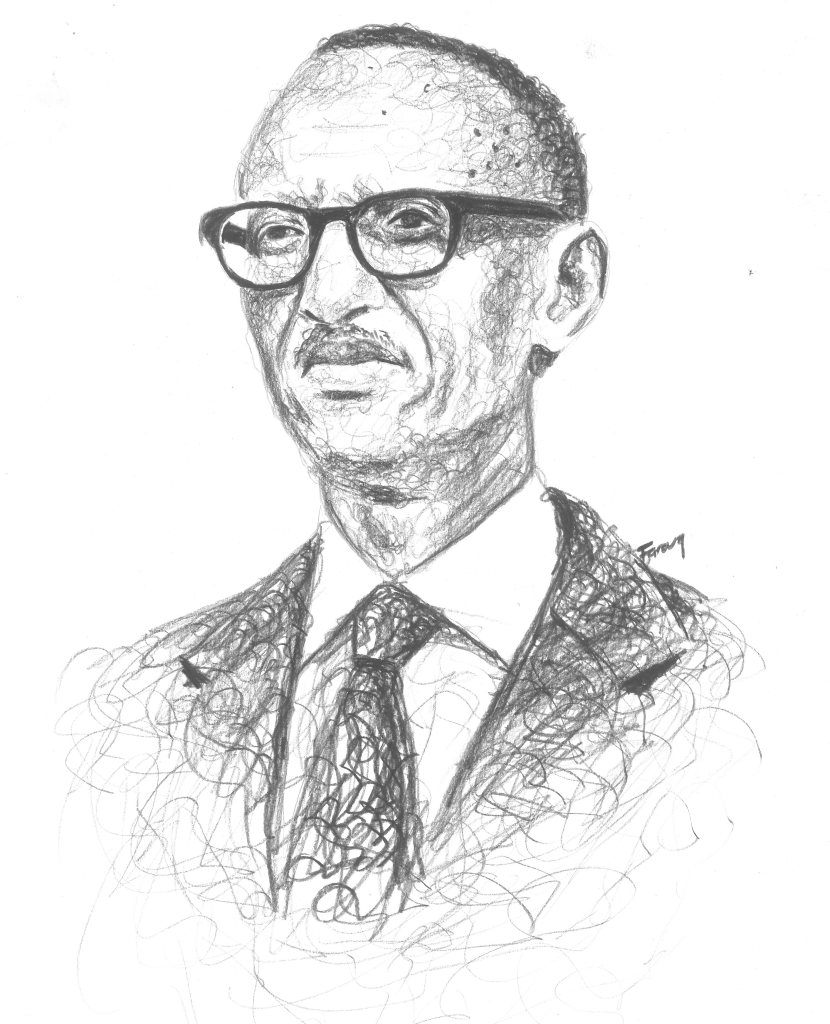
Rwandan authorities themselves admit that reconciliation is still a work in progress, but they are sensitive to any suggestion that there are things they aren’t doing which could remove any remaining impediments. Kagame, who has been Rwanda’s de facto leader since 1994 and its president since 2001, has imposed a political system that revolves around his authority, so that those who serve under him, and thus the people under them, must show unfailing obedience. Criminal justice largely reflects Kagame’s wishes and those of the Rwandan Patriotic Front, the erstwhile rebel group that stopped the genocide and which has since been trying to groom a uniform society in which ethnic identity means nothing. It is a crime in Rwanda to organize along ethnic lines, national ID cards no longer identify Rwandans by ethnic group, and schoolchildren (in a country where every other citizen was born after the genocide) are taught the history of the 1994 massacres. Crucially, perhaps, those suspected of denying the genocide, or of promoting the ideology behind it, face criminal prosecution. There can be no doubt that these policies helped to bring the relative stability Rwanda needed in the aftermath of the genocide, but criticism of these policies has grown the longer Kagame has stayed in power. The critics’ main point is that, under the circumstances, political dissent is not possible in Rwanda and that those who cross the president face a terrible fate: jail, exile, or worse. Kagame won the last election, in 2017, with 98 percent of the vote, an election that Amnesty International said was marred by a “climate of fear.” These points have been repeated so many times that one suspects Kagame is no longer rattled by the criticism he faces, but we know that he reads what is written about Rwanda. To this extent, he does care deeply about the image of his country, and, while he may not agree with what many others say of Rwanda, he wants to be able to know what they think.
I like Rwanda a lot even as I wish I didn’t know everything I know about the country, and for long periods while in Rwanda I fantasized about living there. The moment that encapsulates what I like about Rwanda was the scene outside the Gisozi memorial site on the eve of the official genocide commemoration: two workmen were polishing the balustrades, going about their work as diligently as if the railings were just as important as the walls that had received a fresh coat of paint. I thought, right there, that while no one would remember the freaking balustrades in Uganda, workmen in Rwanda know that they will be found out if they do shoddy work. The balustrades, which the hands of dignitaries may touch, must be carefully looked after, in the same way the owner of a Kigali construction site who releases muck into the street knows he faces a hefty fine if he is caught.
This remarkable sense of order fascinated me partly because it reminded me of what we miss in Uganda, where even now buildings with street-facing plumbing details are still being put up, but also because it underscored how Rwanda under Kagame was able to rise from the ashes, so to speak. But how, I kept asking myself, did this sense of order encourage or hinder official efforts to memorialize the genocide and, accordingly, ensure that something of the sort never happens again?
Not far from the Catholic parish at Nyamata, a quiet village on the road to Bugesera in Rwanda’s east, there’s the first of many “reconciliation villages” in which genocide perpetrators and survivors try to live in peace, and sometimes even affectionately. It’s an incomprehensible thing, but it’s a real thing, and the women of this commune are the key players. Their public activities, notably a basket-weaving collective that regularly brings them together, are an example for their men as well as their children: if we can do this together despite what we have seen, so can you. I spoke with two women there who had somehow smashed the ethnic barrier to be able to arrive at some kind of sisterly love. Jeanette, a Tutsi woman from Muhanga in the south, lost many members of her family in the genocide and hid in a toilet for several weeks to escape the killers. Anastasie, a Hutu woman from Bugesera, was married to a man who later was jailed for genocide, and she recalled her horror at seeing the Tutsi godmother to one of her children lying dead in a ditch. If there’s no shortage of grim stories about the genocide, there’s also no shortage of hopeful ones, and the tenderness between Jeanette and Anastasie seemed to rise to the top like cream. Anastasie pointed out that their friendship had been sealed one day when Jeanette, going on an errand, asked her to look after her child. This was the moment Anastasie knew she could be trusted, because no woman will put her child in the care of someone she couldn’t trust. Anastasie couldn’t remember which year this moment of truth had happened, so she turned to ask Jeanette. “Two thousand seven,” Jeanette said calmly, implying the enormity of that day even for her.
So, it would seem, reconciliation villages can succeed, at least at village level. But can they be replicated in a grand way? I say this in the sense that the RPF is often accused of suppressing Hutu voices in a country where the ethnic mix hasn’t changed since 1994: 85 percent Hutu, 14 percent Tutsi, and 1 percent Twa. At the same time, many Hutu professionals, including those who had nothing to do with the genocide, still choose to live in exile, helping to perpetuate the view of Rwanda as unsafe and dangerous. This can’t be what Rwanda wants, but what options do authorities have if they wish to cultivate an image of Rwanda as tolerant, as a country to which a respectable Hutu doctor in Toronto and his family can consider returning?
It’s a tough question indeed. Rwanda is Rwanda and Kagame is Kagame. Although there are many things the president won’t do, I kept thinking that at least he could reach out, both publicly and privately, to a very specific group of exiles who bear tremendous responsibility for what happened in 1994. The Rwandans I speak of are those Hutu intellectuals who faced justice for their genocide-related crimes, were released from jail, and now live across the globe. The convicted genocidaire who kept floating in my mind was precisely Ferdinand Nahimana, perhaps because he’s an intellectual. He’s a former history professor at the National University of Rwanda whose published writings helped to entrench fear, before 1994, that a civil war in which the Tutsis emerged victorious could herald a return to feudalism. Nahimana’s work made the case for Hutu resistance to RPF aggression while appearing to minimize Tutsi citizenship, suggesting in his work that the latter were misanthropic inyangarwanda.
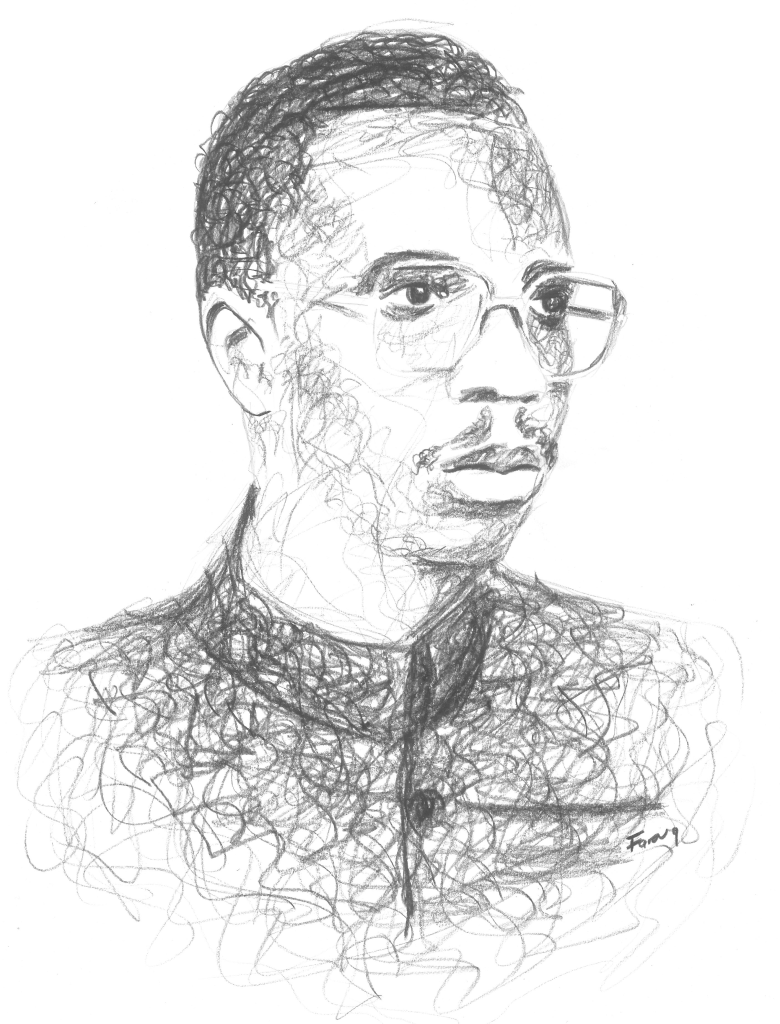
Nahimana was a co-founder of Radio Television Libre des Mille Collines, the radio station whose hateful broadcasts incited massacres between April and July 1994. The Sorbonne-educated Nahimana was important enough to be nominated as education and culture minister under the terms of the ill-fated Arusha peace accords. After the plane carrying President Juvenal Habyarimana was shot down over Kigali on April 6, 1994 – the event that sparked the slaughter by extremist Hutus of an estimated 800,000 Tutsis and some moderate Hutus – Nahimana was among a small group of Rwandans evacuated by French authorities. Arrested in Cameroon in 1996, he was later transferred to the jurisdiction of the U.N. International Criminal Tribunal for Rwanda, in Tanzania, where he was one of three suspects jointly charged in the media case. He was convicted in 2003 of conspiracy to commit genocide, genocide, direct and public incitement to commit genocide, and persecution and extermination as crimes against humanity. His life sentence was reduced to 30 years in 2007 after some findings against him were overturned, and in 2016 he was granted early release from prison by a U.N. judge who said he believed Nahimana and another genocide convict, a Catholic priest named Emmanuel Rukundo, had been sufficiently rehabilitated.
I doubt there are many Rwandans who remember Nahimana. My driver in Kigali surprisingly did, but in such a peculiar way as to preclude a thoughtful discussion of what Nahimana’s return to Rwanda, if that happened, would mean for ubumwe. He said he sometimes wondered if Nahimana was romancing Madame Habyarimana in the early 90s, and that one day not long ago, in a Kigali bar, he gave a member of the Habyarimana-era presidential guard all the alcohol he wanted so that the man, when he became tipsy, would tell him not just about the first lady’s secret affairs but also who targeted the presidential jet. The praetorian consumed all the alcohol he was allowed to drink without ever revealing anything new. I wanted to tell my driver that if the praetorian failed to reveal anything useful, it was because he didn’t know, or had seen nothing, or perhaps was bound by the ingrained habit of secrecy among Rwandans. But I let it slide.
It’s unclear where Nahimana lives today. Perhaps he’s still in Mali, where he served his prison sentence, or has been reunited with his family in Belgium. He is at least seventy-three years old, lucky in some respects because he will spend his last days a free man. There are, however, Hutus with blood on their hands who continue to live freely in Europe and will probably never spend a day in jail. And there are remorseless Hutus who, even if belatedly, have faced punishment. Notable among them is Leon Mugesera, the ‘Hutu Power’ ideologue who in a 1992 speech called Tutsis cockroaches that deserved to be violently killed and sent back to their “home” in Ethiopia via the River Nyabarongo. In 2012 Canada deported Mugesera to Rwanda, where he was convicted of inciting genocide and sentenced to life in 2016.
The decision of a U.N. judge later in 2016 to free Nahimana and Rukundo confounded some Rwandans and angered others, and the New Times newspaper of Rwanda published a column, by the British journalist Linda Melvern, that seemed to summarize the stance of Rwandan authorities:
Judge [Theodor] Meron makes no mention that these men have yet to acknowledge the crimes for which they were convicted. In his own written arguments for release Nahimana reveals how he continues to dispute his own responsibility in ‘these crimes.’ The two pleaded not guilty in their trials. Neither has retracted.
At this juncture, whether Nahimana accepts responsibility for the crimes of which he was accused is not as important as the fact that he was convicted and that his liberties were curtailed for two decades. He will never be able to get his dignity back, perhaps the severest punishment for a learned man. But this historian of Rwanda who once used his scholarship to deny the primacy of Tutsi citizenship can be useful to his country in at least one important way while he still lives, with lessons for Rwandans of all ethnicity: as the scholar who was humbled, who in his lifetime was proved wrong. If there is a universal lesson in the example of Nahimana, maybe it is that there’s no refuge in ethnic solidarity under any circumstances.
And yet, even when he loses everything, Nahimana retains his humanity. I wondered many times whether he had become stateless. Does he have a Rwandan passport? Is he a teacher somewhere? What do his children do for a living, and would they consider returning to Rwanda? These questions go to the heart of the matter when it comes to the complex goal of achieving unqualified reconciliation in Rwanda.
Kagame can’t be expected to encourage the likes of Nahimana to return home and contribute to the development of the new Rwanda, but he can show the kind of grand magnanimity we have yet to see but which one wants to believe he possesses. The critics accuse Kagame of hogging power, of being unwilling to share power equitably with the Hutus, but they miss something else altogether: that Rwanda’s Tutsi leader could hold the Hutus accountable by making it hard for them to remain in exile, by making it difficult for them not to want to live in the fatherland. To suggest this as a possible outcome is not to be naïve about the reality of Rwanda; it is to reach for the full potential of Rwanda. How Kagame goes about it is up to him, for he remains the fountain of honor and he needs no one to tell him what’s at stake. After three decades in power, the president should no longer carry the terrible, awful, bitter, aggravating weight of history on his bare shoulders. He needs to be disburdened, and this act of disburdening can’t be said to be for the president’s sake, because, even now as I write, the impertinence of my argument echoes with the harshness it could draw: You don’t know what you’re talking about. How dare you say such nonsense? But, with humility, I am only reaching for Rwanda, for the sake of the beautiful country Kagame led back from the dead. ▪
Cover image: A collection of human skulls at the Nyamata genocide memorial site in Rwanda. Photo by Inisheer, CC BY-SA 3.0, via Wikimedia Commons