
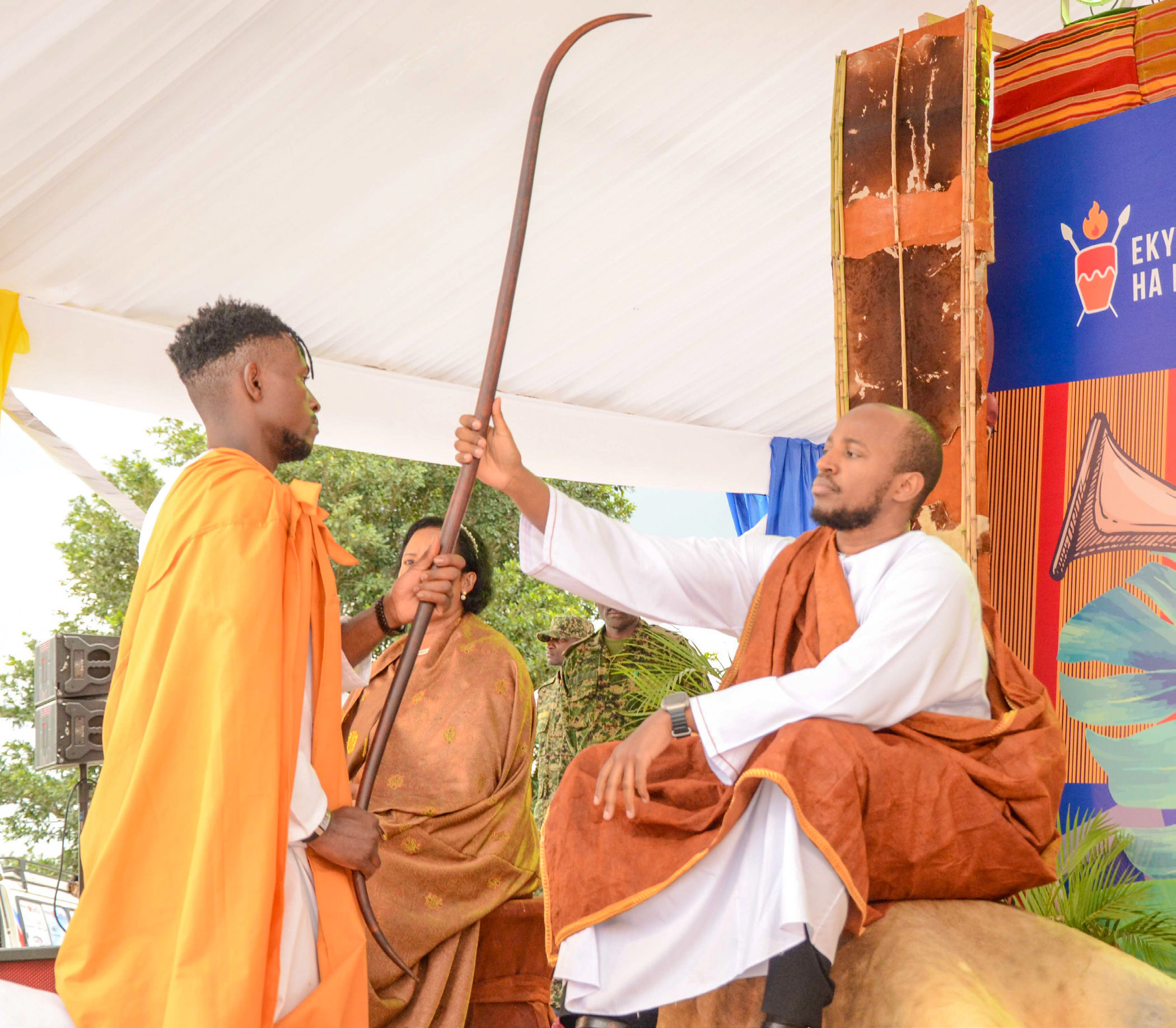
In death, as in life, King Oyo Nyimba of Tooro created spectacle without intending it. His ascent to the throne at the age of 3 was the prelude to thirty years of national, continental and global fixation with his small traditional kingdom in the heart of tropical Africa. His death in August at the age of thirty-four took many by surprise and provoked an outpouring of grief so rare in these parts and yet so genuine in its intensity that it verged on a communal scream. Oyo came to occupy a place in Ugandan hearts that was several times bigger than how we felt about his kingdom, even if we loved Tooro so much. Deeply private to the very last, it is to Oyo’s credit that even as a grown man he won hearts without ever actively seeking the approval of his followers and while seemingly trying to evade all that affection.
Oyo’s death, moreover without a legitimate heir to the Tooro throne, left a baby-sized vacuum, one that those who loved him dearly (and others who didn’t love him as much) later tried to fill, with dramatic consequences that only heightened the national hysteria over Tooro by people, not necessarily from there, who may be best described as Toorophiles.
But did Oyo really leave behind a son, a Baby Oyo? If he did, how old is the child and who is his mother? While no baby materialized, Ugandans kept themselves busy with fake imagery, performative ritual and, of course, rage. Fake imagery: because it satisfied a prurient need to imagine and to believe that the king was getting laid. Performative ritual: because many wanted us to believe that they knew something about Tooro that others were not immediately aware of. Rage, of course, because there was opposition among some Tooro elders to the idea of putting another child on the throne, even if the baby was legitimately Oyo’s.
However one feels about the succession dispute that followed Oyo’s death, the ensuing drama clarified what we have long suspected about Tooro: that it is not an ordinary kingdom and that it is rich in intrigues, physical and extra-physical, which can defy human understanding. Beauty coexists with violence. There are many secrets. And there is enough mythology to take your breath away.
After the death of Oyo, from a very aggressive type of cancer, the ruling clan of Tooro, known as the Babiito, began gathering at Karuziika, the seat of the kingdom, to pick a successor to the throne. They quickly decided that Oyo’s bloodline had come to an end and expanded the search for an heir to include two other branches of the royal family: the Mugenyis and the Kiijanangomas. Among Oyo’s cousins two names came up for serious consideration: George Desmond Kamurasi, a goalkeeper in the ninth tier of English football, and Edward Rukidi Kiijanangoma, a TV anchor with Uganda Broadcasting Corp. Kamurasi’s name was first leaked to the press, and profanity-laced videos of the SE Dons captain flooded the internet overnight as Ugandans discovered what a “fucking” inspirational leader he is, and yet others in Tooro were distressed or happy to learn that in fact a possible monarch was happily married to a white woman. Kamurasi apparently asked for more time to make a decision, which the Babiito didn’t have, and he is said to also have asked for an inventory of the kingdom’s assets.
The Babiito moved away from Kamurasi and turned their attention to Kiijanangoma, a humble journalist who read the evening news on UBC TV and was known to buy his own fish and vegetables in the market at Kyaliwajjala, a town just outside Kampala that is not far from his home. Kiijanangoma was already a born-again Christian and happily married to a lady from Teso who had given him children, but he felt it to be his God-ordained responsibility to accept when the Babiito asked him to become the next king of Tooro. A small group of elders, led by an elderly prince known as the Musuuga, or Chief Prince, made the announcement one evening. By then the Musuuga, whose real name is Charles Kayondo Kamurasi, had quickly become a sensation, the man of the moment as he asserted the supremacy of tradition over any practical imperatives. In an entertaining video, now widely shared, the old man seems to shake with rage as he says he is firmly in charge of Tooro Kingdom after Oyo’s death and asserts that all the king’s powers are vested in him.
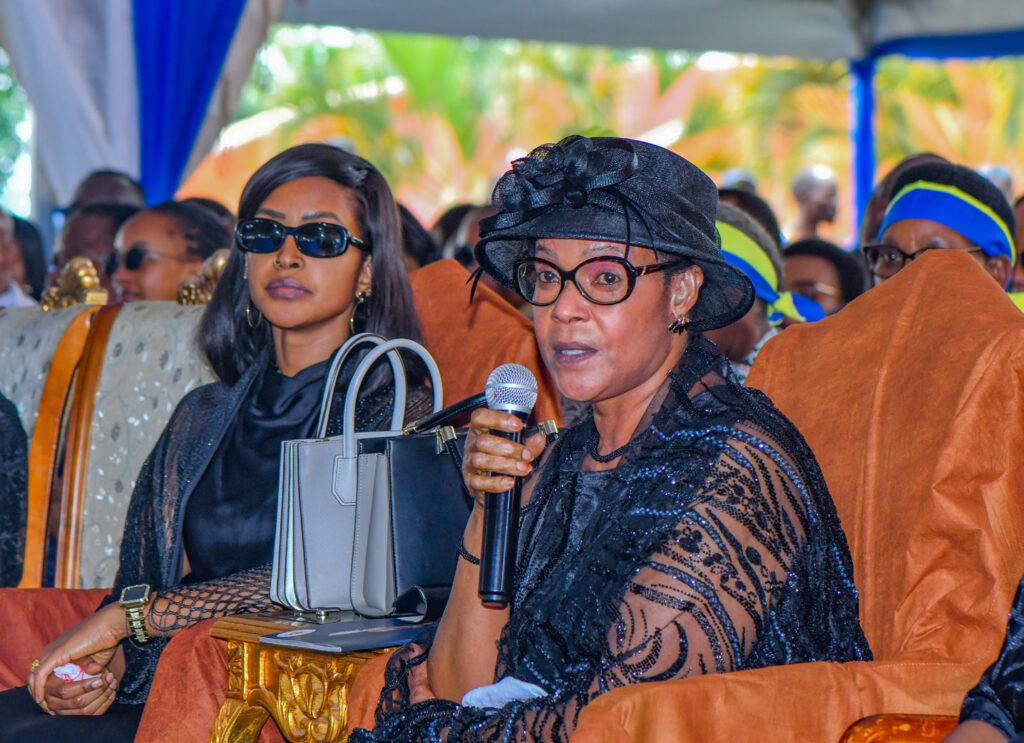
At the same time, as all of that happened, a serious dispute was brewing in the kingdom. Best Kemigisa, Oyo’s mother, and Ruth Komuntale, his sister, came out to say that Oyo had left a will as well as a son. The 2022 will shared on social media did not mention a particular heir, but it specified that if Oyo died without a legitimate heir then two of his cousins – both of them sons of the Musuuga – were to be considered for the throne. Komuntale, flanked by her aunt, the legendary and ageing Princess Elizabeth Bagaya, charged that the Musuuga’s group had let Oyo down in dismissing his will and that their decision was likely to sow turmoil. The Musuuga’s own sons came out to disown his decisions, saying he was a trapped man.
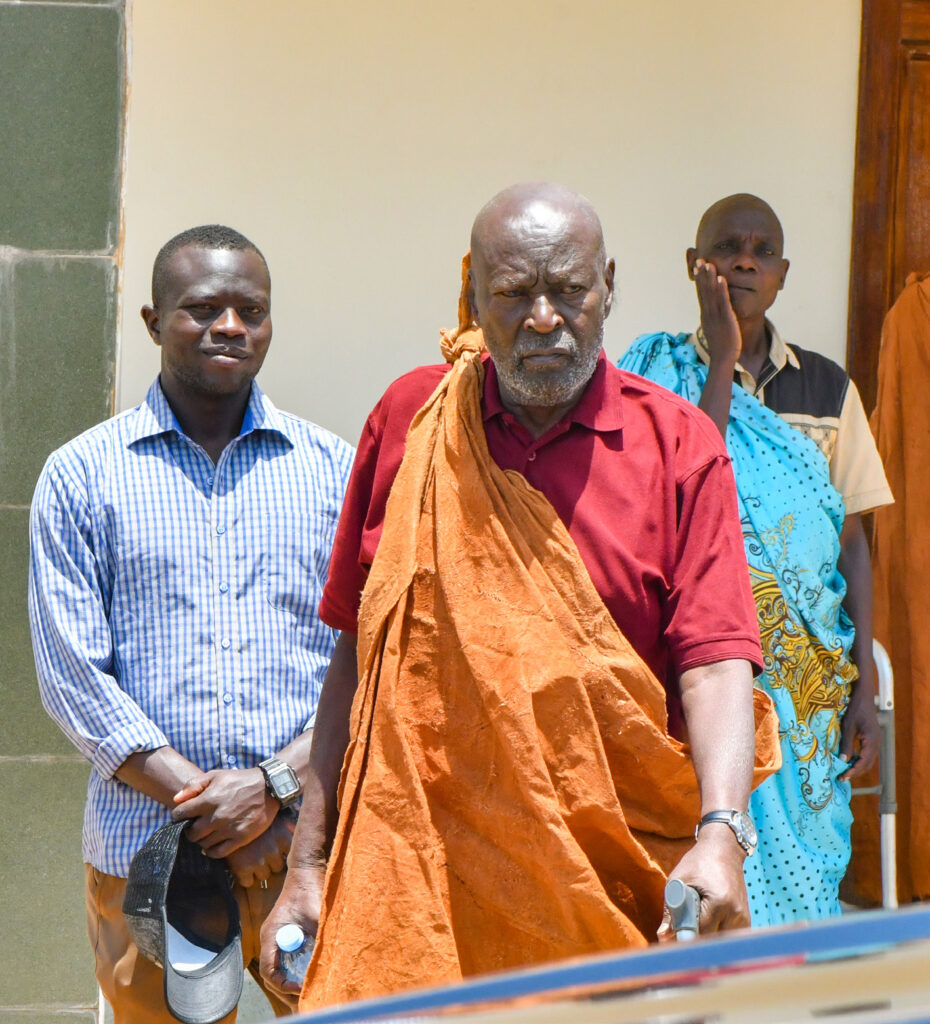
For the Babiito elders who picked Kiijanangoma to become king of Tooro, Oyo should have introduced his son, if indeed he had one, while he was still alive. The elders also cited a speech given by Kemigisa, the queen mother, late in 2025, when she urged Oyo to get himself a bride and give her a second grandchild, after the boy born to Komuntale and her Jamaican husband.
Matters came to a head during the nine-day mourning period before Oyo’s funeral: a memorandum of understanding was reached between Kemigisa and the Babiito over certain rules that were to be followed in the interest of peace. Kiijanangoma, the selected crown prince, was to take a low profile and desist from performing any throne-related rituals until the succession dispute had been resolved. Inside Fort Portal’s St. John’s Cathedral, where Oyo was crowned in 1995, the Musuuga stood before the departed king’s coffin and commanded him to “rest with your father,” addressing the casket as if he were conferring with a ghost, and the TV cameras shifted to focus on Kemigisa and Komuntale, who appeared to ask her mother what the hell the Musuuga was doing.
At the Karambi royal cemetery, further away from the cathedral, Kiijanangoma was seen in traditional mourning garb and, by some accounts, tossed nine coffee berries into Oyo’s tomb in fulfilment of a key rite of passage. The ritual cannot be performed twice without testing the wrath of the ancestors, and a dead king must be buried by 3 p.m., when the sun is still out. Kemigisa is said to have tried to stop the gravediggers from extracting Oyo’s remains from the hearse in which she sat, leading to a brief impasse before she was restrained on the orders of the central government. “What happened at Karambi left me devastated,” Kemigisa said in a statement after Oyo’s funeral. “The understandings reached before the burial were not honored, and the events of those final moments caused my daughter, Princess Komuntale, and me profound distress. I will carry those memories for the rest of my life.”
But she also thanked those who had helped her raise Oyo, for many years the world’s youngest monarch, into the handsome and well-built King Oyo Nyimba Kabamba Iguru Rukidi IV. She also thanked his devotees, including Zoomers born in the 1990s and 2000s who saw Oyo as one of them. They bowed their heads and cried repeatedly that their “milk had poured,” in that laughable but funereal saying of the Batooro. They had grown up with Oyo and had never imagined that one day they would speak of him in the past tense. For those people, Batooro and non-Batooro alike, Oyo was part of their youth, part of their memories, and part of an era that could never be reprised in their hearts. The contest over his legacy, his personal legacy, only deepened their sense of grief at Oyo’s untimely passing.
To an outsider, the dispute over succession in Tooro reads like a modern-day royal power struggle: clan elders up against a widow, tradition against personal wishes, grief versus the quest for power. Henry Tumukunde, the minister in charge of kingdoms, said at a public lecture after Kiijanangoma had been enthroned, that in his interactions with the Babiito it was never clear that they were fighting for the interests of Tooro. Only after “a hundred words,” he said, did they begin to discuss what was at stake for Tooro and not just the Babiito. But to anyone who has followed the history of Tooro, the fight was not even being waged on the terms of the flesh-and-blood Babiito of the moment, however commanding they seemed; certain fates were sealed a very long time ago.
II
The word Tooro is believed to be a contraction of the name Nyamtoro, a Luo woman who literally bequeathed her name to the kingdom in the foothills of Mount Rwenzori (Rwenjura to the locals), not far from the Congo border. Nyamtoro gave birth to the four sons of the demi-god Chwezi monarch Kyomya, who co-ruled with his brother Ndahura at the very start of the kingdom age in East Africa. According to mythologists, one day Kyomya went hunting north of Lake Albert, known to locals as Mwitanzigye, when he saw a very beautiful woman named Nyamtoro. He fell in love with her, wooed her and took her to be his wife. As he had not paid the bridewealth according to custom, he built a house under a Biito tree in those lands. That house was to become the cradle from which his children with Nyamtoro would grow. She bore Kyomya four sons: Nyalwa, Isingoma Rukidi, Kato (Kimera), and Kiiza. As the boys grew up under a Biito tree, so they came to be known as the children of that tree, or abaana abaBiito. Isingoma Rukidi grew up to launch Bunyoro-Kitara’s Luo-Biito dynasty. Predictably, Tooro Kingdom’s ruling clan, the Babiito, take their name and ancestry from these forebears, and, and beyond them, from Nyamtoro.
Without the cover of women, historians say, succession collapses before it starts and there would be no crown today. When Prince Kaboyo Omuhundwa Olimi broke away from Bunyoro around 1830 to begin his own kingdom, he did not do it alone. His mother used her standing inside the royal court to divert cattle, mobilize fighters loyal to her son, and clear a path for him to escape. Besides the queen mother, two princesses are said to have known about the plan and kept it hidden from their father. One of them is said to have accompanied Olimi to the new kingdom. The plot involved even more women. The prince told his father that one of his wives in present-day Kyenjojo was expecting twins and that he needed to witness childbirth. The ruse worked.
The clearest case is from the late 1800s, when Bunyoro’s Omukama Kabalega invaded Tooro and effectively erased it from the map. The kingdom’s survival came down to one woman, Queen Mother Vikitoliya Kahinju. As Princess Elizabeth Bagaya recounts in her autobiography, Elizabeth of Toro, spelling Tooro that way, Kahinju fled into exile around 1875 at the peak of Tooro’s succession wars and after the death of her husband. She sneaked out of Tooro with her three young children, including an infant who would become King Kasagama Kyebambe IV. Bagaya writes that the queen mother and her children were granted asylum in Ankore, while in Tooro the wars of succession and foreign intervention from Buganda and other traditional groups so weakened the kingdom that by 1880 Tooro couldn’t stand on its feet. Kabalega, with his superior army of the Abarusuura, overran Tooro and brought it back under Bunyoro’s control. This meant more time in exile for Kahinju and her children.
In Ankore the exiled royals settled in Sheema, where they were not really safe from danger. Kabalega sent a stern warning to Ankore, declaring that if they continued to host Tooro’s princes he would not hesitate to carry out an invasion. Kahinju and her offspring had to go somewhere else, and their saga includes escaping from a feast at which her children were to be killed. This time Kahinju escaped only with her youngest child, just a year old, and walked through the jungle until, somehow, she reached Buganda, first at Kabula and later all the way to Mengo, where mother and child were given asylum. At Mengo, they found Yafesi Byakuyamba, an elder cousin of the future king, and he was instrumental in connecting Kahinju to Baganda chiefs and, eventually, to Captain Frederick Lugard of the Imperial British East Africa Co. Kahinju for years shielded the young prince until an opportunity came in 1891 in the shape of Lugard, to whom she sent a messenger bearing a special wooden vessel with a sample of salt from the crater lakes of Tooro. She also had a message: if Lugard helped restore her son to his throne, he could have a share in Tooro’s salt mines as well as access to other minerals. Lugard is said to have been swift to grasp the economic opportunity, and he welcomed a strategic alliance with the woman.
Armed with British maxim guns and Sudanese troops, Lugard marched west, repelled Bunyoro’s forces and dramatically restored the sovereign kingdom of Tooro. In August 1891 the little boy Kahinju had carried through the bush all the way to Buganda was crowned King Daudi Kasagama Kyebambe IV. Kahinju’s power did not end with her son’s enthronement. Her court on Rwengoma Hill wielded just as much authority, and by rights she entrenched a norm, as uncanny as it may seem today, that queen mothers are not to be messed with. They are co-architects of the state of Tooro and wield influence that stretches unpredictably. Even with Edward Rukidi Kiijanangoma, who chose the regnal name of Nyabongo at his coronation in September, for some reason his mother was front and center at his coronation. Nyabongo is fifty-six, so his quizzical-looking peasant mother will not really serve as a queen mother in the way Kemigisa was for Oyo. But apparently the old woman will upgrade her living quarters when she moves into the palace, and who knows what intrigues she will partake of in service to her son.
III
Monarchies have always held a powerful place in human history. Kingship has always captivated men, provided amusement, stirred desire, and aroused the hardest of feelings. So it is with Tooro, which has fascinated historians, philosophers, sociologists, political scientists, and even presidents. And a recuring theme within the layers of existence for Tooro has been the part played by matriarchs or mother figures. The crown has been created, stage-managed and manipulated not by its kings but by their mothers or other women around them, from Nyinamwiru to Kemigisa, with devastating consequences.
The geography of Tooro is punctuated by volcanic craters, lush green forests and serpentine rivers, Mpanga prominent among them. Less than ten kilometers west of Fort Portal City, the Tooro capital, is the cave holding the fabled Amabere ga Nyinamwiru, which literally refers to the breasts of the maiden-servant’s mother. The stalactites in the cave bring in tourist revenue and contribute to Fort Portal City’s reputation as attractive to tourists, but the Nyinamwiru legend survives almost like a malevolent curse upon Tooro.
The cave acquired that name after King Bukuku chopped off the breasts of his daughter, Nyinamwiru, and had them thrown inside, following a prophecy that the daughter would one day get married and have a son, Ndahura, who would kill the king and take his throne. The king was not pleased to hear that prophecy, so slicing off her daughter’s breasts was an attempt to deform her and make her seem unattractive to men. His weak security services didn’t know that Nyinamwiru was already pregnant with the child of Isimbwa, the heir of a rival. After Nyinamwiru gave birth to her child, Bukuku made a second attempt to block the prophecy by ordering the murder of his grandson. In total defiance of the king’s orders, the people assigned to kill the baby preserved its life and carefully hid it in the cave where its mother’s breasts had been dumped. Baby Ndahura was fed, so the mythologists say, by his mother on the calcium-rich milky liquid that trickled from teat-like stalactites in the cave. Agonizing over her father’s brutality, Nyinamwiru is said to have placed a generational curse upon the throne. She decreed that because of the blood spilled and the pain inflicted upon her body, the rulers of Tooro would die young and that the crown would repeatedly be forced onto the heads of children, stripping them of their youth. Ndahura grew up disguised as a potter’s son, and, years later, encountered his grandfather, Bukuku, and killed him exactly as the prophet had foretold.
Some traditionalists point out that such mythology around Nyinamwiru is not to be dismissed, seeing mystifying tragedy in the death of Oyo and that of his father, Olimi III, only two years after kingdoms had been constitutionally restored in Uganda. And others see intrigue in some dates: Olimi III died of a heart attack on August 26, 1995, while Oyo passed away on August 27, 2026 after suffering for months with angiosarcoma. For some elders among the Babiito, the untimely deaths of Oyo and his father can be understood, or accepted, as the tragic materialization of Nyinamwiru’s curse, a continuous thread along which kings are doomed to expire when they are widely cherished.
Perhaps, as matriarchs go, now it remains only to talk about Kemigisa. She was conspicuously missing at Nyabongo’s coronation. To be honest, no one had expected her to be present. She is not perfect, but those who ridicule or mock Kemigisa fail to realize that there is no Oyo without his mother and that Tooro sparked much curiosity – and the world’s attention – in no small part because of her service as the queen mother of Tooro. She had (and still has) the favor of President Yoweri Museveni, who was appointed Oyo’s guardian, and she attracted the love and largesse of a figure no less powerful than Libya’s Col. Muammar Gadhafi. In July 2001, at Karuziika, Gadhafi was installed as the Omujwara-Nkondo of Tooro, the kingdom’s defender. Oyo was only nine years old when he placed a special crown on Gadhafi’s head and palace ritualists dressed the Libyan leader in a barkcloth robe. Together with Museveni, Gadhafi walked on an animal-skin carpet.
Rumors swirled of a “special friendship” between Gadhafi and the youthful Kemigisa. In any event, whatever the nature of their relationship, there were privileges for Tooro. Gadhafi gave millions of dollars for the refurbishment of the Karuziika Palace, which had been rotting. Oyo and his mother vacationed in Libya multiple times, and his sister enrolled at an international school in Tripoli. For years, inside Karuziika Palace, a portrait of Gadhafi, who died in 2011, was displayed in a receiving room: the Libyan leader victoriously raising his fist. It seemed that Kemigisa, in her peculiar way, sustained the ancient tradition of having female royals as instruments of governance and foreign policy in Tooro.
She was also successful in a bitter dispute with the Babiito over what belonged to the kingdom and what belonged to her husband’s estate. They called her a thief and a liar, but she had entered into a strategic alliance with Museveni, whose support the feuding Babiito did not have, and the courts agreed with her: her late husband’s private property was now hers. Today, even after Nyabongo’s coronation, she insists Oyo left behind a son who had been with him while he received treatment in the United States – and that the boy remained where he was for his own safety. One suspects that the child will be unveiled when we least expect it, and what a day that will be for Nyabongo and the rest of the Babiito.
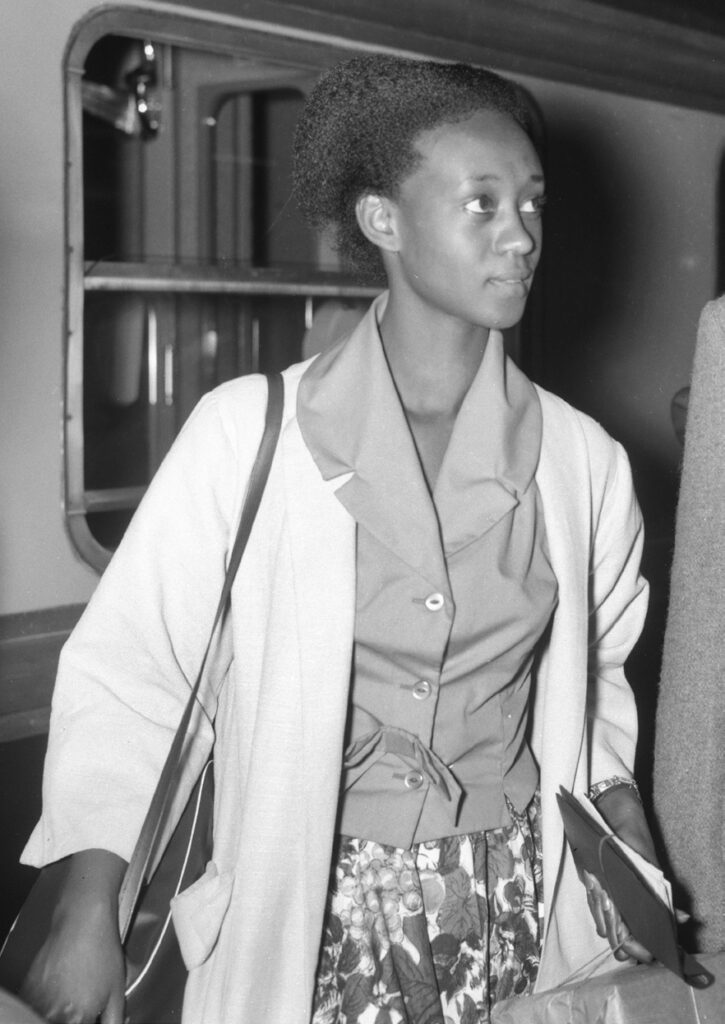
It is imperative that in her tribulations Kemigisa has had the support of Bagaya, her sister-in-law. When Bagaya’s father, Rukidi III, died in 1965, Bagaya became the Batebe, or Princess Royal, to her brother. A year later, Milton Obote’s abolition of kingdoms forced the royal family into exile. The Cambridge-educated Bagaya became Uganda’s first female lawyer and used her fame as a runway model to champion her family’s legacy. She later served as Uganda’s foreign affairs minister under Idi Amin, whose capriciousness she barely evaded. She was dismissed and publicly humiliated by Amin in 1974 after she rejected his romantic advances. Amin initiated a malicious campaign with claims that he fired her after she was found having sex with an unknown white man in a public restroom at a Paris airport. Having quietly left Uganda, Bagaya went into exile in Britain.
Bagaya was Uganda’s ambassador to the United States between 1986 and 1988, and she helped rebuild the image of Tooro through the 90s. Following Olimi III’s death in 1995, she became regent and guardian to her nephew Oyo, of whom she was very fond. Bagaya is ninety today, and in her small and frail body she still packs bottomless dignity.▪
Cover image: Oyo Nyimba Kabamba Iguru Rukidi IV, flanked by his mother Best Kemigisa, at a public event in Tooro, via Wikimedia Commons