
When the National Resistance Army captured power in 1986, the former rebels inherited a country in ruin. The long decades of civil war and economic collapse had left Ugandans disillusioned with the country’s leadership. Many Ugandans supported the NRA rebellion against Milton Obote’s second administration as a way out of endless bloodshed, tribalism, and economic hardship. The regimes of Obote and Idi Amin were marked by atrocities and nepotism, and both faced severe political crises aggravated by political factionalism and indiscipline in the military.
After ousting the junta that had removed Obote and sent him into exile, President Yoweri Museveni promised to end insecurity and nepotism, and to establish a functional democracy. He also undertook to respect and safeguard basic freedoms, and promised a government that would guarantee equal opportunities, economic prosperity, and security for all citizens. This endeared him to many Ugandans who were disgruntled with bad governance and the lack of economic opportunities. With hope and optimism, Ugandans poured into the streets to celebrate the NRA’s capture of power, and shared moments that encapsulated a nation’s spirit. They saw Museveni’s NRA as symbolising a break from the tumult of the past and offering a new direction for Uganda. In the first two decades of Museveni’s rule Uganda undertook drastic socioeconomic reforms. Museveni embraced the neoliberal economic agenda intended to ignite post-conflict economic growth. He opened domestic markets to foreign investments, deregulated financial markets, eliminated price controls, privatized ailing government parastatals, weakened the power of trade unions, reduced the size of government, and opened the economy for international goods and capital. These reforms were necessary for a post-conflict economy facing constraints, notably rising poverty, high levels of inflation, food insecurity, and insufficient institutional and structural capacity. Museveni was soon praised as a reformer who wanted a stable, prosperous, and democratic Uganda. Bill Clinton described Museveni, along with others like Meles Zenawi of Ethiopia, as a “new breed” of African leaders. These leaders, it was said, were pragmatic, young, progressive, and willing to embrace the neoliberal reforms essential for social transformation of their respective countries. For Uganda’s Museveni, having led an armed insurgency that overthrew an unstable regime, it was hoped that, under his leadership, the country would inevitably transition from military rule to a constitutional democracy. Ex-NRA militants were to put away their guns and begin new careers as politicians with the mandate of voters. It was expected that a democratic system would constrain the army’s inclination to violate human rights. Likewise, the new parliament and the judiciary were meant to provide institutional checks and balances against abuse of power by executive authority.
This was Museveni’s promise to Ugandans, and, at least in the first decade of his rule, he enjoyed a measure of goodwill from them. Yet, after nearly four decades in power, Museveni has fallen into an authoritarian trap that has left the country on edge. The coercive strategies he is using to consolidate power may as well lead to his eventual downfall, with the relationship between his regime and Ugandans increasingly contentious. The abuse of civil liberties – especially through torture and detention without trial – has increased, as has the suppression of civil society. Through a pseudo-democratic process, the regime organises farcical elections as a means of survival and legitimation. State institutions such as parliament and the judiciary have become a complete charade. They play a marginal role in governance, because they submit to Museveni’s will at the crucial moment.
The 1995 constitution provides for the separation of power between the executive, the legislature, and the judiciary. The framers of the constitution sought to avoid the concentration of government power in a single entity or individual, fearing it would subject Ugandans to authoritarianism. To guarantee civil liberties, and to discourage rights abuses, the Constituent Assembly members did not want to see one branch of government performing the core roles of another. Despite their best efforts, it is clear that they did not succeed.
It is difficult to pinpoint precisely when things started to go wrong with the Museveni regime. But it can be argued that, as the political opposition strengthened with the rise in 2001 of Col. Kizza Besigye, a former NRA combatant who had served as the army’s national political commissar, the ruling National Resistance Movement party was forced to subvert the constitution in order to remain in power. The underhand actions taken to contain Besigye also were designed to weaken institutions like parliament and the judiciary. The regime consolidated political power in the hands of Museveni, who is now a domineering figure in Uganda’s political system.
The peak of the NRM’s abuse of the constitution was the army’s invasion of the High Court in 2007 to re-arrest opposition politicians who had been granted bail by the court. The security agencies continue to defy court orders related to political detainees. Such blatant disregard of the doctrine of separation of power undermines the independence of the judiciary as well as constitutionalism and the rule of law. Things have deteriorated so badly that Museveni now speaks in favor of defying court orders, reasoning that such action can be justified in situations where the courts issue orders he doesn’t agree with. In addition to destroying independent institutions, Museveni has given his close acolytes economic favors even as he persecutes or exiles business people suspected of funding the opposition.
Since 2001 Uganda has seen an increase in cases of electoral fraud and the criminalisation of political dissent, with the security system playing an outsized role in entrenching Museveni’s authority. The president’s decision to remove constitutional term limits in 2005 triggered protests and a wave of harsh suppression, amplifying regime insecurity but also putting the centralization of political power on an inexorable path. Attempts to establish a political alternative to the Museveni regime, first by Besigye and then by Bobi Wine of the National Unity Platform, have been met with excessive violence.
Uganda witnessed another wave toward autocratization in 2017 after constitutional age limits on the presidency were removed, allowing Museveni to effectively rule the country for as long as he wishes. The opposition and civic groups tried to challenge the amendment using available means but the outcome was obvious, given that institutional checks and balances had long been swept away. The Supreme Court’s decision to uphold the amendment cemented Museveni’s already omnipotent position. Attempts to organise the citizens to protest the amendment were suppressed by a combined force of the police and the military. This unprecedented coercion further underscored the regime’s insecurities. As Museveni grows older, his speeches show that he is getting detached from reality. He often vents cynicism around the concerns of young Ugandans while giving dry history lessons about his experience as a guerrilla leader. Some Ugandans respond on the internet by making him the butt of countless jokes.
At the height of the Covid-19 pandemic, Museveni lost touch with many Ugandans as he retreated further into social distancing. Infamously, appearing before the media with six kilograms of maize meal and a weighing scale, he purported to demonstrate to needy Ugandans how to ration food. Museveni’s speech was in response to criticisms about food shortages during the pandemic and the government’s insufficient response. To protect Museveni from Covid-19, his intelligence built a virus-free bubble around him that exceeded standard measures taken by other leaders in the region. This isolation also had the effect of intensifying his sense of power as he made many dubious decisions that had to be implemented by his subordinates.
The Museveni regime now expresses rule by law, not rule of law. Parliament, far from being the independent institution envisaged in the constitution, is little more than the regime’s rubber stamp. Lawmakers rarely reject oppressive laws brought by the regime. In fact, if those laws restrict freedom of information, speech, and assembly, they are more likely to be enacted. The Public Order Management Act of 2013 effectively strangled the constitutional right to freedom of assembly and association, with the police using provisions of it to arrest and detain opposition leaders and others who hold rallies the regime wants to stop from happening. The Computer Misuse Act, which Museveni signed into law in 2022, is now being used to target Ugandans who use social media platforms to criticize Museveni’s rule. Hours before Ugandans went to vote in 2021, social media platforms such as Facebook and Twitter were shut down, and in a public statement Museveni accused social media companies of siding with the opposition against the ruling party. Since the NRM largely maintains control of traditional media in Uganda, opposition supporters had retreated to social media to campaign and to expose malfeasance.
The election-day attack on social media was undoubtedly intended to prohibit Ugandans from exposing electoral malpractices. Although restrictions on most platforms were removed after Museveni’s disputed victory, Uganda has joined the likes of China, Iran and North Korea in forbidding the use of Facebook. Thus, when all’s said and done, we have now in Uganda a complete dismantling of independent media, the stifling of dissenting voices, and the inability of the media to inform the public about the regime’s policies. While the government justifies such restrictions as necessary to protect the public from harmful and politically destabilising content, what has emerged is a well-crafted strategy to deny Ugandans information that may contradict official propaganda. Many independent journalists face harassment for doing their work, so that any genuine attempt by a journalist to investigate abuses involving the security forces is likely to draw a harsh response from the regime.
Despite local and international outcry surrounding Uganda’s growing list of repressive laws and restrictions on speech and assembly, the NRM government has remained unwavering in its attempt to consolidate power through coercion. Under these circumstances, permitting Ugandans to enjoy their civil liberties without restrictions is seen as a threat to the regime. Participating in an “unauthorised” rally can attract a prison sentence of indeterminate length. As of today, many supporters of the opposition National Unity Platform party and other political activists are languishing in prison, having never been produced in court, because they participated in protests or were somehow linked to Bobi Wine.
Ofwono Opondo, the government spokesman, recently said that the jury was still out on Museveni’s legacy as he, Opondo, responded to the public’s reaction to the president’s rejection of a proposed institute for the study of Idi Amin. According to Museveni, Amin should be forgotten, as perhaps he should. But some Ugandans look closely at where they stand with Museveni these days and they despair for their country: rampant corruption, excessive income inequality, a government that hardly cares for the fate of the common man.
But what really frustrates many people is seeing Museveni adopt the very coercive tactics used by his predecessors. Nowhere is this turnaround more noticeable than on the issues of torture and extra-judicial killings. Thirty-eight years is a long time to be in power, of course, but some Ugandans haven’t forgotten early Museveni, whom they compare to the current version and find a lot to weep for. This is the same Museveni who once never failed to highlight the murderous excesses of regimes such as Amin’s. This is the same president who once said he could never preside over a country in which a citizen is murdered and the authorities do not know who is responsible.
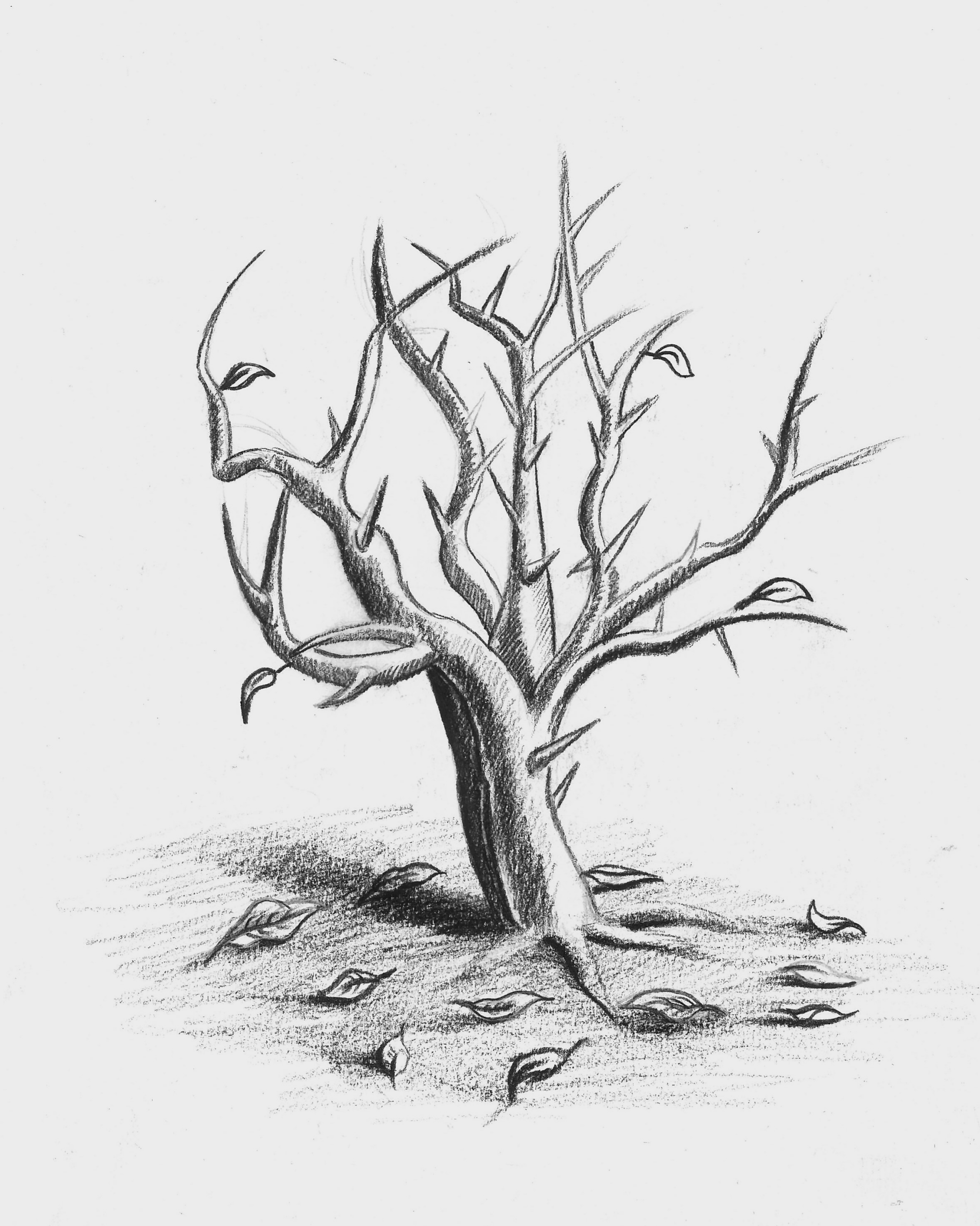
As was the case under Amin and even Obote, Ugandans are increasingly concerned by what they consider a slide toward full-blown military authoritarianism, and there is a palpable fear of what happens next. The scale of abuses has intensified with the rise of Bobi Wine. Some of his supporters have been picked from their homes at night by security agents who invariably shove their victims into vans that Ugandans have described, terrifyingly, as “drones,” apparently because of the speed with which they are driven from crime scenes. Some of those released from detention tell harrowing stories: fingernails pulled out, bodies burned with hot metal, and other abuses too violent to mention here. Contrary to what Opondo may think, these cruel acts of torture reveal current truths about the Museveni regime. They show the government as it is. These are the political remains of the NRM, as bitter as the leaves of a poisonous plant.
How can we make sense of what is happening in Uganda? It is difficult to predict the political trajectory in the post-Museveni era and the challenges such a transition might bring. What is clear, however, is that Museveni has effectively de-institutionalised political power. He has done so in order to counter growing opposition to his rule. As a result, accountability institutions like the judiciary and the national assembly are effectively under the control and direction of the presidency. Within the ruling party there is no room for dissent. Independent-minded individuals have either left the NRM or prefer to keep silent on contentious issues in order not to be misconstrued as challenging the president’s authority, by all intents and purposes a crime in Uganda today. Generally speaking, anyone with economic or political privileges to lose prefers to lie low and keep quiet as Museveni, now surrounded by a narrow circle of young acolytes with blind loyalty, does with the constitution what he wants.
The ‘institutionalization’ of Museveni is a betrayal of the sense of hope this president once inspired, at once the reason for the deepening sense of doom and gloom among many Ugandans. They see little hope for long-term political stability so long as Museveni continues to entrench himself in power, and they know, if they are wise, that the conceivable scenario points to a looming wave of political upheaval.
Museveni’s growing hostility toward the opposition and civil society tells us a lot about whether he believes in the values of democracy and free society. He has defied all constraints on his power, undermining state institutions so as to concentrate immense power in his hands. He has explicitly stated that he cannot hand over power to the opposition because they are, he says, “wolves” waiting to devour the country. He often invokes the possibility of a civil war whenever his rule is threatened, seeing his opponents not as actors with something useful to offer but potentially as criminals who belong in jail. In his mind, Uganda is Museveni and Museveni is Uganda. He cannot imagine himself out of power. ▪