
The stories and artworks presented here were created by a group of young authors and artists from refugee backgrounds, originally from Democratic Republic of the Congo and now living in Uganda’s Nakivale refugee settlement. Over a period of eighteen months, the authors participated in a series of remote storytelling and art workshops facilitated by members of the Otherwise Magazine editorial collective, in which they explored creative writing elements like story shape and structure, narrative voice, the role of memory, and visual representations of story, as they crafted their pieces for publication.
The stories presented here examine the junctions of their lives, the moments pregnant with opportunity and ripe with danger. The moments when their very survival was at stake, when chance encounters led to friendship and opportunity, and when familial betrayal or political violence threatened to destroy families, homes, and livelihoods.
Stories, at the most fundamental level, are crafted and shared for an audience. The act of creating and recreating these stories is exercised collectively, in constant dialogue with others. This is particularly true for young people, who are deeply immersed in a process of defining themselves in the complex network of their social worlds. In addition to undergoing a typical process of editorial review, the authors featured here were matched with other young writers to participate in a collaborative process of peer review. As they engaged with critical feedback from both their peers and the editorial team, they demonstrated the complex interplay through which stories and perspectives are transformed intersubjectively.
The possibility and scope for storytelling is radically diminished when power dynamics are altered in the context of displacement, violence and trauma. In circumstances of social rupture we might consider narrative storytelling as a coping mechanism. The very act of telling stories allows a means through which to interpret and infuse meaning into circumstances and events that seem beyond control. This occurs not simply through the repetition of events but through a process of critique and manipulation of those events – the defining junctions – necessary for their retelling.
___
The project was funded through the Wenner-Gren Engaged Research Grant project, “Sociality of the Story: Harnessing the Transformative Power of Storytelling through Ethnographic Exchanges Among Refugee Youth” and emerged in partnership with Stone Soup children’s literary magazine, and Elite Humanitarian Service Team, a refugee-founded and led non-profit working with young people in Nakivale Refugee Settlement. Stories were previously published in a special issue of Otherwise Magazine.
___
Safe Passages
John Fadhili
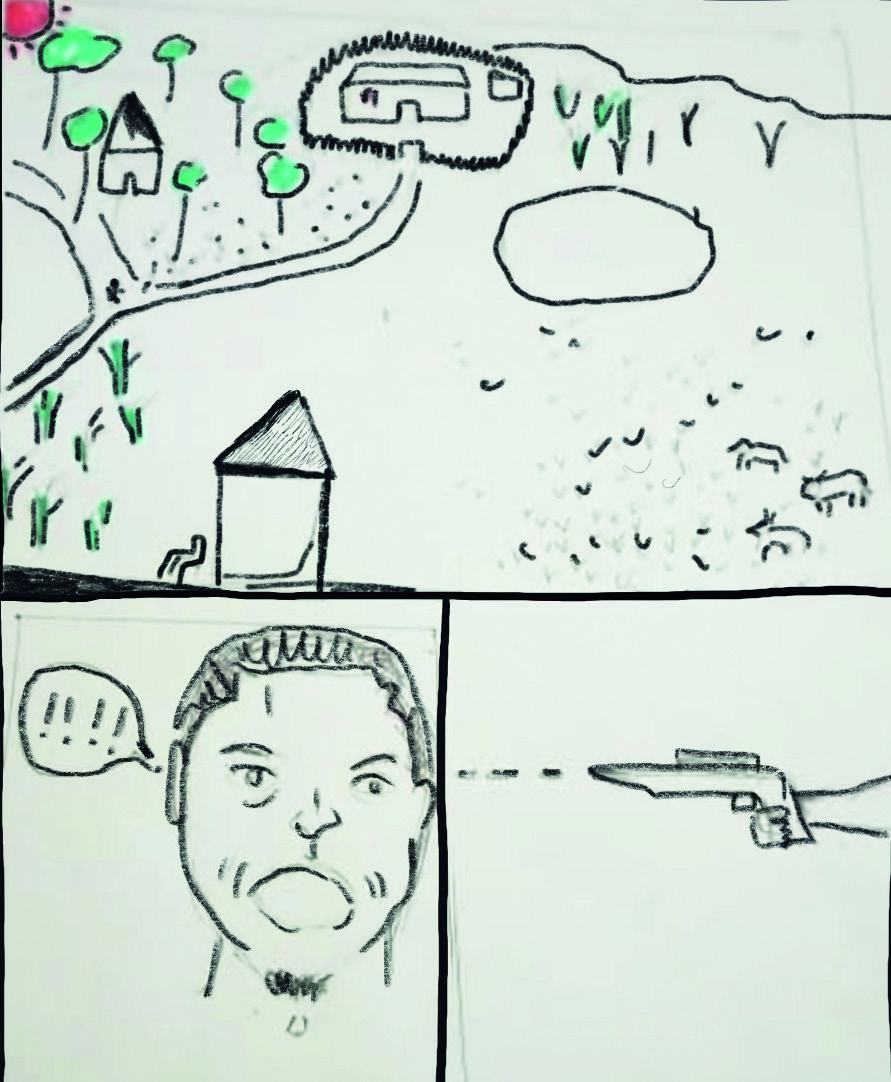
It was a bright morning. I was lying in bed in a room built of uncooked bricks. Nothing but a plastic sheet for protection. My mother, my little brother and my sister still heavy with sleep in the rooms beside mine when my dad’s frantic voice pierced through my dream. ‘Pack all your bags!’ he yelled. ‘We must go!’ I couldn’t imagine what could make dad scream like that.
I leapt out of bed and went outside in the compound to see what was taking place. Shocked, I looked upon a sea of bodies. The space was quiet, lifeless. People had already fled. I moved nearer the dead bodies, and saw familiar faces. One was a boy I studied with from nursery school, up to grade four of primary school. I remembered carefree days playing football and sharing lunch with this boy, whose body now lay limp on the ground.
I was terrified to see someone dead from gunshots. I was scared to see children orphaned, women and men widowed, most of the village properties destroyed.
I first became aware of the war between M23 and the government of Democratic Republic of Congo when I was only nine years old, but I never thought it would hit so close to my own home. We were forced to make a decision to flee the country we had invested our lives in, since the war was still taking place and had no sign of stopping.
I went to my bedroom to pack all my necessary things. Tears flowed down my cheeks, soaking the collar of my shirt, my heart sick with sadness as I spotted a toy car given to me as a gift for my first birthday by Peter, another friend who was now dead.
We gathered outside once everyone had finished packing their things. Still morning, my family and I took a hidden route. We did not know our destination. We had no choice but to leave for the fear of being killed in the violent attack.
Although we didn’t know where we were going, we knew we had to keep moving forward together. We walked all day and night. We shared what little food we had, along with stories of our past and hopes for our future, as we navigated unfamiliar forests.
After walking for hours, we met some people on our way who were bushmen. We tried to communicate with them, hoping they might help us. But they did not understand what we were telling them because they didn’t know the language we were using. Realizing there was no time to improve our communication, we humbly continued on our way.
We walked all day without stopping. When it was evening, we all decided to have a rest for the night before continuing our journey early the next morning. We slept in a terrible condition. We had no blankets or bedding, and my mind was racing, haunted by the images I’d encountered mere hours earlier. The next morning, we woke up and thanked God for waking us although we slept in a bad condition. My father told us to remain in one group as he was going to go ahead to scout the way. Surprisingly, he came back running, calling to us in a loud voice that there was a lorry picking up people to take them to Nakivale Refugee Camp. We rushed toward the lorry and arrived in time to board. I stepped foot in Nakivale among the maize and banana plantations in the inky dark of a cold, still night. I still live there with my family today. I am grateful. Safe passages persisted. An awful day survived in my now-distant home.
(My name is John Fadhili. I am 17 years old. I live in Nakivale refugee settlement. I am a student at Nakivale Secondary School. I love playing musical instruments, specifically the guitar, and also reading books.)
___

A Little Girl in the Village
Rukia Seleman Bijoux
Amina lived with her mother, Mrs. Bimbo, in a small village surrounded by lush green forest and winding rivers. Mrs. Bimbo was a kind and gentle soul, loved by all in the village for her warmth and generosity. Amina and Mrs. Bimbo shared a special bond and their days were filled with laughter and adventure. They would spend hours exploring the forest, collecting herbs and berries, and helping their neighbors with their daily chores, all the while dreaming of a garden of their own. One day a very wealthy man named Mr. Peter moved from the city of Kisangani, in Democratic Republic of Congo, to Amina and her mother’s village.
One Monday morning, when all of the other children were in school, Mr. Peter saw Amina fetching water from a nearby stream. Wasn’t she supposed to be in school, Mr Peter thought to himself. But he did not say anything.
On Tuesday, when all the students were supposed to be in school, Amina was once again at home doing chores. ‘Hello little girl, how are you?’ asked Mr. Peter. ‘I am fine, sir,’ Amina responded with surprise. Amina was not comfortable talking to strangers and she stepped backward, almost making her way indoors.
Mr. Peter said, ‘Wait, l don’t bite. I am just here to have a word with you.’ Amina smiled nervously. ‘Why are you not in school?’ Mr. Peter asked.
‘My parents did not have money to put me in school, sir.’
Mr. Peter shook his head and asked where Amina’s parents were, and if they were inside the house. Just then, Mrs. Bimbo came out of the house and greeted Mr. Peter. ‘I heard you do not have money to put this young girl in school,’ Mr. Peter said, ‘I am here to help.’ He continued, ‘Can you please allow her to follow me to the city where I will take full responsibility for her education?’
The truth was that Mrs. Bimbo was struggling to make ends meet. Amina’s father had passed away when she was just a baby and Mrs. Bimbo worked tirelessly to provide for her daughter’s needs. Despite her efforts, the two of them often went to bed with empty stomachs.
Mrs. Bimbo requested of Mr. Peter, ‘Sir, why not give her the education here in this village, sir? She is my only hope and I would not want her to be far away from me. I don’t want anything to happen to her.’
Mr. Peter promised, ‘Don’t worry, I give you my word she will be fine.’
Mrs. Bimbo agreed and, after two days, Mr. Peter and Amina made their way to Lagos, the biggest city in Nigeria. They arrived at noon and Amina was very happy when she got to Mr. Peter’s beautiful house where his wife, Madam Sophia, was waiting.
‘Who are you?’ Madam Sophia asked with an accusatory look.
‘Good evening, madam,’ Amina said.
‘And what is good about the evening?’ Madam Sophia retorted sharply.
Immediately Mr. Peter stepped in. ‘That is Amina, the little girl whom I was telling you about over the phone while I was in the village.’
‘Yes, what about her? Did you tell me you would bring her with you? What is she doing here?’ Madam Sophia asked with anger.
Mr. Peter explained that he offered to help Amina and provide her with an education because her family was in need, and she and her mother was always kind and generous.
The next day, Amina woke up to see a pile of dirty clothes. ‘Go and wash those clothes in the basket!’ Madam Sophia demanded. The demands did not stop. Amina was not fine, but she was determined to manage the situation so that she could finish her education.
Eventually, Amina paid off her school fees and was able to return home. She returned to a surprise. Mr. Peter had bought a garden plot surrounded by lush green forest for Amina and her mother. They were able to expand their garden, hire helpers and start a small workshop to produce jam, sauces and spices. Mrs. Bimbo was overjoyed to see her daughter’s dream to be an agricultural entrepreneur taking shape. She had always known Amina was special, but now the whole world was recognizing her talent and hard work.
Two years later, a representative from a prestigious agricultural university visited their garden. He was impressed by Amina’s innovative techniques, sustainable practices and high-quality products. He offered Amina a full scholarship to study agricultural science, which she happily accepted.
With Mr. Peter’s help and her own determination, Amina changed her family’s life from nothing to something. She never forgot his kindness.
(My name is Rukia Seleman and I’m eighteen years old. I live in Nakivale refugee camp. Before this, I lived in Kisangani in Democratic Republic of the Congo. I am a storyteller and I also love basketball.)
___
Suffering
Charles Shika Safina
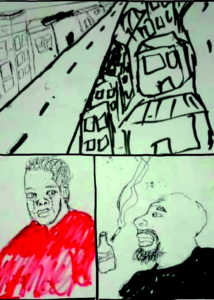
In 2009 I lived with my family in a village called Baraka in Congo. We were a family of five: my father, my mother, and my two younger brothers, Omari and Eddy. My father did not take care of the family. Instead, we depended on my mother to do odd jobs or farm so that we could eat and have clothes. My father loved a life of leisure and was a drunkard. He never left any money for our needs.
One day my mother went out to look for work but returned with nothing. We went to bed horribly hungry, without eating anything at all. While we were sleeping my father returned home. He started banging on the door violently, demanding to be let in. My mother got up and went to open the door for him. He shouted, demanding food. When she told him there was none, he insulted and beat her. He yelled. He threatened to leave us. I felt horrible seeing my mother like this. When morning came my father left. We had no idea where he went.
Soon after, my mother became very ill, sick from the beating she had received from my father. There was no one to help us. I had to start looking for money for food and my mother’s recovery. The day I set out in search of work, I was turned away because I was still young, but I didn’t give up. My family’s suffering gave me the strength to keep searching. God helped me, and soon after I found someone who hired me to farm for them. They paid me very little, but it was enough to buy some sugar so that my siblings could drink porridge
My younger siblings stopped going to school because there was no money for school fees. I felt like the world was collapsing on me. When I walked by, people would laugh at me because of my tattered clothes. I walked through the streets begging for help. Some people gave me assistance, but others insulted me or called me a thief because of how I looked. I became like an orphan, even though I had a father and a mother.
When my clothes tore, I would take some sack string and a knife, and I would cut and sew them back together with the string. Many nights I would stay up crying. The days passed. We continued to suffer.
One night, seven months after my father beat her, my mother’s condition worsened. That very night we rushed her to the hospital. When we arrived the doctors told us that we needed to pay for her treatment. She also had many thoughts about how we would survive, because she was not well. These thoughts eventually led her to have a heart attack.
My heart ached deeply. I was overwhelmed by the suffering we were enduring. I felt I had no other options. I made up my mind to try stealing.
Walking through the market a few days later, I saw a man holding money in his hand, and he had left some on the seat of his car, which he hadn’t properly locked. My mind tempted me to take the money that was in the car. This was my chance! But my heart resisted.
I went back and forth. I thought about where I could possibly get the money to pay for my mother’s treatment. I was stuck. I needed to save her. I decided to take it. Just as I was reaching through the car window to take the money, I heard people shouting, ‘Thief!’ I panicked and dropped the money. I ran. When I was running I fell, and when I fell they caught me. Then they started beating me.
I begged for forgiveness. I pleaded ‘I am not a thief. Please forgive me. Please let me go.
The man whose money I had tried to take came and told the angry crowd to leave me alone. He looked me in the eye and spoke to me. I felt immense relief when I heard him call me ‘my child,’ and I cried tears of joy. He told me, ‘I will help pay for your mother’s hospital treatment, and I will pay for your siblings’ education, but under one condition.’
‘What is the condition?’ I asked.
He replied, ‘I want you all to be like my children because I have no child, and my wife passed away.’ I felt like God had sent me an angel. I thanked him profusely and accepted his offer. I was so happy.
*
One night, when my mother was home from the hospital and we were sitting together, just the two of us, I told her that there were things I wanted to know more about. She asked me, ‘What are the things you want to know?’ I told her that I wanted to understand what suffering is and what happiness is as well. My mother told me that just as I had once experienced, suffering can push you to do things you never expected to do.
My mother explained, ‘Sometimes God can give you suffering so that you learn a certain lesson. Suffering is something you can never get used to.’ She continued, ‘But it is important to thank God for everything and fight through our problems, only then will we find happiness.’
After sharing her thoughts that evening, my mother told me she was ready to go to sleep. I told her, ‘But I am still not satisfied, Mother.
Then she said, ‘Before I go to sleep, let me give you one last piece of advice. You can never have peace or happiness if you are not satisfied. Peace and contentment in your soul will give you lasting happiness.’
I found peace in the depths of my suffering and in the love I have for my mother.
(My name is Charles Shika Safina. I am sixteen years old. I come from Goma in the Democratic Republic of the Congo. I live in Nakivale refugee settlement. I’m a student of storytelling and I hope that, through my stories, I can change the lives of some people. I also like to draw, dance and read.)
___
Walking Away
Akili Nestor Olengo
My siblings and I were sitting in our home discussing how you can talk to your parents to make them trust you more. My sister Maria said, ‘Our parents think that we wouldn’t have the strength to walk away from a bad situation. We have tried telling them that we have already walked away from bad situations, but that is not good enough for them.’ My elder sister Jeanne argued that the issue of trust can be a source of considerable tension between youth and parents. My younger brother Christopher, my elder brother Nelson and I all agreed.
In the middle of our discussion, our parents came back from the market. They bought me shoes, and I was happy because I did not have shoes for going to church.
Jeanne said, ‘Today I will prepare a good meal. You will enjoy it.’ Nelson said let us wait for what you shall prepare for us. After a brief time, Jeanne brought beans and rice to the table for our evening meal. As we ate, our father said to Nelson and me, ‘We shall not be with you for a while. Make sure you take care of yourselves.’
‘Where are you going to be?’ Nelson asked.
My father answered, ‘We are going to Kampala, Uganda, to see whether we can get a job, and move away from this miserable life of eating green vegetables.’
Nelson agreed, saying, ‘I hope when you will reach there, everything will be okay. And you know how much we love you. We cannot spend even twenty-four hours without seeing you. How long are you going to stay there?’
‘We shall be away for only one week,’ my father answered.
My brother Nelson said, ‘I wish you a wonderful journey.’
*
When my parents started their journey from [Congo] to Kampala they were very happy about the city. My father made a friend called John and asked him how he might get a job.
John answered, ‘You have a chance. My boss is looking for another person who will replace me.’
My father asked, ‘To replace you? What have you done?’
‘Nothing wrong. I need to see my children in Ghana,’ John answered. ‘One of my children is very sick from malaria.’
John said that he was leaving the next morning, and he told my father, ‘Let us go and see my boss now.’
*
After his first month of work, my father sent some money to us.
My elder brother Nelson told our father on the phone, ‘First, one week passed, and now it has been one month. When will you come back?’
My father and mother wanted to remain there due to the beauty of the city. So my father answered, ‘We shall send you money for transport. Meet us in Kampala.’
After one week, our parents sent the money and we took the journey to Kampala. We loved the city so much. There were many kinds of foods like matooke and cassava and a lovely, mild climate too.
My brother Nelson made many friends as we adjusted to our new home. He started smoking and drinking alcohol with a new crowd of friends. After some weeks of this behavior, my parents called a family meeting.
My father began, ‘Our children, we trust you. Your friends, we don’t. We are afraid of the problems they’ll bring into your life. Look for a good friend who will advise you to follow a good path. A friend that can help you in your future life.’
‘We love you,’ my mother continued, ‘We do not hate you. From today, we don’t want to see these kinds of friends anymore.’
*
Early one morning my parents woke us up and told us to pack everything. Nelson asked where we were going and my parents answered that we were soon going to Nakivale, a refugee resettlement in the southwest of Uganda.
I was very annoyed with this information. What I did not know at the time was that my parents did not have good jobs or enough money to stay in Kampala. Once again we were forced to take a journey. I wondered how I could make good friends in the Nakivale refugee settlement. I thought, If I am angry, I will need someone to vent to. If I am sad, I want someone to tell me it is going to get better. I didn’t want to leave my friends and have to adapt to a new environment once again. I had my family, but I would be alone without friends.
*
I still live in Nakivale with my family. For now I am happy to have my best friend called Charles. He comes from a poor family of beggars and he is very humble and clever.
I don’t feel okay when I don’t have friends, because friends help me with ideas and advice and cheer me up when I’m sad. Life made me leave many friends in many different places throughout my journey. But I am here now, and I love my family so much and I am happy to have a supportive friend that guides and sustains me.
(I go by the name of Akili Nestor Olengo. I am Congolese by nationality. I live in Nakivale refugee settlement. I am 18 years old and I am a student of the storytelling workshops where I wrote my story. My hobbies are mostly related to technology. Thank you for reading my story.)
___
Two Sides of Tears
Nicole Bachoke
Life was good in our village of Kamituga in the district of Mwenga, DRC. I lived there with both of my parents, my sisters and my brother. I was the firstborn. Mugoli, my sister, was next, then Bife, my other sister, and last came my brother, John. My parents enjoyed catering to my siblings and I, and showing us care and love. Life was not hard. We had our own house, clothes, and a bicycle. We were not rich, but we lived happily, with everything we could have wanted.
Our village of Kamituga was wonderful. People loved each other and shared things. In our village, if someone got married or had a child we would celebrate it together. Sometimes we would organize parties in the village just to enjoy each other and be together. It was good for us village children to love each other like that. We were united. It was home.
One Tuesday evening, on the fifth day of July, eleven years ago, my father fell sick. We took him to the hospital. My family was in deep distress seeing him in pain. We thought that he would be treated, return home, and enjoy life with us again. The doctors treated him as best as they could, but he could not recover. They operated on him to see what was inside, but they failed to find an answer. He went to another hospital, but they too could not discover the cause of my father’s sickness. After spending a week in the hospital with no answers, we took my father back home.
He took medicine at home, but things were still not good. I wanted to take my father to an herbalist; but, my uncle, aunt and grandmother all refused. When things became so desperate that we sensed my father was about to die, my family changed their minds. We found an herbalist named Maroy. He was a tall, thin, dark-skinned gentleman dressed in a white shirt and black trousers. When we reached him, we asked Maroy what caused the sickness. He said, ‘First, take a seat while we see what to do.’

We sat down and, after some minutes, Maroy came with medicine and testing materials. After preparing his things, he took my father and started a series of tests. Soon after, the herbalist came and told us that a poison was causing my father’s illness – that it had affected all of his body. He said it was a terrible poison that would destroy my father’s intestines. Maroy tried as much as possible to treat my father, but he failed. My father died of the poison.
At the burial of my father, my uncle, aunt and grandmother decided to take all of our property. They took the house we lived in, our clothes, our utensils. They took our things by force. They left us with nothing. They said that these things were the riches of their brother. We could not do anything. We were too young and my mum was too stressed from the death of her husband. We were choked. They went with everything and said that because their brother will not be alive again, they had to take his things. This made no sense to my family and I, but we had no way to fight back.
After our father’s relatives stole our home, we moved to our neighbor’s house. One evening, our mum came and told us we were going to travel to Uganda the next day. We had to leave, she said, because we had nothing in our hand, and our neighbors had helped us as much as they could. We packed our things that very night, feeling devastated and alone.
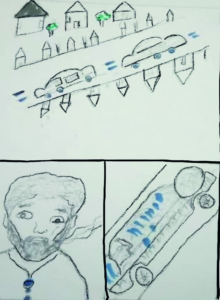
It wasn’t long before we faced another tragedy. When we set off in our car the next morning, a passing car knocked into us and pushed us off the road. We survived the accident. God saved us, along with the other people involved. But still we could not eat or drink. We had no money. We faced hunger. We faced bad people – people who took all of the things that we had, what little clothes we had left, and our shoes. But, again, we survived.
When we arrived in Uganda we found things were harder than we imagined. My mum moved us into a house in Nakivale near the police station where we could stay with the whole family. My siblings and I could not get jobs because we were underage. Our English was poor, and everything was in English. We could not go to school. We could not eat. Everything in our lives had changed. We lived this way, lost and scared, for a while. We could not get any help from my relatives or friends. We faced a difficult time during that moment.
One day, six months later, a gentleman visited us. His name was Joshua. He was our neighbor. The day we arrived, he was there; our house and his were at the same place in one compound. We were still suffering when Joshua visited us. We had no schooling and there was not enough food to eat. There was not much food for us. Joshua approached us, he explained, because my mother was generous, despite our situation, and my sisters and I were kind, funny, and respectful to him. We had spent some time in passing with Joshua, sharing ideas about life and joking together. When he approached us that day, Joshua offered to teach my mother, my sisters, and me English, and my family accepted his help. Seven months later, Joshua offered my sister Mugoli a job at his school.
Mugoli is intelligent and kind and she had started speaking English very well. Now she has a good post, and at the end of the first month they gave Mugoli four hundred dollars. My sisters and I have started schooling, wearing new clothes, eating well and buying water to drink. Next year I will get my diploma and start looking for a job so that I too may help my family.
In the course of one year, our life has changed from a hard life to a good life. In our life we call Jesus each and every day. Even when our life is good, when we have joy, peace, and money, we call our Lord. Those relatives who took our property? One among them is now poor and the others [are] suffering in their lives. They are going through hard times. I believe they deserve this fate.
We keep our father’s memory alive because he was loving, he was kind, he taught us how to live with people, and he taught us how to understand the world. Through all I have been through, I have learned how to be patient no matter the difficulties you are facing. I have learned to never take someone’s property while it is not yours. Like the title of this story suggests, today you might be rich but tomorrow you could just as easily become poor. We can’t know the future, all we can do is live the best we can and take care of each other. In order to survive the hardships we endure we must love each other, respect and unite.
(My name is Nicole Bachoke Joshwa. I am sixteen years old. I live in Nakivale refugee settlement. Before coming here, I was living in Democratic Republic of the Congo. In my free time I like to write and revise my stories. I think a lot about how I am going to become a storyteller in the world because I like writing stories.) ▪