
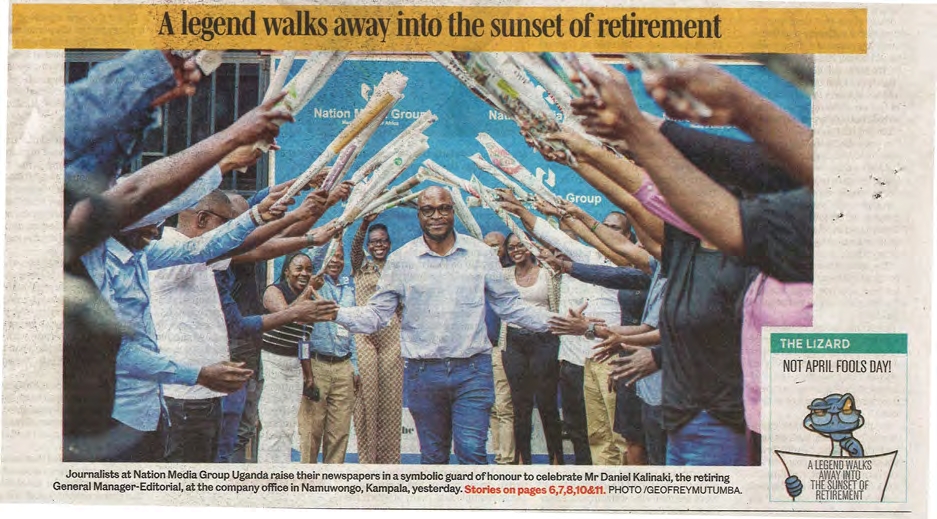
On April 1, Fools’ Day, the Daily Monitor newspaper of Uganda was mostly dedicated to the exit of its long-serving editorial manager, Daniel Kalinaki, who, by his own account, had spent three decades with the news outlet. The front-page photo showed him taking a symbolic guard of honor, of the kind usually given to athletes who win trophies for themselves or their countries, as he touched hands with colleagues who flanked him. The newspaper described Kalinaki – bald of head, free of corpulence, cautious of belt in tight-fitting jeans, and seemingly in the prime of his life at forty-five – as a “legend [walking] away into the sunset of retirement.” And there was more inside: five pages of coverage bizarrely focusing on Kalinaki’s exit, complete with the ruminations of former colleagues who knew him and could say what kind of manager he had been. Their praise of him was quite compelling.
For those reading the newspaper that day who didn’t know who Kalinaki was, the immediate fear would almost certainly have been that an important man had died. But the man in question was very much alive, reading his own obituaries the day after he had finally clocked out of the Monitor, and perhaps even playing tennis at his sports club just outside Kampala. But for those reading the newspaper who knew Kalinaki and understood the existential challenges the Monitor faces, all that newsprint about one man’s “retirement” seemed dubious if not plainly vulgar. It didn’t make sense, and it seemed like an expensive gesture for the Monitor. Even Wafula Oguttu, the man who founded the Monitor, was not so feted when he retired.
Kalinaki, who held his final Monitor post for many years, was himself aware of the predicament – in its finances as well as its journalism – that the newspaper finds itself in three decades after its launch by a small but indefatigable group of Ugandan journalists who sought to build a platform independent of the farthest tentacles of the government. The day after he retired, in his weekly column, Kalinaki was offering advice to those he had left behind, writing that the Monitor should “reinvent itself by creating and curating new conversations about possibilities for the future, and the Uganda we want. It needs to stop merely trying to survive and find new ways to thrive.”
Under any and all circumstances this is good advice, and it should be taken by those to whom it may concern. The only problem is that the Monitor under Kalinaki should have started following his advice maybe 10 years ago, when he, Kalinaki, rose to the top of editorial leadership and could help decide its fate for the next half-century. Monitor has been in a long, squalid decline for as long as Kalinaki has been looking after the newsroom, which shrank as good journalists left and were replaced by others not so good. In the end, after consolidating his authority, Kalinaki had no intellectual rivals within the ecosystem he presided over “like a colossus,” as his former Joe Ageyo put it, somewhat pridefully, and no one was in a better place than Kalinaki to rescue the Monitor, if it required rescuing. But Kalinaki’s rich, belated insight about the possibility of the Monitor convening a Moshi-style consensus-building conference around politics, never mind that a journalist should not be saying that, crucially came after Kalinaki had pulled out of the Monitor, not when he was inside it and could be asked to implement what was key for business.
Kalinaki inherited an institution that had built a reputation as a lodestar of bold and outrageously good journalism, so tenacious that President Yoweri Museveni grew suspicious of the Monitor and even came to perceive it as the last bastion of opposition to him. Kalinaki left behind a cowardly institution, still despised by the president but now weakened and not nearly as able as it once had been to hold the president accountable. All the egregious editorial mistakes, inevitable in a newsroom without the keen-eyed editors it once had, left the Monitor exposed to litigants ranging from Pius Bigirimana, the judiciary permanent secretary, to Museveni, who, for the first time ever, successfully sued the newspaper in a defamation case over a report (initially published in the Wall Street Journal) that Museveni and his family had secretly received COVID-19 jabs while Ugandans died.
The Monitor apologized, as it has been apologizing to others lately for perceived editorial errors of judgment, and asked to settle with the president out of court. Museveni got a kick out of the episode. He had warned that the Monitor would pay him – and inevitably it did. Every alum of the Monitor should have been sickened by the photo, in April 2023, of National Resistance Movement Secretariat members and lawyers happily posing with a dummy cheque in the amount of Shs. 300 million, awarded to Museveni as damages for defamation. Museveni, who didn’t need the cash as much as the Monitor was desperate not to lose it, quickly donated the money to his party. The Monitor was told to back off the president, and soon the newspaper was being threatened by others for its good-faith reporting.
For most of the 34 years of its existence, the Monitor was widely known for speaking truth to power and exposing gross right abuses and corruption, a stance for which it paid a heavy price. Its founding editors had been prescient in their prediction that the NRM government’s veneer of democracy under Museveni would finally wear off, with the regime morphing into full-blown authoritarianism. The newspaper challenged draconian legal provisions over the offense of sedition and the criminalization of false news.
The Monitor tended to report all the news worth reporting, but it knew it had a wider social contract with the citizens, one built on the newspaper’s reputation as a bulwark against the forces of impunity and as an institution effectively fighting for liberty. For long spells, the NRM government, and particularly the president, labelled the Monitor an enemy of the state. The newspaper has been closed twice, most recently in 2013, when it published the contents of a letter written by a spy chief, Gen. David Sejusa, who warned of a plot to kill senior army officers and politicians who opposed hereditary rule in Uganda. Eventually, not surprisingly, Uganda’s military intelligence concluded that the Monitor, with an allegedly sinister agenda to destroy the NRM government, operated as an intelligence organ of the opposition.
But the last decade – despite the relaunches and the attempts at masterful headline merchandising – has spelt the death knell for this crumbling publication. The Monitor’s copy sales, which at its peak in the mid-2000s could reach 40,000 daily, have dwindled to an average of 8,000 during weekdays and 5,000 on weekends. Most recently, amid rapidly declining revenue, the Monitor followed the New Vision’s example in having just one paper for the weekend. The Monitor has recorded losses for the last two consecutive financial years, a trend just as worrisome as the decline of the Monitor’s journalism: the numerous clerical and knowledge errors in headlines and stories, the lost opportunities for storytelling, the stories avoided. Perhaps surreally, the “government-owned” New Vision, even with its own financial challenges, often appears to be the superior newspaper. That was never the case two decades ago.
The crisis at the Monitor is multi-faceted; the newspaper is not the only one, at home and abroad, to suffer heavily from changing trends in how people consume the news. Like other newspapers, the Monitor is competing with social media for influence. But it has challenges that are uniquely its own, sometimes carried over from the Nairobi-based parent company, Nation Media Group, which has tended to dictate how things proceed and to replicate in Kampala what seems to be working (or will work) in Nairobi.
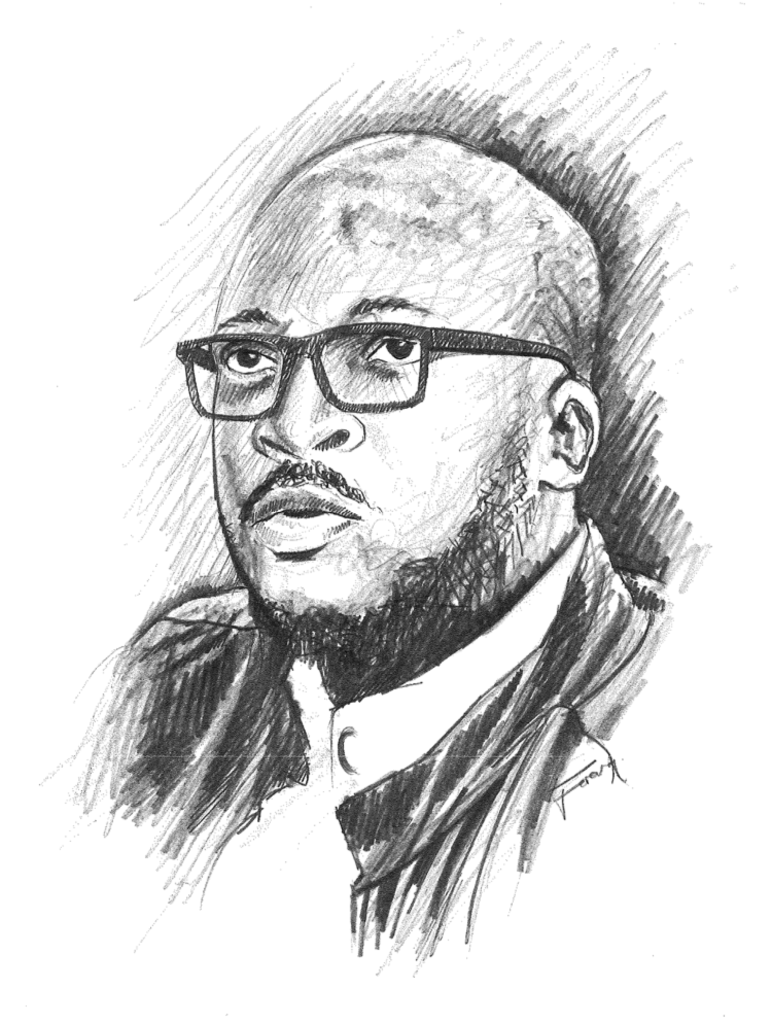
Daniel Kalinaki, who recently left the Daily Monitor after serving for years as the editorial manager, illustrated by Farouq Ssebaggala
The Ugandan government’s advertising ban on the Monitor, decreed years ago, has largely remained in place, starving the company of what should have been a guaranteed source of revenue. The digital plan has not paid off for the Monitor, whose stories are often behind a paywall, because readers can tell that they will learn nothing from a 300-word story about yesterday’s appearance of Kizza Besigye in court. More strikingly, perhaps, the Monitor has proved woefully unable to stop its best reporters from leaving. Almost every serious journalist in Uganda is a former alum of the Monitor, and many of them, as important as they were, did not even last a decade in that newsroom.
A constant presence in Namuwongo, the Kampala suburb where the Monitor newsroom is mostly domiciled, was Kalinaki. He has said that he first wrote for the paper as a high-school kid, and for some years he was a sports and news stringer before he became more or less a staffer at the turn of the century. His long tenure at the Monitor spawned not-so-nice jokes about his age (who went to school with him?), about his ability to survive a tempestuous and intrigue-filled newsroom (how come he is still there?), and even about his place in the Monitor canon (is he special?). Although he never broke a powerful story in the brilliant drive-by style of, say, Andrew Mwenda, and was not a distinguished writer of enterprising features in the way that some others were, editors like Charles Onyango-Obbo and the late Kevin Ogen Aliro liked him.
In private conversation Kalinaki sounded convincing, and it helped that he had had a good education. Soft-spoken and professing a vaguely cerebral sensibility, he was esteemed by editors who could task him with producing a routine story for the front page, say the results of an important opinion poll. He was versatile, with interest in everything from sports to politics. And although he rose through the ranks to finally lead the newsroom, and wrote a decent book about Besigye’s struggle, many felt that he was never, in the main, as consequential as others who led the Monitor before him or, for that matter, even some who never had the opportunity to lead. Some felt that he possessed the rare ability to put on a kind of intelligent calm while feeling none of it, a skill that was a source of amusement as much as annoyance for his detractors, of course, because many of them were friends who fell out with him and never forgave him.
One of them was Eriasa Mukiibi Sserunjogi, whom he recruited from the Independent to become the editor of the Monitor’s weekend editions. Sserunjogi’s editions were often stellar, with wide and interesting offerings in news, features, and commentary. But Sserunjogi and Kalinaki eventually disagreed because he, Sserunjogi, felt he did not have the freedom to do his work and put out his best paper possible. Sometimes he risked having no paper at all, and one day he put his foot down. He told Kalinaki he was no longer obligated to share his publishing plans and that his boss, since he had hired him, was also free to fire him. Sserunjogi was transferred into a less visible role.
Later, when the newspaper retrenched a number of prominent and seasoned staff, including veteran editor Patrick Matsiko wa Mucoori, Sserunjogi pleaded that he be retrenched instead of Matsiko wa Mucoori, who is said to have wept when he found out that he had lost his job. Kalinaki told Sserunjogi that the company jettisoned those it wanted to jettison, and refused his offer to go instead of his esteemed colleague.
Tensions between the editorial manager and the former weekend editor rose so sharply that Sserunjogi put what was, for all intents and purposes, a kind of curse on Kalinaki. He told his boss one day, after he decided to quit of his own volition, that, unlike some others who wanted Kalinaki fired or wished him misfortune, he hoped that Kalinaki would keep his job and have his name on the masthead while the Monitor deteriorated into a useless thing. The curse, such as it was, had almost certainly come into force by the time Kalinaki left the Monitor. The newspaper is a shadow of itself, and there are people in Kampala, more in pain than joy, who predict death in the not-so-distant future.
To the extent that the Monitor can survive, much of what happens next will depend more on the desire of its dwindling editorial staff to emulate the excellence of those who came before them. Morale may not be so high these days. Before Kalinaki’s departure from the Monitor, a detective journalist named Andrew Natumanya, who goes by the X name of Ninye Tabz, published details and dealings of a private company, named Zulu Media, owned almost entirely by Kalinaki. His wife’s share in Zulu Media is an odd 1%, causing many who discovered this simple fact to sneer. Tabz, in revealing this company that had done business with the government via the Ministry of Works and Transport, simply wondered how it was possible for a senior journalist to be so engaged with the government. Many in the journalism community wanted to know what was going on.
Kalinaki has not been charged with a crime and has a right, as all Ugandans do, to engage in private business and even to prosper. But news of Zulu Media drew concern from Monitor staffers and alumni, not least because it was known that many journalists have been fired over the years, justifiably so, for apparent breaches of trust.
Some Ugandan journalists are known to accept cash from potential advertisers for favorable coverage, in the process denying their employers funds in advertising revenue. Good investigative stories are spiked, and companies may no longer feel the need to order adverts if they can transact directly with the newsroom. This is a bit like having a bartender who sells his own bottles of Uganda Waragi while the proprietor’s goods go unsold. It doesn’t end well for all involved.
At the Monitor through the years, Kalinaki attended some of the disciplinary hearings that expelled a few faithless journalists. At all times he defended integrity (his own and the Monitor’s) and kept his dignity (in his columns and public appearances) as perhaps “the last of the Mohicans,” as Robert Kabushenga called him. But this wonderful impression cannot be a badge of honor in the deepest sense of the word if it is the Monitor about which we are talking: one of the truly great institutions of post-colonial Uganda. Another newsroom leader might have left sooner if they felt they were being let down, by their bosses or their journalists, or if they felt they could not save the paper they loved dearly.
To survive while the Monitor dies would be so horrible an event for everyone, certainly for those of us who care deeply. And yet Kalinaki writes, after saying au revoir, that the Monitor’s core role is to try “to positively influence society and the inevitable looming change” amid the political transition from Museveni. Has the Monitor under him been a negative influence on society? The weekly columns form the basis of Kalinaki’s legacy as a Monitor man. His writings have often been sharp but devoid of clarity, even as some readers praise them for what must be their highfalutin, semi-colon-rich grandeur more than for what they honestly teach. The 700-word columns impress, but they do not educate in a big-picture way. They catch the eye, but they are forgettable. They are regular and uneven at once. As useful as Kalinaki is said to have been for the Monitor, to spend one’s entire productive career in one place and then “retire” at forty-five sounds regrettable. Perhaps he can still get his doctorate, as others who left before him did, or write hefty essays that will be talked about decades later, which is probably what he should try doing now that the Monitor is in his past. It may be too late for him to fulfill his potential, but one, at last, feels compelled to wish him good luck.
As for the Monitor, not so long ago the Aga Khan Fund for Economic Development sold its majority stake, at 54 percent, to Taarifa Ltd, a company owned by Tanzanian billionaire Rostam Azizi. Whether or not he proves a good media owner is up in the air; if the example of the Jeff Bezos-owned Washington Post is anything to go by, with all the cuts that have led to widespread newsroom losses and even more widespread suffering, being owned by a billionaire is not necessarily a fortunate thing.
Nation Media Group, which owns the Monitor, is not doing well and is constantly trying to restructure itself. The conglomerate reported a net loss of $2.3 million in 2025, up from $1.9 million in 2024. It has tried to experiment with possible revenue models, but times have been hard since the pandemic period. It sought to re-align its platforms to focus largely on digital-first, data-driven content. It rolled out paywalls to move away from reliance on advertising revenue, seeking subscriptions from audiences. But in Nairobi, as in Kampala, low subscriber numbers have created doubt about the commercial viability of this digital strategy. There, as here, discerning subscribers prefer to pay for high-quality journalism, while the so-called “premium content,” including what is published by the Monitor online, is often recycled news that readers can find elsewhere for free.
Azizi’s interest in Nation Media Group is thus questionable, even as he promises to support “credible and independent journalism” that is “essential for the development of our society.” Some worry that Azizi, an influential member of Tanzania’s ruling party, simply wants clout as the latest billionaire to control a major news platform. Azizi continues to enjoy close ties with Tanzanian President Samia Suluhu Hassan and President William Ruto of Kenya. It has not been said whether Museveni is Azizi’s friend or enemy, but maybe, apropos of the Monitor, we will know soon enough. ▪
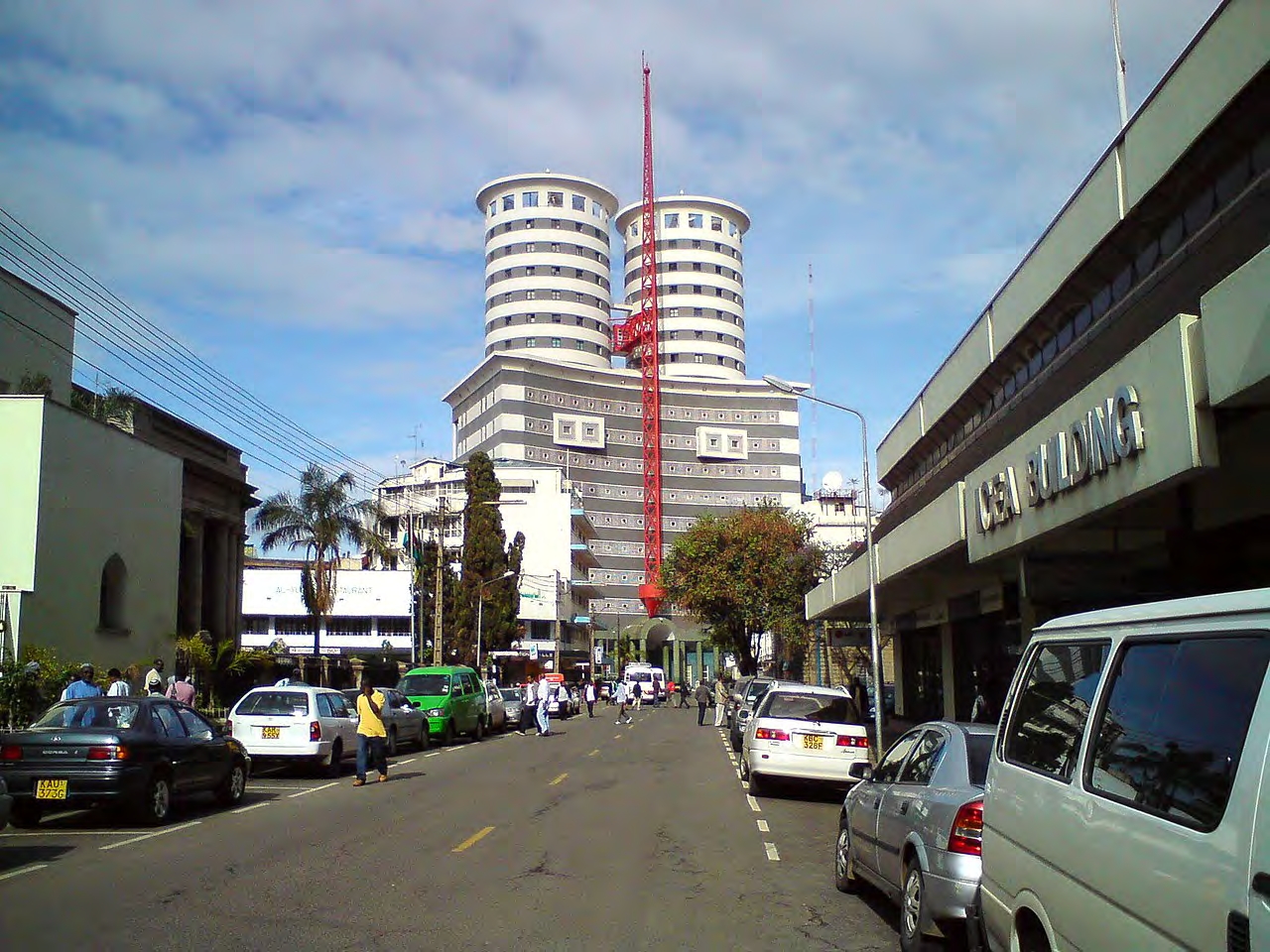
Cover image: A street view of Nation Center, headquarters of Nation Media Group, in Nairobi, Kenya, via Wikimedia Commons