
I
If these are the last days of the long rule of President Yoweri Museveni, as some Ugandans seem to think, then his last days will be very long and winding. Museveni was sworn in for a seventh consecutive five-year term only in May, and since then he has seemed to go about his work with the predictability that has marked his long reign. The 81-year-old is inevitable – at his inauguration if not at an event to preside over the graduation of the latest batch of soldiers who will protect his rule, as indeed he was only a few days ago. It can seem that Museveni is not quite going anywhere.
And yet something unmistakably consequential is now happening in Uganda: even as Museveni remains in the presidency, his eldest son and heir apparent, Gen. Muhoozi Kainerugaba, has seized power to become the country’s de facto leader. Those who were looking for a formal declaration of succession, even a casual ceremony where Museveni points at Kainerugaba as his successor the way Kenya’s Daniel arap Moi once gestured at a young Uhuru Kenyatta, are being too optimistic. In any event, this is not how we know Museveni, not how we expect him to behave. It is now apparent that Kainerugaba, as the top military commander, will rule Uganda whilst his father remains in charge, if not as a dry run for Kainerugaba’s own presidency then as a uniquely Ugandan thing that would test the foundation of Museveni’s succession strategy.
When Museveni first took power by force in 1986, Kainerugaba was thirteen. At fifty-two, Kainerugaba has reached the age when sons can tell their fathers what to do and can even order their lives. Yet one suspects that with these two – Museveni being the kind of man we believe him to be – the relationship between father and son is unusually complex, sustained not by affection but their desire right now to preserve what is finally at stake: family rule over Uganda.
In an amusing expression of self-consciousness, Kainerugaba recently said on social platform X – a dangerous tool in his arsenal, one from which he makes his most powerful pronouncements – that his father never once told him he loved him. But Kainerugaba was sure his father loved him, the army chief pointed out, rebuffing the shouted pronouncements of a fan who had professed love for him. The question of whether there is deep filial love between Museveni and Kainerugaba is thus not as important as the question as to whether they are comrades in purpose: Kainerugaba works for Museveni, and the father could also be said to be working for the son. That is their point of reference, the point in the circle where their interests converge.
If pictures show us anything, Kainerugaba almost certainly fears his father as much as we do. Like us, Kainerugaba has studied Museveni from a distance, never quite being allowed entry into his father’s mind. One cannot imagine them having tea together, or joking about the big-bummed goddesses Kainerugaba says he prefers, or discussing their nightmares. To be Museveni’s eldest son is to bear a heavy burden of responsibility, and Kainerugaba has probably come to his own tortured conclusions about what it means to be his father’s heir. By his own pronouncements, it would seem that he has decided he ought to become the president of Uganda. And it seems that, in his quest to achieve presidential authority, he has determined that his path will not follow that taken by his father. It will veer wildly off the course charted by Museveni in the last four decades, with predictable as well as unpredictable consequences for Uganda.
Like many post-independence African states, Uganda has endured decades of political instability and violent conflict. Following independence in 1962, the country quickly descended into political turmoil, driven by poor governance, economic mismanagement, and the struggle over state power. Idi Amin’s 1971 coup ushered in one of the most violent and repressive periods in Uganda’s history; Amin’s regime oversaw the collapse of state institutions and widespread human rights abuses, including torture and extrajudicial killings.
Following the fall of Amin in 1979, Uganda entered another turbulent period marked by insurgencies, civil unrest, and competing armed groups. Government forces struggled to suppress several rebellions, leading to internal fragmentation. The state became deeply contested, increasingly unable to provide basic services and, in many instances, either too weak or unwilling to prevent its own army from committing atrocities against civilians.
After Museveni seized power in 1986, he confronted two fundamental challenges: establishing the state’s monopoly over the means of violence and constructing a new and legitimate political order. He presented himself as the good soldier, so to say, one who seemed willing to build a broad-based coalition with a range of actors whose support was necessary not just to retain hard-own power but also to project himself as a statesman.
This strategy by Museveni has been explained most compellingly in a new book by Gerald Bareebe, a Ugandan scholar who is an associate professor of politics at York University in Toronto. In Social Structures and the Making of Museveni’s Civil Authoritarian Regime in Uganda, Bareebe argues that although Museveni’s National Resistance Army (NRA) achieved a decisive military victory, the new regime inherited a “residual social structure” – a network of resilient and deeply entrenched social groups with enduring political influence – that it sought to preserve rather than destroy. This network included traditional monarchies, religious institutions, landed elites, and long-established political parties that had survived successive conflicts. Instead of dismantling these competing centres of authority, the NRA – institutionalized as the National Resistance Movement, or NRM – bargained with, co-opted, accommodated, and, at times, repressed them. The result, according to Bareebe, was the emergence of a civil authoritarian regime for which political control depended not solely on coercion but also on continuous negotiation with powerful actors in society.
Bareebe does not downplay the authoritarian character of the NRM regime. He acknowledges that coercion, even of a very hurtful kind, remains central to the survival of the regime. Yet Museveni has increasingly found it politically costly and strategically risky to rely exclusively on violence to manage entrenched social groups and broader political contestation. In some instances, Bareebe writes, resistance from influential social actors has even compelled the government to outsource repression to non-state or semi-official actors, including vigilante and paramilitary groups, allowing the regime to minimize the political costs associated with direct state violence.
Museveni’s four decades in power have seen him survive economic crises, armed rebellions, constitutional crises, international criticism, and several electoral challenges. Conventional explanations for the NRM’s remarkable durability typically emphasize military repression, electoral manipulation, corruption, and a fragmented opposition. But all that offers only a partial explanation: Museveni’s NRA inherited a country that was deeply divided politically and socially but retained resilient social institutions predating colonialism. Rather than eliminate alternative centres of power, Museveni gradually incorporated many of them into the post-1986 political order through alliance-building and selective patronage, so that we have in Uganda today a distinctive form of authoritarianism that leaves room for the ability to bargain.
For Kainerugaba, however, the time for haggling has long been over. He has jailed his own friends over alleged corruption since taking over as army chief in 2024, building a reputation for himself as uncompromising. He joined the army in the late 1990s via a stint as a member of the Local Defence Unit, a reserve force for the military. Later, after attending a cadet officers’ course at Sandhurst, the British Royal Military Academy, Kainerugaba joined the presidential guard unit and was instrumental in its development as a muscular arm of the military. There have always been questions about his fast rise in the army, with some critics dubbing his potential for leadership as the “Muhoozi Project.”
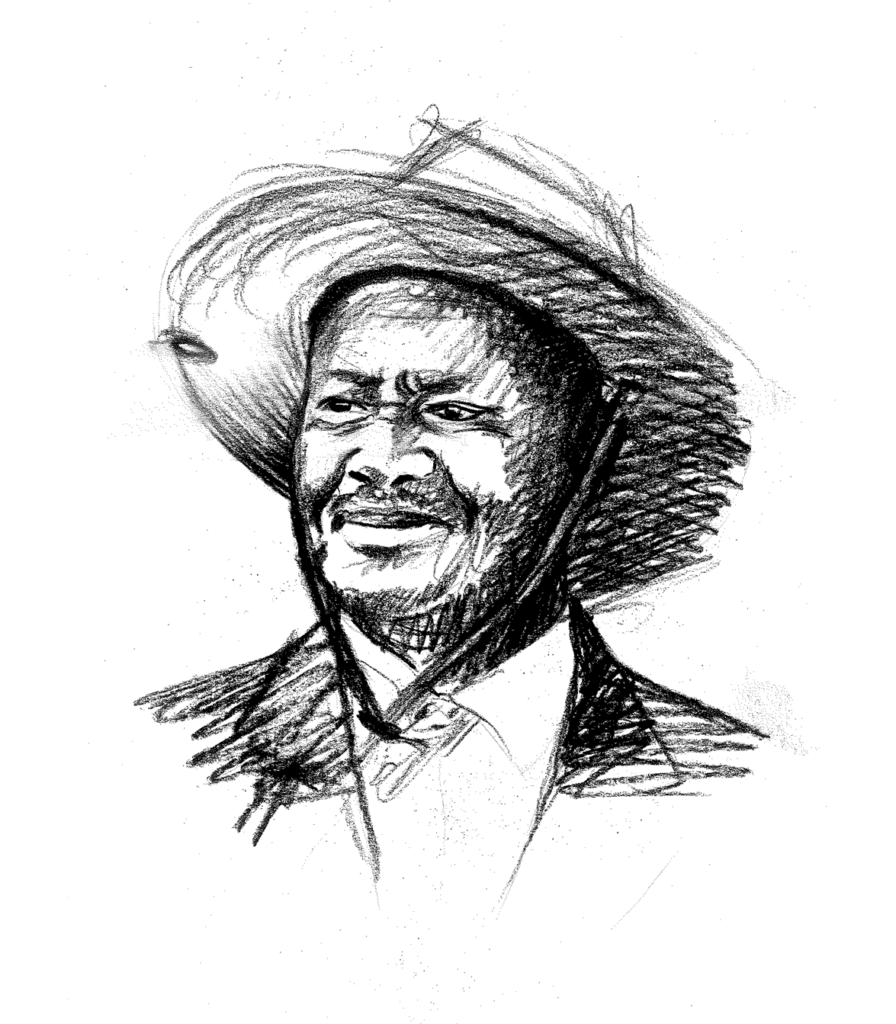
Although Museveni has never explicitly denied that he sees his son as a potential president, over the years he has suggested that he has high expectations of Kainerugaba. Once, at an event in the mid-2000s for the children of deceased NRA fighters, Museveni spoke of Kainerugaba as his “avenger,” pointing out that he named him Muhoozi – a Runyankore word that refers to the act of avenging – in the hope that the boy would avenge his father’s death if Museveni died in the struggle. More recently, at a birthday celebration for Kainerugaba, Museveni warned corrupt government officials that Kainerugaba would not tolerate those who stole from the people, with the unstated implication that the son was destined to crack the whip if and when he became president.
This perceived intolerance of corruption is the main talking point for those who promote a future Kainerugaba presidency. His supporters say Uganda needs the stance of a leader as harsh as Rwanda’s Paul Kagame, who hogs power and controls resources to the exclusion of everyone else. Kainerugaba says he is suspicious of the NRM and its bloated leadership, even though the NRM remains Museveni’s party. At some point before January’s general elections, with Kainerugaba’s Patriotic League of Uganda (PLU) political group threatening to cannibalize the NRM with persistent attacks against the ruling party, Museveni warned Kainerugaba’s camp against “unprincipled” disagreements.
When Kahinda Otafiire, a historical leader of the NRA, opposed the political rise of Kainerugaba, the PLU wanted him fired as a government minister. Kainerugaba himself has said he would arrest Otafiire if his father allowed it, even though some of his followers warn that arresting Otafiire is like going after your own uncle. When Miria Matembe, a wonderfully cantankerous woman who demands the respect she has earned for her unfailingly pro-democracy stance, railed against Kainerugaba as the possible reincarnation of Amin, she went missing for days before resurfacing to face criminal charges. And in a telling picture, taken days before she was put under house arrest and stripped of her authority, former parliamentary speaker Anita Among, flanked by her husband, appears to gesture for mercy from the army chief, who seems unconvinced and will soon execute an operation to thoroughly search Among’s houses and seize her fleet of luxury vehicles. Among is disgraced only days after attending a birthday event for Kainerugaba at which she tells lawmakers that she will do everything to pave the army chief’s path to the presidency. She says, obviously in vain, that Kainerugaba should relax in the knowledge that all opposition will be “walloped” in the Twelfth Parliament she hopes to lead. In that moment, before the fall, she does not yet know that she will return to the parliamentary building a backbencher, if she ever returns at all. Although the operation against Among is what many Ugandans wanted and demanded, the spectacle was also politically motivated, intended to beat down a politician who, even as a strong ally, was thought to be too cunning to be trusted. Among’s hands had to be amputated. As it turns out, Kainerugaba, himself the author of a book about the NRA’s “tradition of manoeuvre,” has no use for flexibility when it comes to the most important manoeuvre of his career – and perhaps even of his life.
The ongoing show of force, on the part of Kainerugaba, may work only up to a certain point, especially as long as Museveni is still plotting his own manoeuvres. Even though he has many followers among lawmakers, including Speaker Jacob Oboth and Deputy Speaker Thomas Tayebwa, many influential politicians are yet to line up behind Kainerugaba. Their loyalty is to the father, not the son. Museveni himself appeared to vex Kainerugaba with his ministerial selections, retaining some of Kainerugaba’s most trenchant critics. Chris Baryomunsi, who declared Kainerugaba to be suffering from Peter Pan syndrome, was named the health minister while Otafiire, the erstwhile interior minister, was put in charge of water and the environment. It was a classic Museveni gesture to keep the critics close, especially if they have not publicly disavowed him.
II
This has always been the NRA style: the threat of violence to intimidate rivals while preserving the possibility to talk peace. Where repression proves unavoidable, it is often followed by negotiation and reconciliation. Perhaps there is no better illustration of this nature of the NRM’s civil authoritarian rule than the ruling party’s relationship with traditional monarchies, an entanglement complicated now by the emerging possibility of hereditary rule should Kainerugaba succeed his father in the presidency. Now, more than ever since the 1980s, traditional kingdoms are re-emerging as vital centers of power, and their relationship with the presidency may have to be renegotiated amid the ongoing presidential transition from Museveni to Kainerugaba, from father to son.
The British colonial administrators chose to incorporate rather than abolish traditional institutions by granting them varying degrees of autonomy. Buganda, for example, was granted extensive privileges that included control over significant landholdings and substantial political autonomy. This arrangement established monarchies in Uganda as centers of authority that survived successive governments despite attempts by regimes such as Obote and Amin to eliminate monarchies.
The monarchies’ enduring political influence is reflected in the fact that every post-independence regime in Uganda struggled to manage their sway. For instance, Obote abolished monarchies after attacking the Buganda king’s palace in 1966. Amin maintained the ban but didn’t succeed in eliminating monarchist sentiment. Museveni’s NRA adopted a different strategy, promising to restore traditional kingdoms. As a result, monarchists in Buganda and in other parts of the country supported his rebellion against Obote. They provided shelter, intelligence and food to NRA fighters because they considered the success of the NRA as the only way to get their treasured monarchies restored. Kingdoms were finally restored in 1993, with limited cultural and social authority but no formal political authority.
Still, relations between the central government and monarchies have frequently demonstrated the limits of state power, and have tested Museveni’s commitment to dealmaking. The 2009 Kayunga Crisis offers perhaps the clearest example: the NRM government’s efforts to block Kabaka Ronald Muwenda Mutebi from visiting Bugerere triggered widespread protests throughout central Uganda. These demonstrations were violently suppressed by a combined force of the army and the police. A few months after the deadly protests, the government started negotiations with Buganda’s cultural leaders that culminated in Mutebi’s visit to Bugerere.
The episode revealed an important political reality: Although Buganda possesses neither an army nor formal state authority, it retains enormous mobilization capacity. Its leaders command widespread public loyalty, maintain influential media platforms, and possess sufficient legitimacy to force negotiations. Rather than risk prolonged confrontation with Buganda, the government eventually reached a compromise that preserved the king’s dignity. This pattern has repeated itself in other disputes between kingdoms and the central government, including disagreements over federalism and constitutional reforms.
The 2016 Rwenzururu Crisis also illustrated Museveni’s carrot-and-stick strategy. The standoff between Omusinga Charles Wesley Mumbere and the central government culminated in the storming of his palace in Kasese after authorities accused elements within the Obusinga bwa Rwenzururu of seeking to secede from Uganda. More than 100 people were killed, and the king and 200 of his subjects were arrested over treason and other charges. Yet even this violent confrontation eventually gave way to negotiation. The government accepted mediation by religious and cultural leaders from other kingdoms, which ultimately contributed to the dropping of criminal charges against Mumbere. His return to Kasese in October 2024 was carefully managed, and thousands of his jubilant people came into the streets to welcome their king after nearly seven years of house arrest.
We see more of the same in Museveni’s engagement with church leaders. Relations between the NRM and religious institutions have periodically oscillated between cooperation and confrontation, with the regime seeking to exploit the legitimacy of churches for political reasons while simultaneously resisting their criticism of state excesses. Meetings between the president and religious leaders have often followed periods of heightened tension. Rather than simply suppressing the churches in response to their criticism of his rule, Museveni has frequently resorted to dialogue and engagement. In 2018 Museveni moved quickly to meet Kampala Archbishop Cyprian Kizito Lwanga after the Catholic primate criticized authorities for the violent treatment of opposition leader Bobi Wine, whose real name is Robert Kyagulanyi Ssentamu.
Even now, as he ages and cedes some power to his son, Museveni shows a remarkable ability to co-opt his perceived enemies rather than destroy them. He tolerated Among, the ousted speaker, for months when others in the NRM were screaming that she was amassing the capacity to oust him. Among, who campaigned aggressively for Museveni for his current term, may still spend some days in jail and deservedly lose much of her wealth, but there is a very good chance she will reach a settlement with Museveni that allows her to escape justice for her alleged transgressions. Wine is said to be trying to negotiate with the presidency for the right to return home without facing embarrassment or worse, even as Kainerugaba vows to detain the exiled opposition leader on arrival.
The people associated with Kainerugaba’s PLU have shown that they are guided mostly by their (apparent) devotion to the army chief. Daudi Kabanda, the lawmaker who until recently was the group’s secretary-general and sees himself as a sort of John the Baptist figure, has called for the punishment of Odrek Rwabwogo, the president’s son-in-law, over alleged corruption. Although Rwabwogo has never said he wants to be president, he is an intriguing fellow in palace politics because he presents himself, knowingly or not, as “the anti-Kainerugaba” figure, articulate in his description of what the NRM must do to renew itself. He posts videos of himself as a brand-new ideologue with a keen sense of the ideals of the NRM, causing Kabanda and others to erupt in indignation. Rwabwogo is also blamed by some for the unflattering comparison, in online memes, of Kainerugaba to Absalom, the delinquent son of King David who screwed his father’s women and was killed in a botched coup.
Rwabwogo denies responsibility for such attacks on Kainerugaba. But in a recent video, posted after Kainerugaba ordered the arrest of critics such as former Kampala Mayor Erias Lukwago, Rwabwogo says that Museveni must be protected from those who want to monopolize access to him or seek to subvert what the president stands for. Lukwago, a self-respecting attorney who had brought charges against Kainerugaba for his alleged role in the abduction from Kenya of Kizza Besigye in 2024, was seized from his house in Kampala by soldiers who took him to Kainerugaba’s “basement,” so said the army chief himself as he posted photos of a blindfolded Lukwago appearing to plead for his life. The day they grabbed Lukwago, Kainerugaba tweeted that Ugandans would learn that there is “method to the madness” of his leadership. The episode shocked the nation, and the very ill Lukwago remains in jail despite pleas for his release on compassionate grounds.
“How do we ensure unity of the elite on what really matters for the country and keep it together?” Rwabwogo asks in the video. “I want you to know that freedom does not aways beget freedom. It sometimes breeds anarchy and a resurgence of what is in the foundational DNA.” Predictably, some in PLU saw this message as an attack against Kainerugaba, who quickly told Kabanda to back off when the consigliere sought to respond to Rwabwogo. For Museveni’s son-in-law, Ugandan history has an “uncanny habit of repeating itself,” the reason he wants reforms while Museveni is still alive, not when he is gone. Rwabwogo has such audacity, and one can see why he irritates Kainerugaba. He is a grateful member of the first family who condescends to present an alternative vision for Uganda after Museveni. Still, the frantic man has a point. Even for a regime that has spent decades in power, especially for a regime that has spent so much time in power, stability does not suddenly emerge from absolute coercion. Kainerugaba may very well succeed Museveni, but he will need more than raw force to succeed.▪
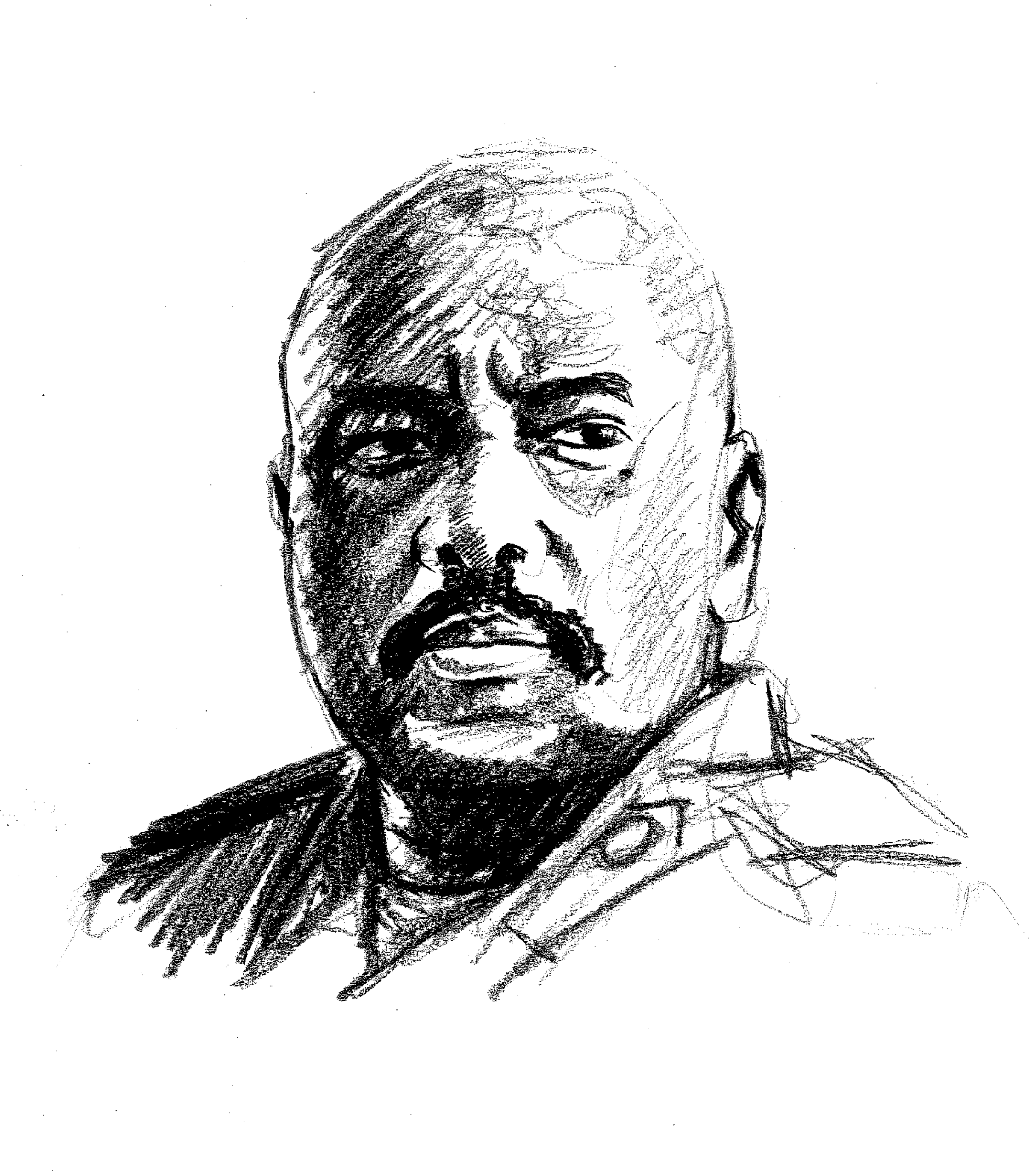
Cover image: Gen. Muhoozi Kainerugaba; illustrated for TWR by Farooq Ssebaggala