
Mona Taha described her firm shift to art, years after graduating from Makerere University with a degree in development economics, as a “real risk” that grew from a strong desire “to take a chance on myself and on this thing that I enjoyed doing.” She had been self-employed, working as an assistant in her father’s business after failing to find employment in the civil service and other places. While she had no formal training as an artist, in her free time she liked to sketch portraits of relatives, friends, and others she knew. The works she made were often shared on Facebook, which is how Daudi Karungi of Afriart Gallery discovered her. One day he asked her if she wanted to join an artist development program. Not surprisingly, she was very interested.
Mona today ranks among the most exciting young artists in Uganda, distinguished by her strong drawing skills and, as her recent solo with Afriart shows, the ability to express feelings. She spoke to TWR not long after her show, “A Walk in Makindye,” went on view at Afriart in Kampala. Despite her talent, Mona sees grace and providence – luck, as she put it – in her rise as a notable artist, one whose work has already been showed in fairs abroad. “Ordinarily it takes a while before you get any kind of gallery representation,” she said.
In 2019 Mona participated in the second edition of “Surfaces,” a conceptual development workshop regularly put on by Afriart. It was an eye-opening experience for her in terms of understanding materials (although she had dealt with graphite, for example, she didn’t know about charcoal at the time) and image-making. She met other artists and was inspired by them. Her first opportunity to show her work as a newly minted artist came with 2023’s “Shapes of Water,” a group show in which we saw the beginnings of her mercurial draftsmanship.
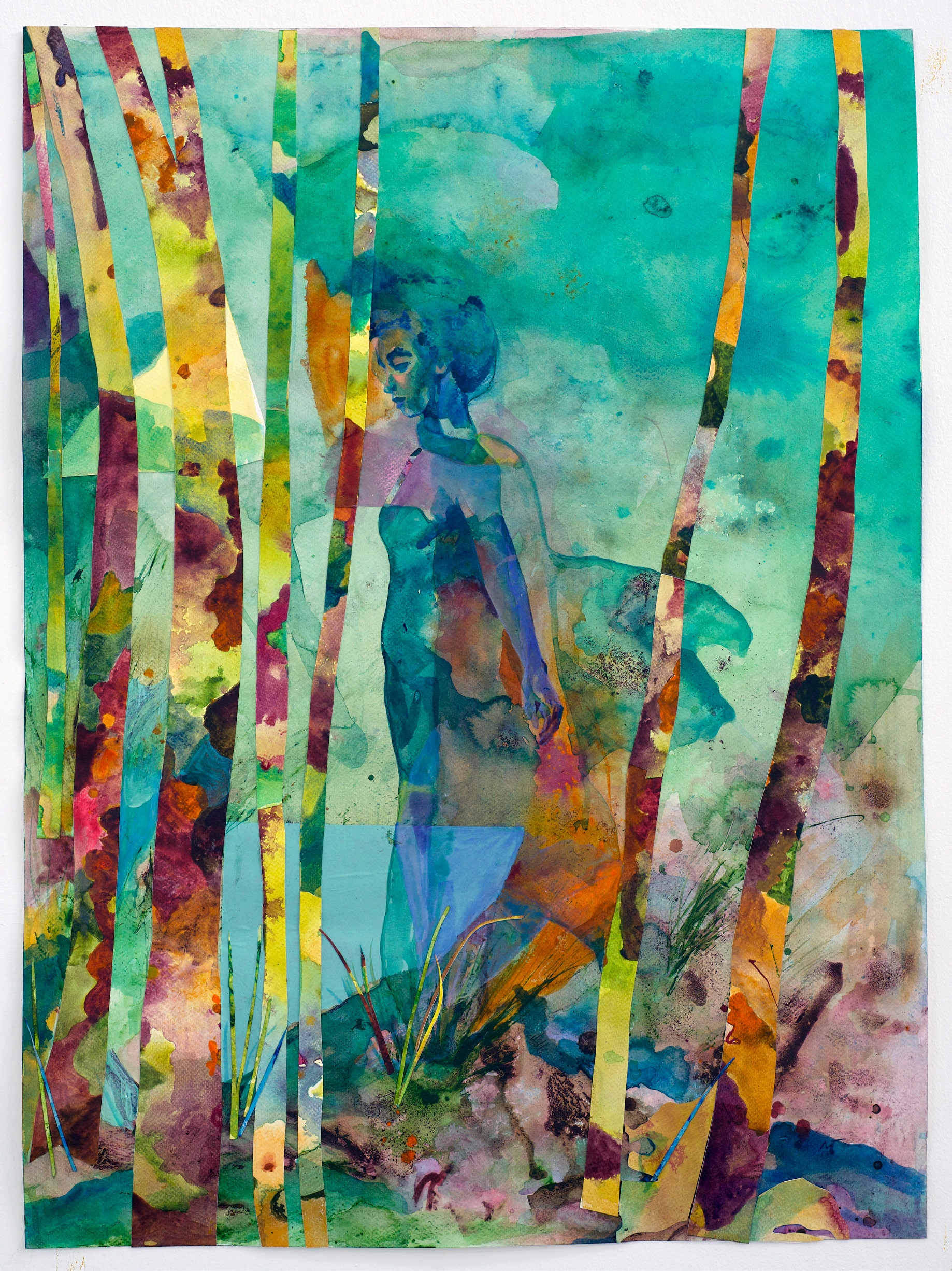
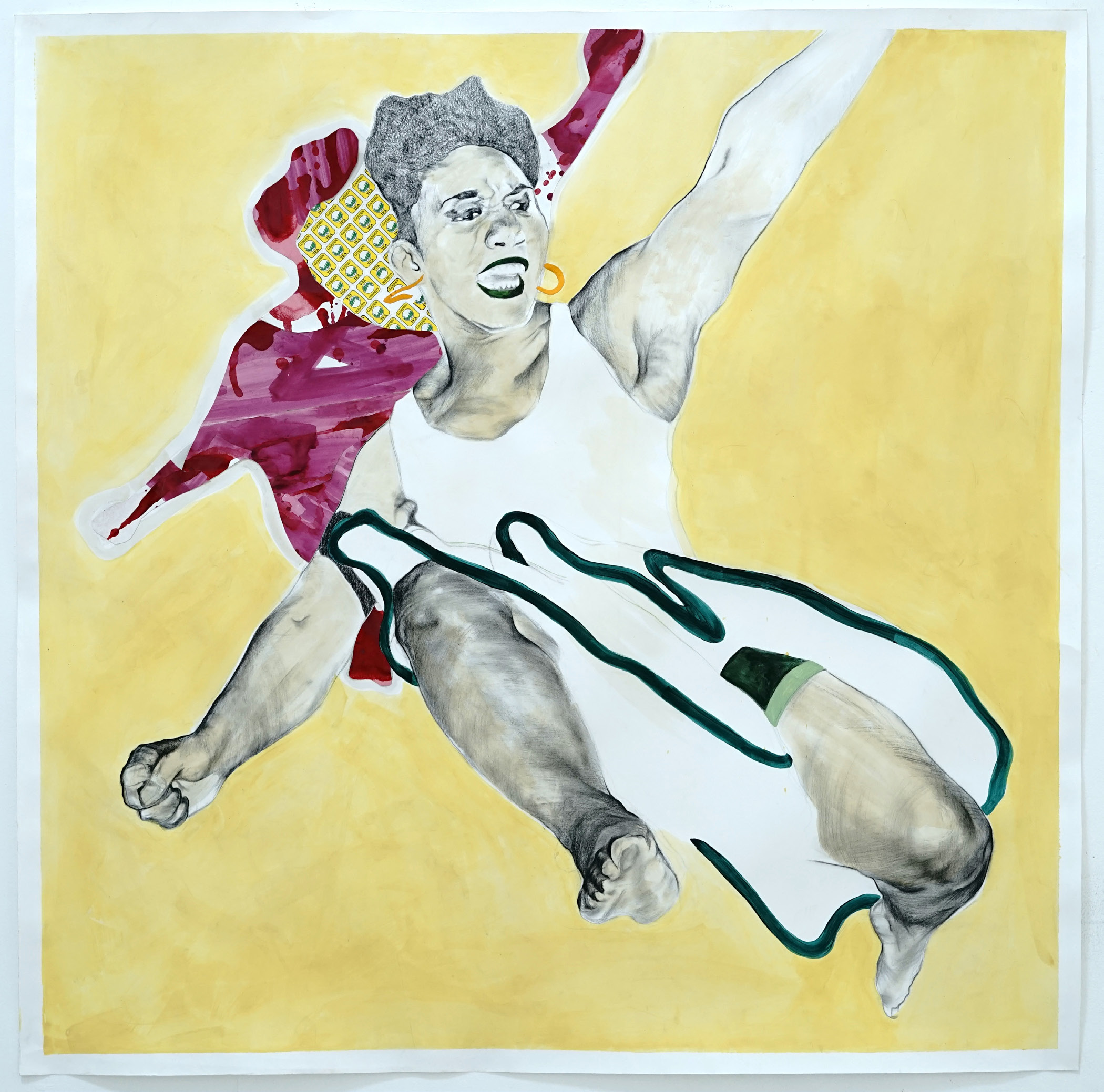
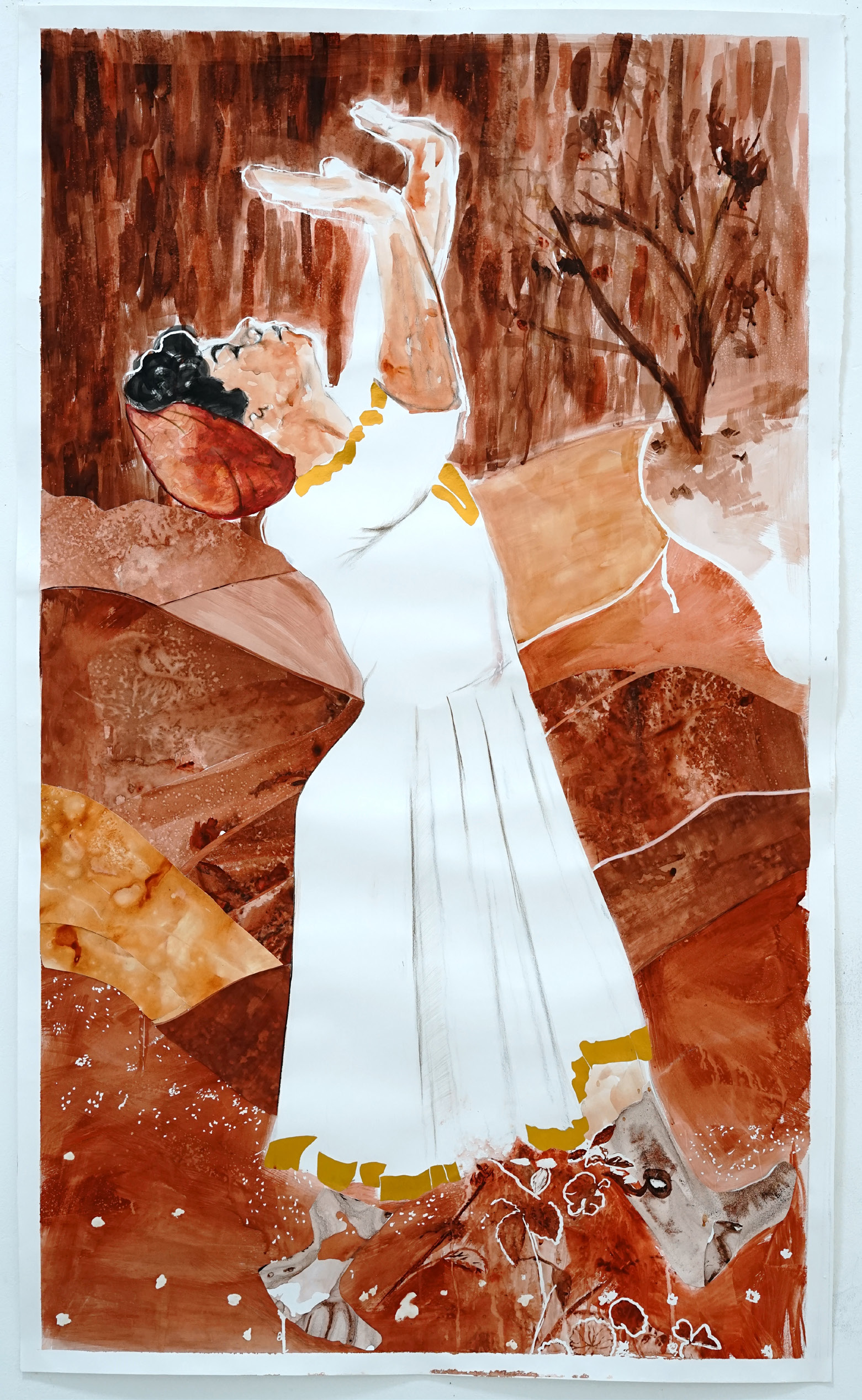
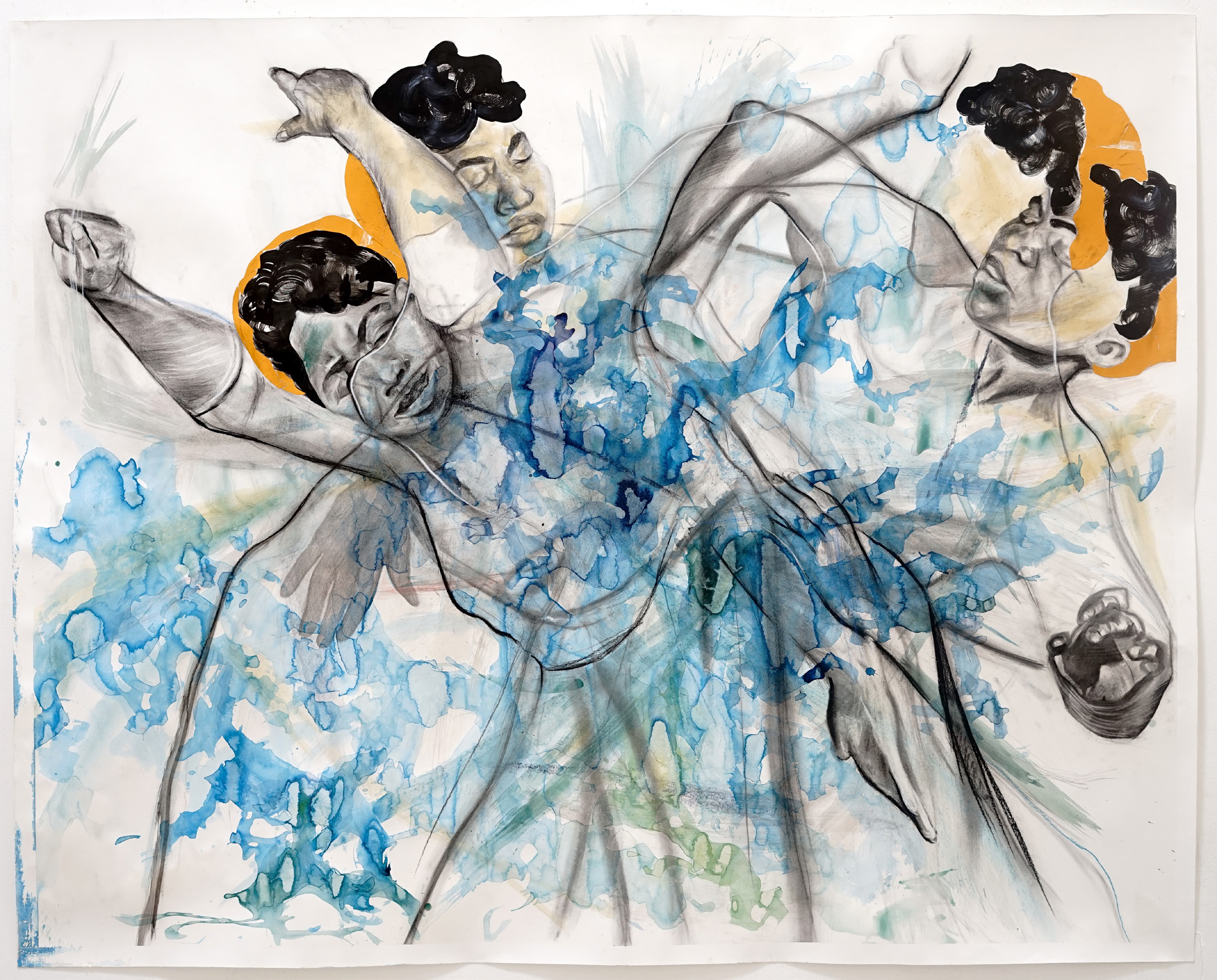
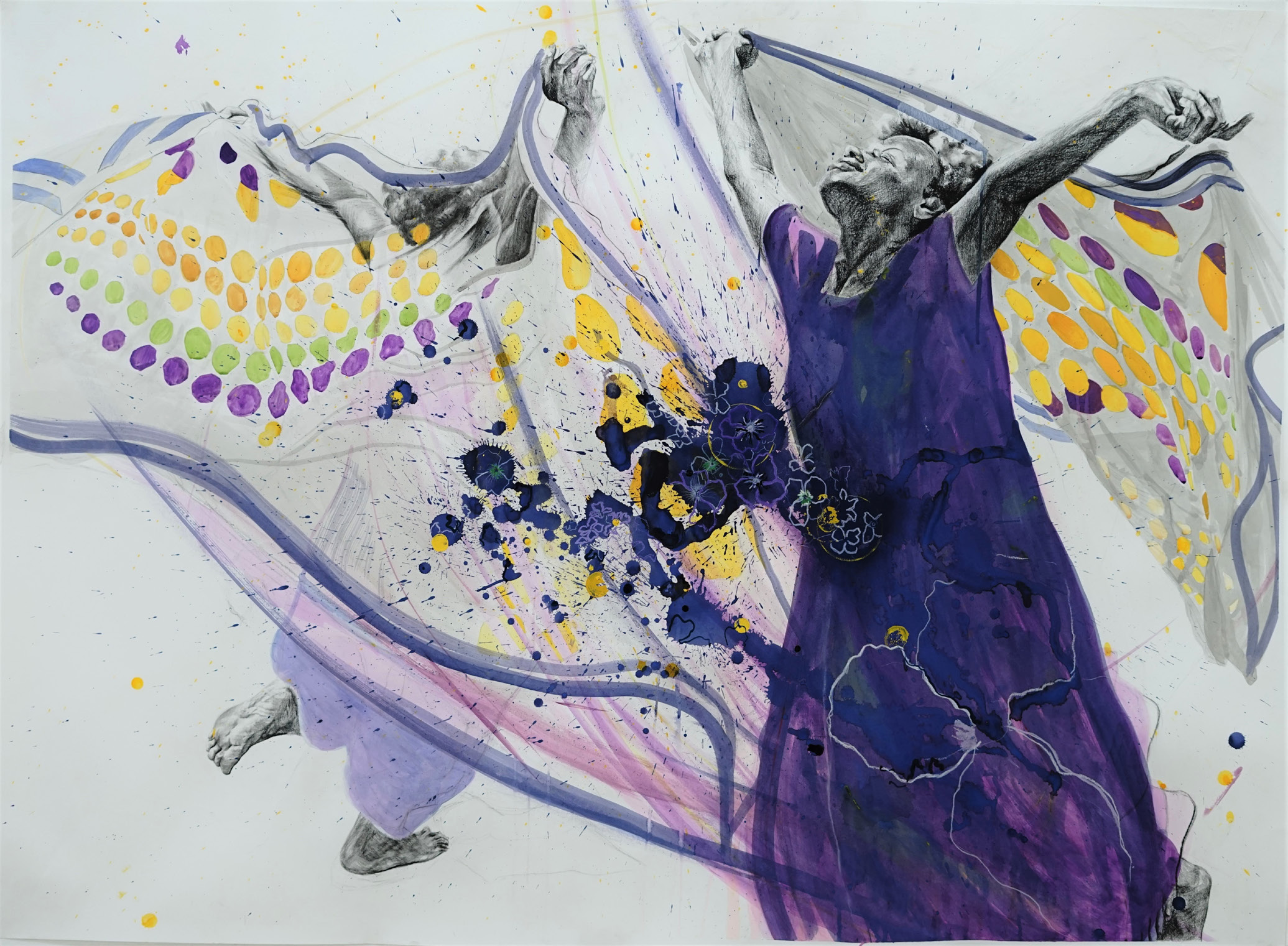
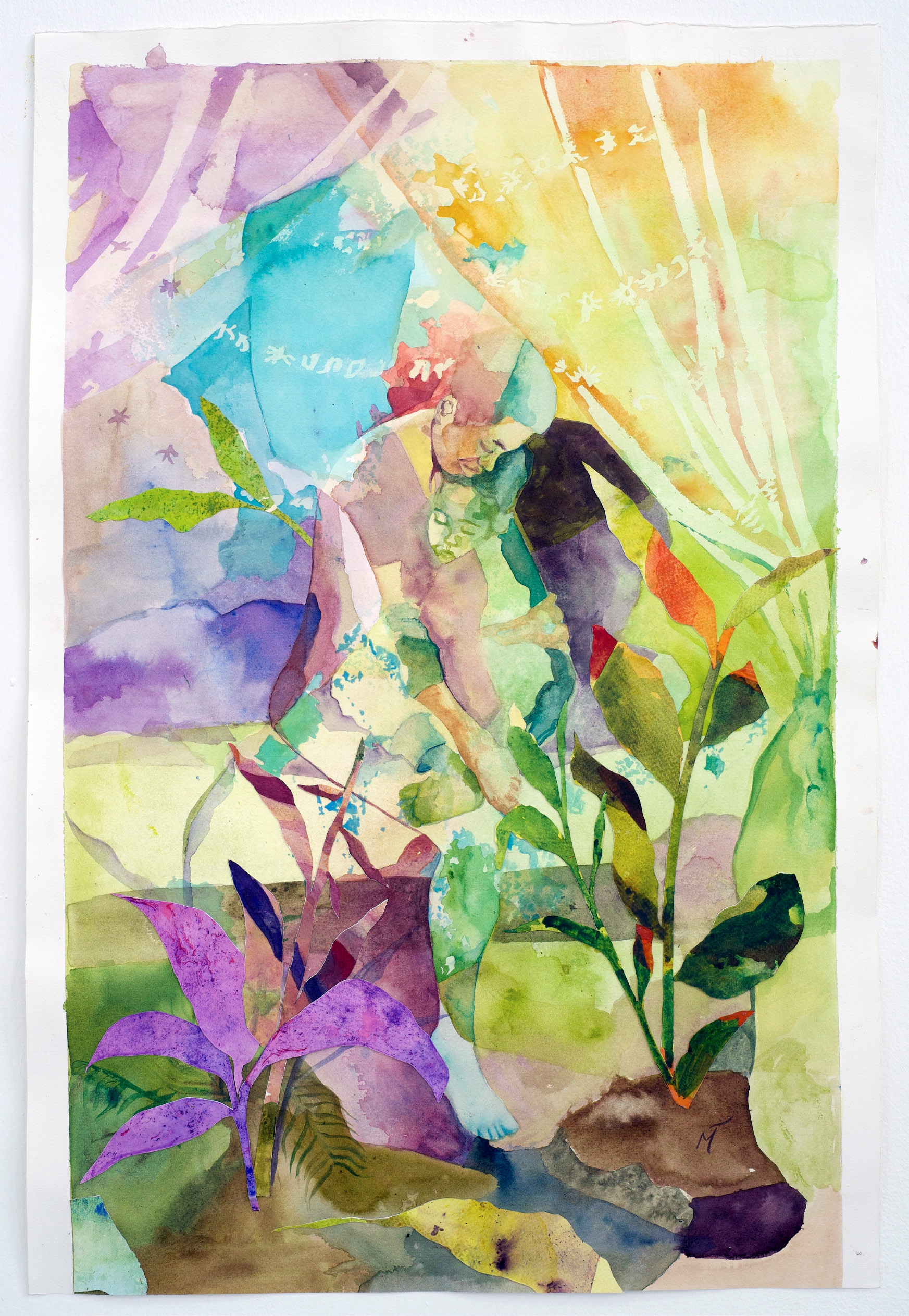
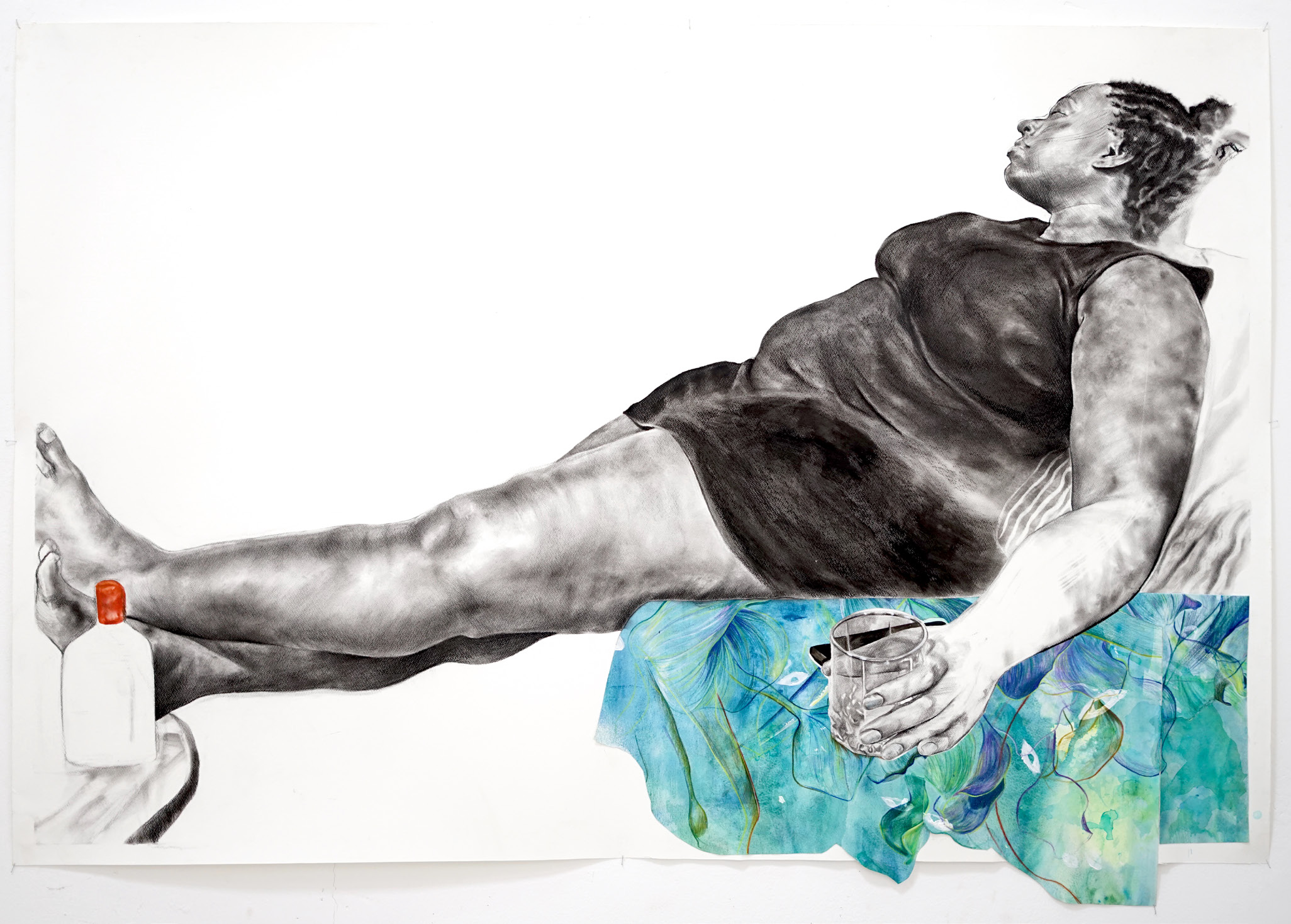
TWR is happy to present a portfolio of a dozen pieces from Mona’s growing body of work. The pictures are often sensual, with a wonderful sense of the atmospheric as well as the physical. Many are older, but some are taken from the body of work she recently presented in a “A Walk in Makindye,” in which she brings an abstract sensibility to bear on the search for selfhood. At all times, however, even accounting for the luminous injection of color in her new work, Mona’s pictures are always unmistakable her own, easily recognizable for their zany style.
For Mona, who was born in 1988, art has always served a therapeutic purpose. As she grew into art, it also grew into her, so that she has come to the conclusion that, for her and hopefully for those who interact with her work, art is a tool of existence. She began taking herself seriously as an artist as a mother facing turmoil in her household, while also “trying to understand” herself as a Muslim woman. Art helped her find her rhythm. “Whatever I put into words, I transmitted into drawings, trying to just understand my womanhood, but also the concept around having the courage to do something I never foresaw myself doing,” she told TWR. “That whole story became its own concept.”
Mona said of art, after she found peace in it, that it “seems like a marriage. Once I really committed to it, then I could really learn more and sharpen my technique through online classes. I am not entirely self-taught.” She is now comfortable in both painting and drawing, and works with everything from charcoal to gouache, from ink to watercolor.
Afriart says of Mona’s practice that while her earlier works “often centered on portraiture and the body as sites of inquiry, her recent paintings expand this exploration outward.” This is a necessary and delightful escalation of her image-making, in the sense that she is broadening the definition of intimacy for a woman such as herself: the difference between suffering and peace – the bridge between exhaustion and renewal – may just be a walk in the city. ▪


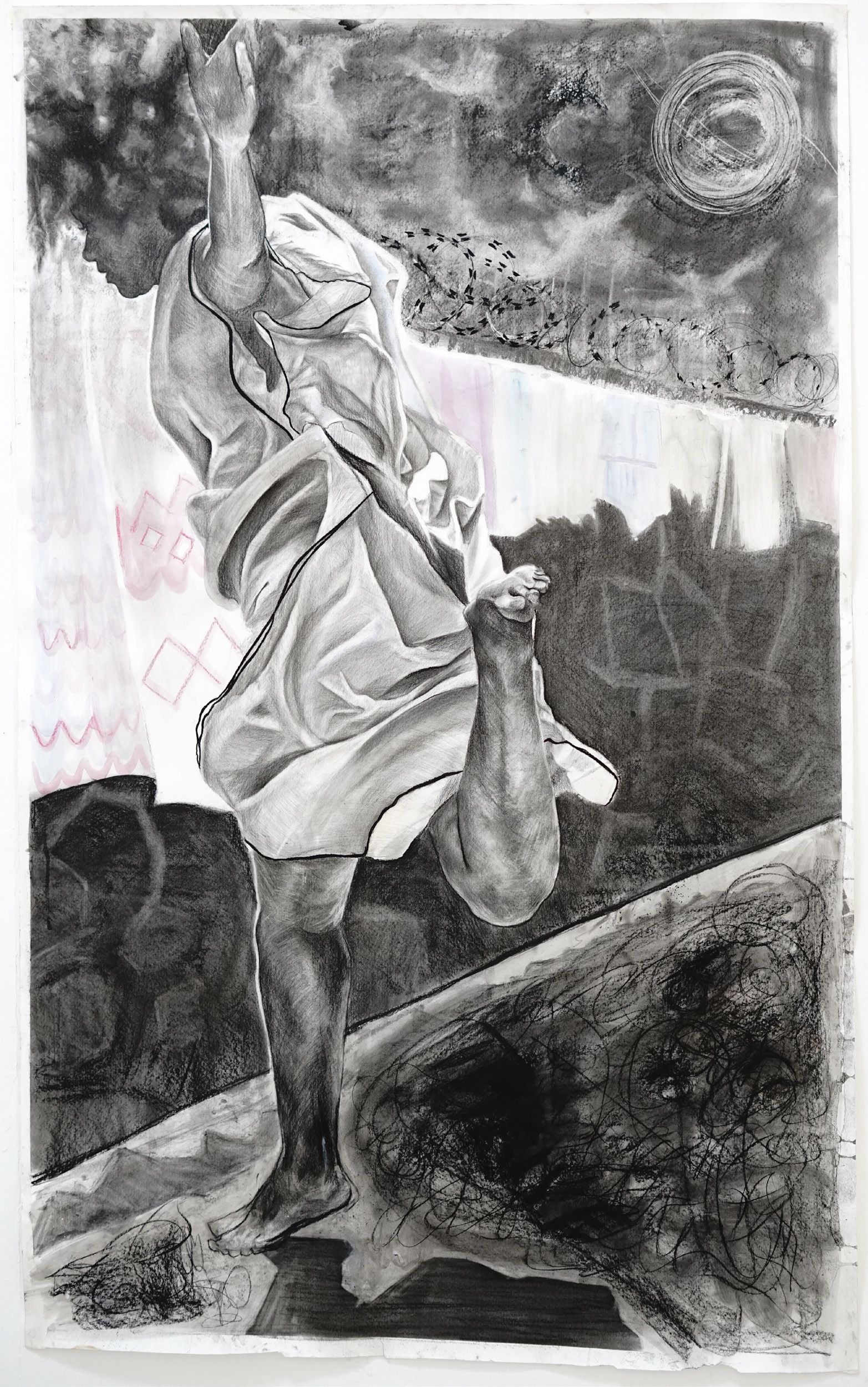

Cover image: Mona Taha, The Escape, 2022, charcoal, graphite and ink on paper, 160 x 100 cm