
John Bosco Kanuge, who has taught for many years at Makerere University, counts luminaries such as Paul Ssendagire, Xenson, Henry Mzili Mujunga and Robert Yiga among his onetime protégés. Those students may now be more famous than the master, but Kanuge is slowly getting his due as a distinguished printmaker and a major artist of our time. This year, in recent months, his work has been part of a group show (with the likes of Fred Mutebi) at Aka Gallery and then a solo show at Xenson Art Space. Suddenly the world is starting to appreciate Kanuge’s extraordinary gift, and it’s a wonderful thing to see while the artist himself is still alive and at work.
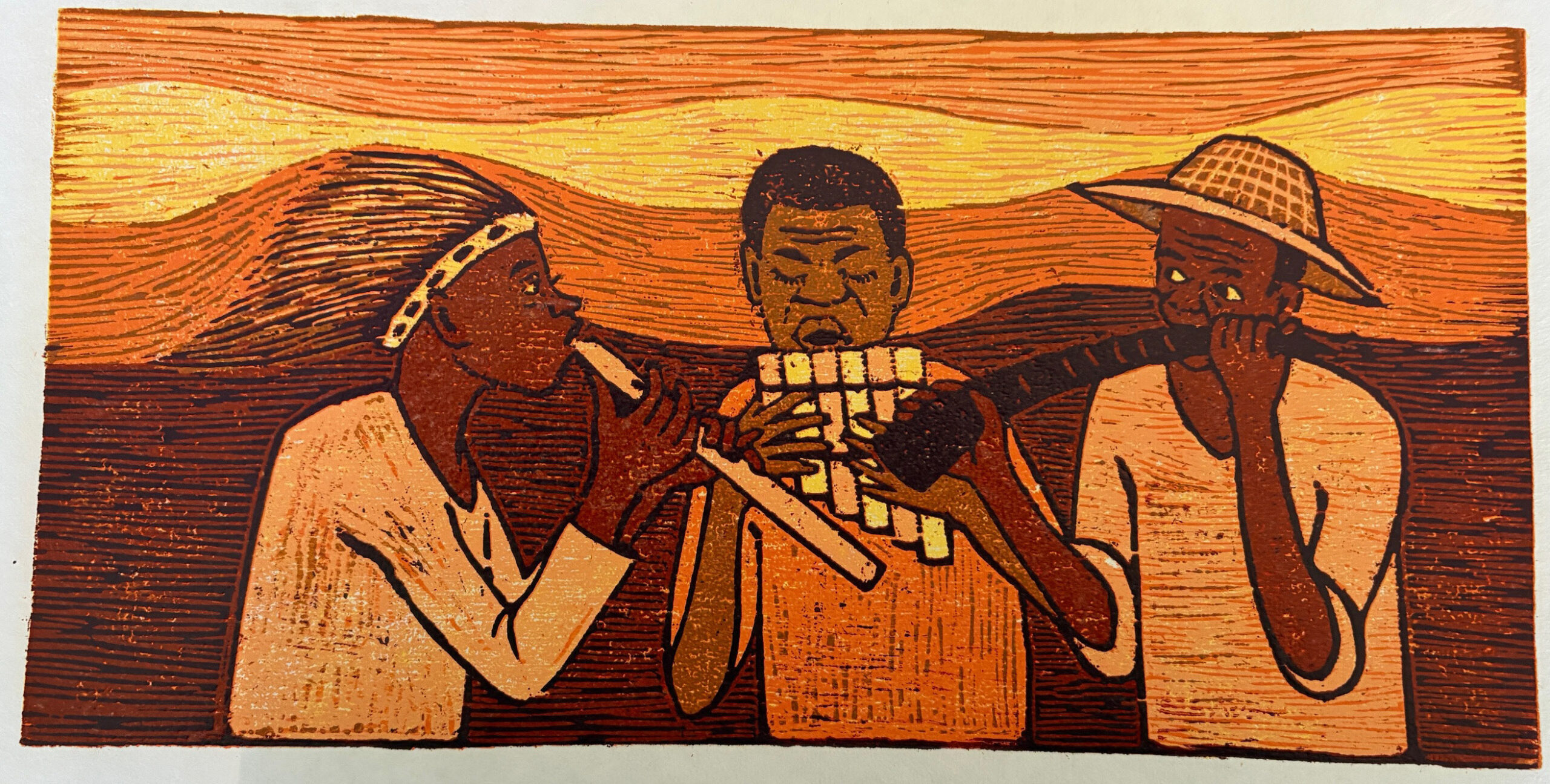
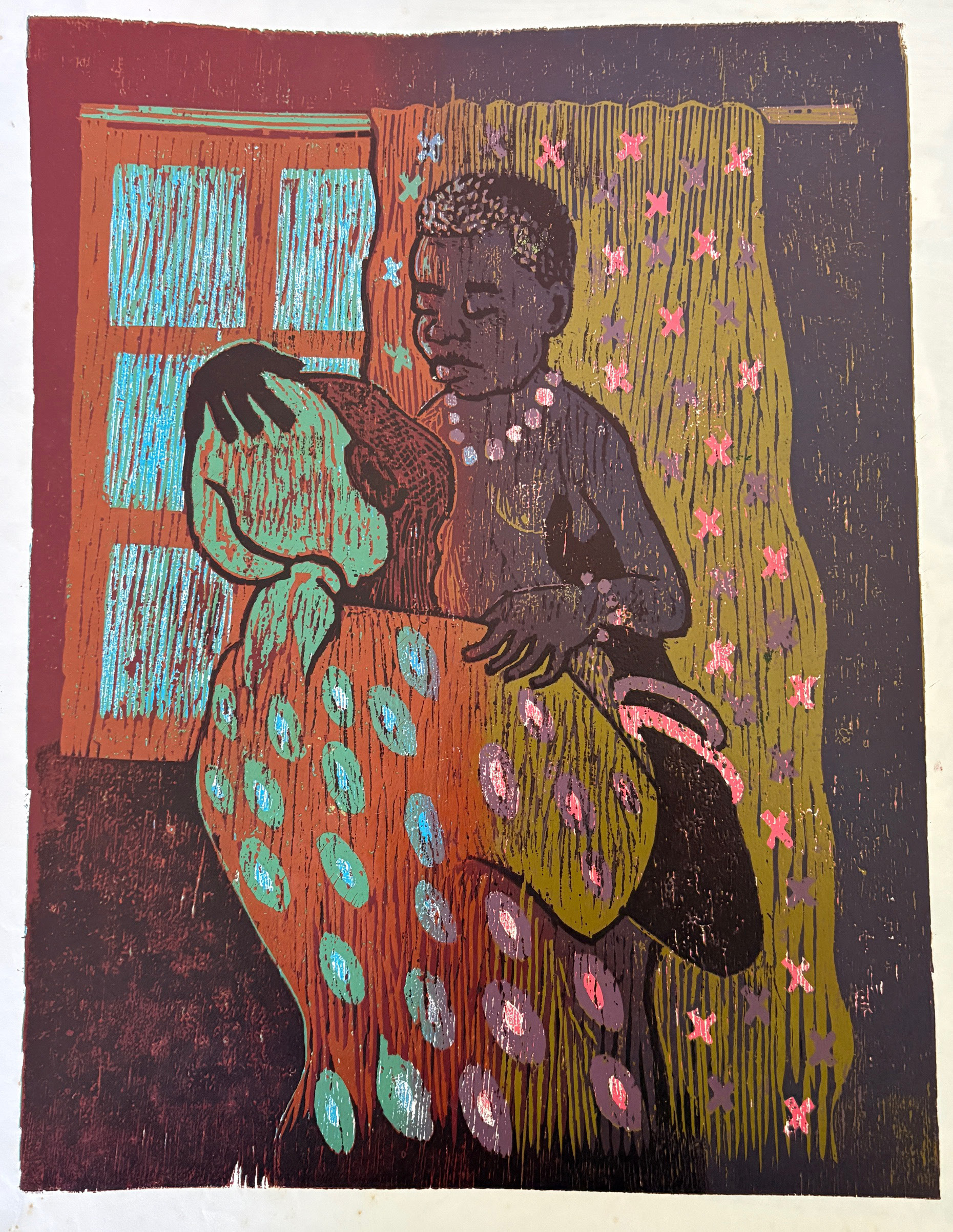
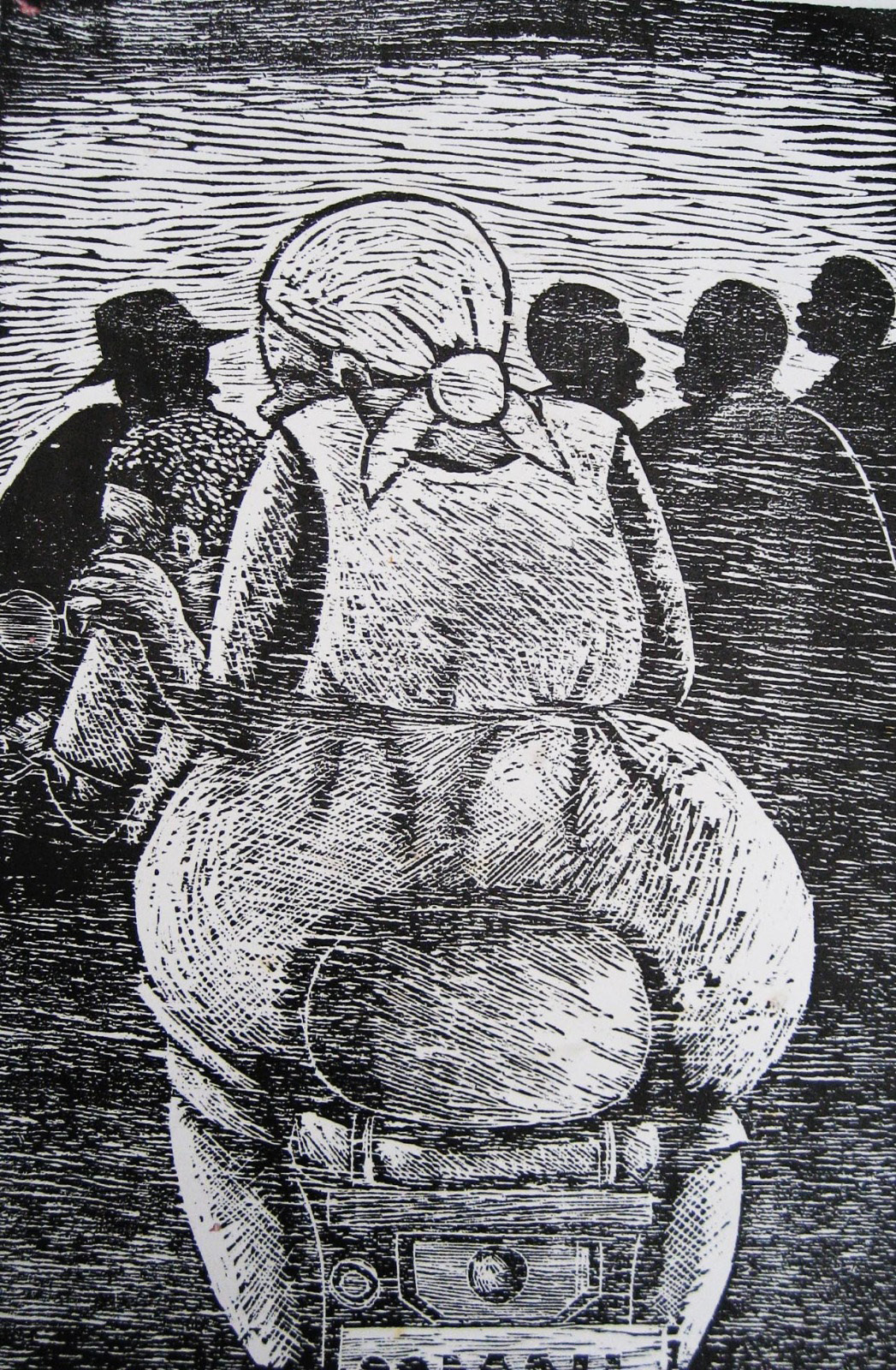
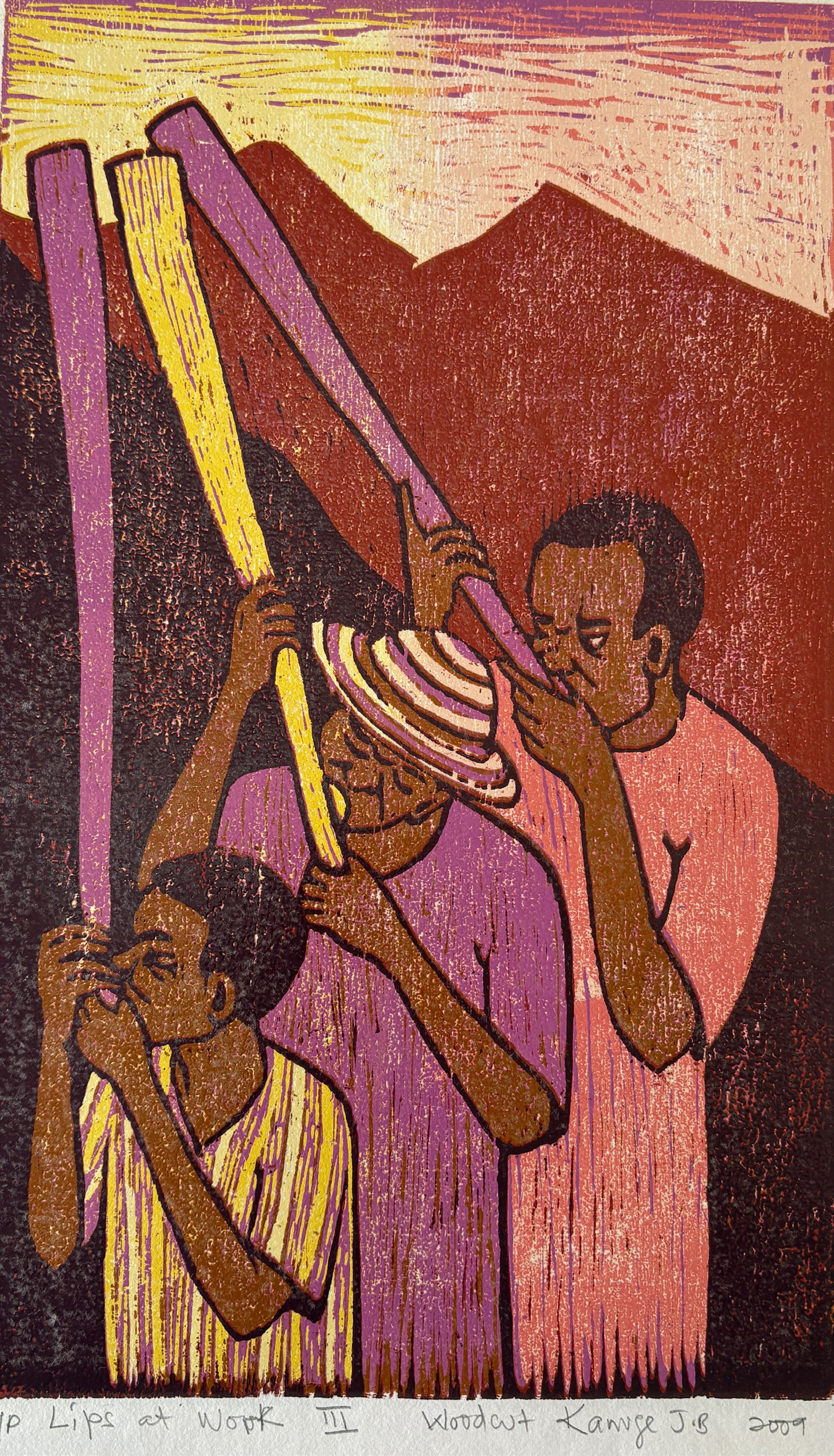
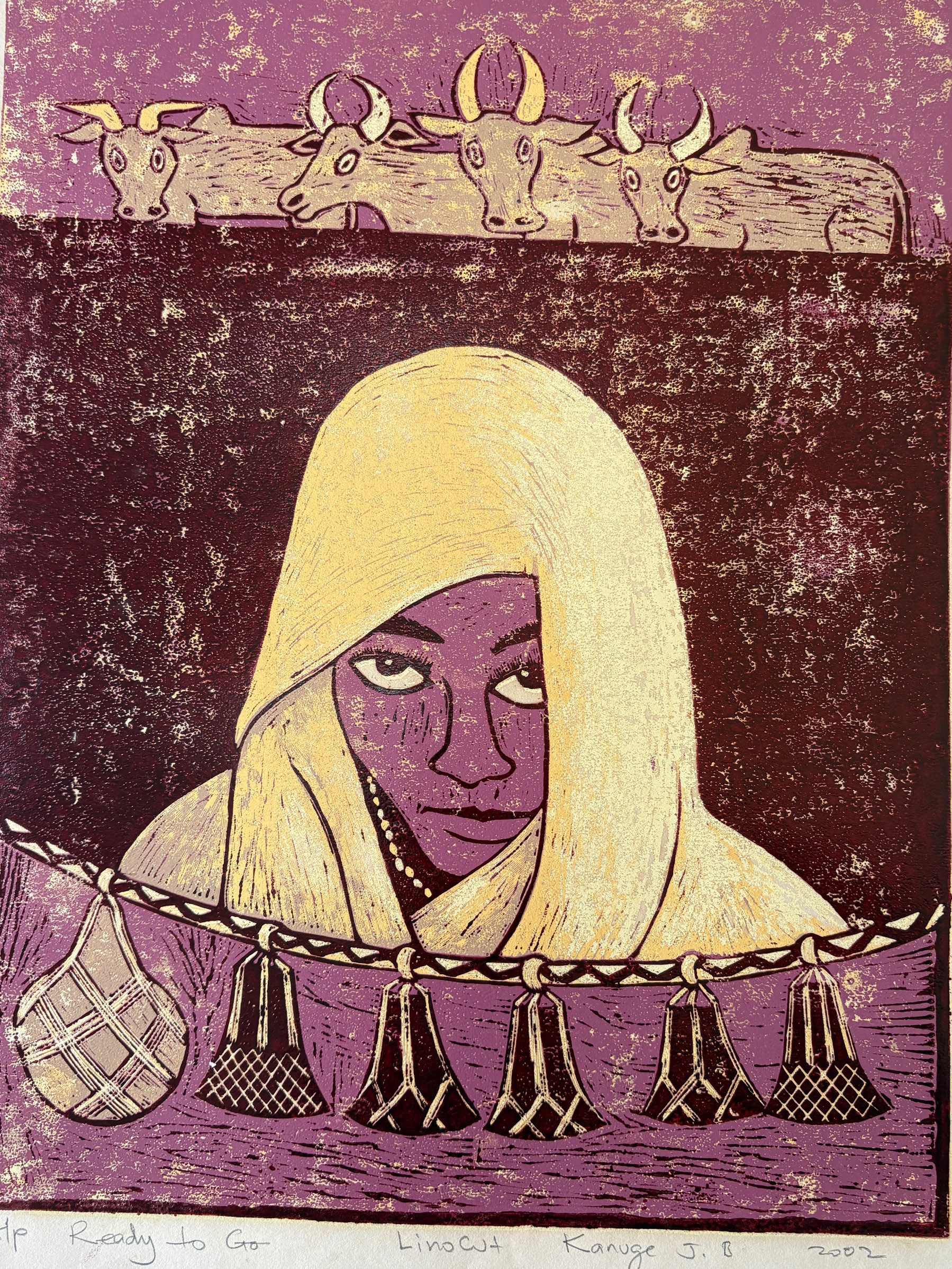
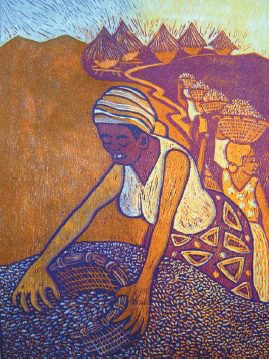
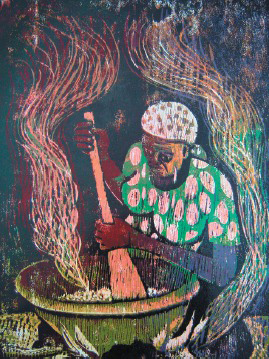
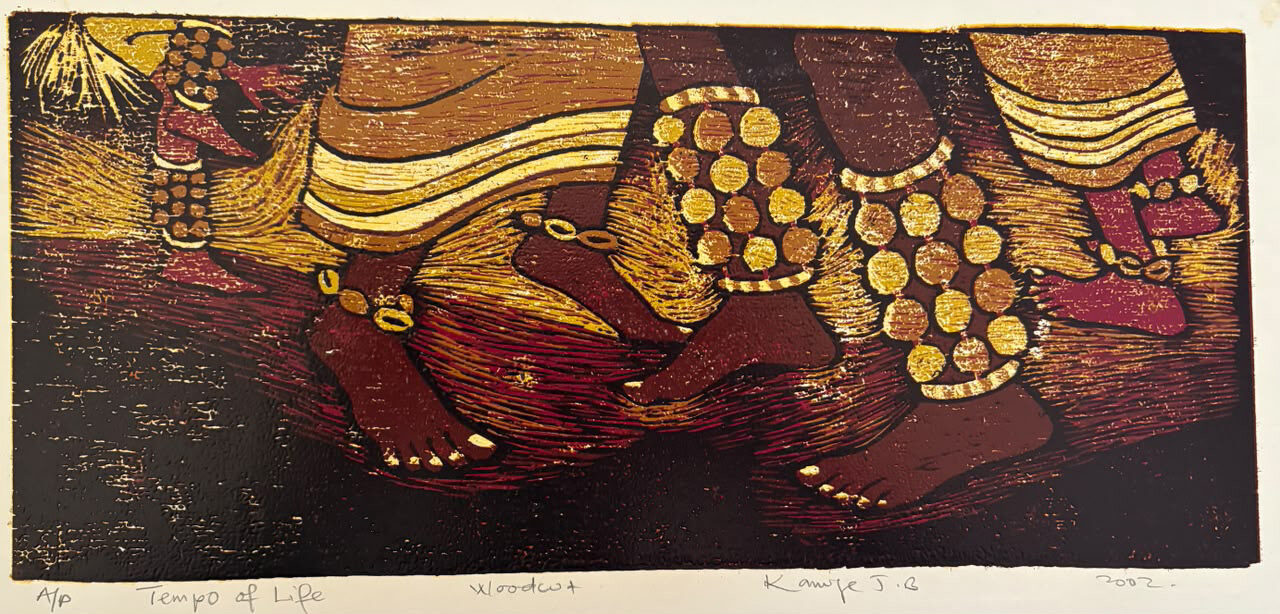
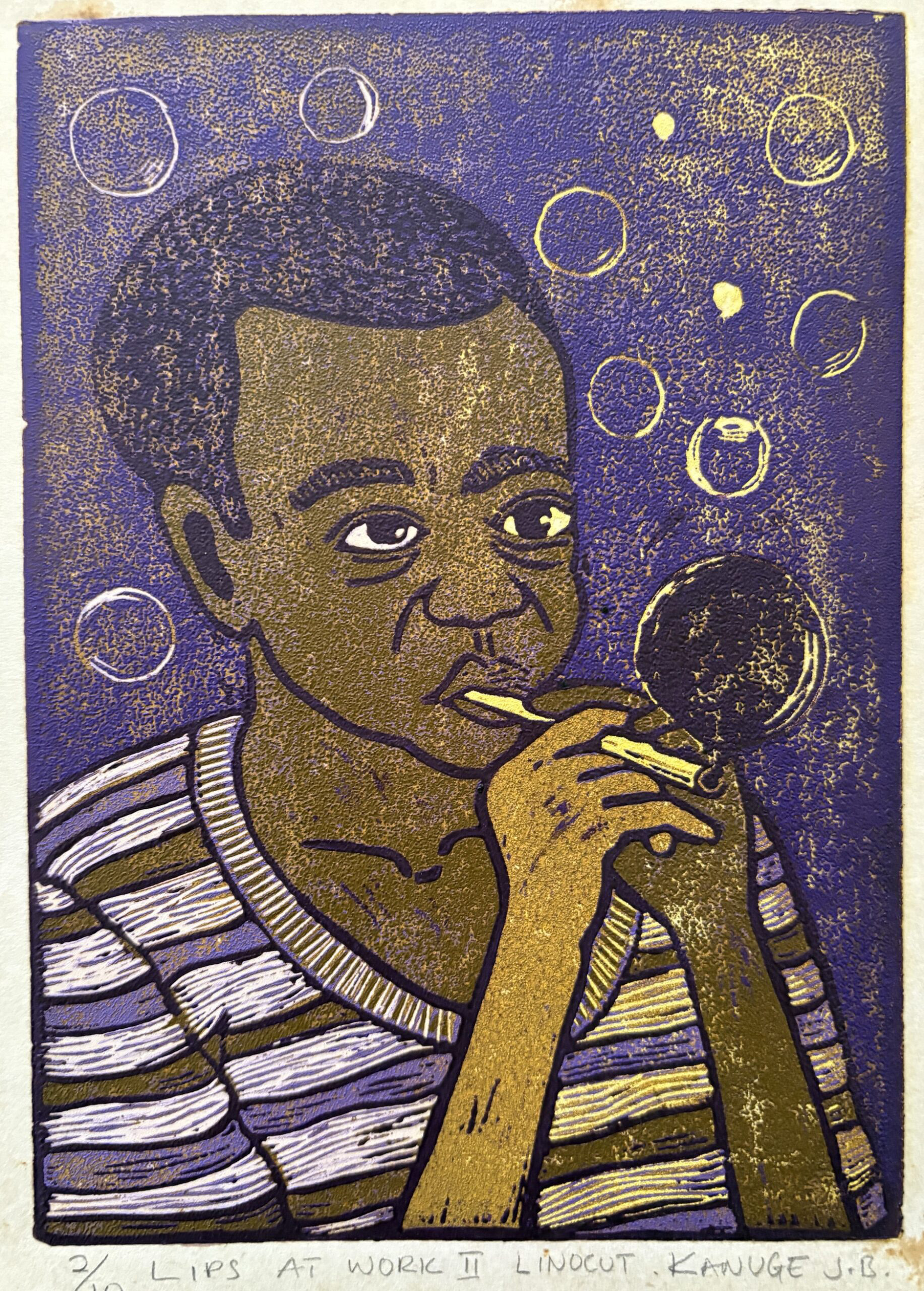
The show at Xenson Art Space, still on view, brings together old and new work by Kanuge, from woodcut to linocut prints. The pictures are often evocative of the lives of ordinary people: women in the marketplace, passengers perched on boda-bodas, rolex-making stands, traditional dancers, and even a powerful nude of a woman counting her waist beads. It is all very interesting.
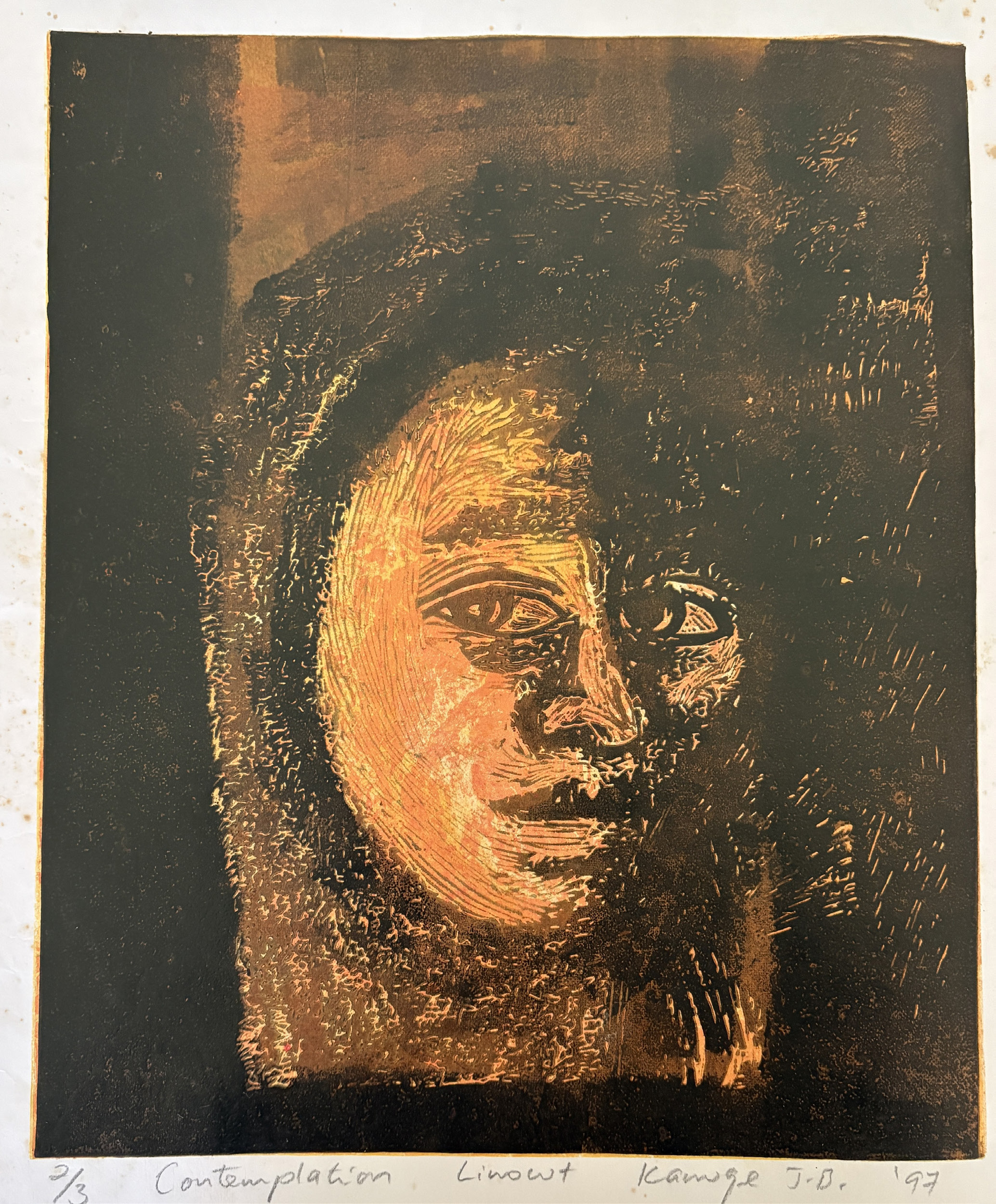
TWR is publishing only 12 examples of the work of Kanuge, selected by the editor in concert with the artist, in addition to the exquisite piece gracing the cover of this issue. The pictures include some being exhibited at Xenson Art Space and others that have rarely been seen in public. Kanuge pointed out that women – their lives, what they go through, their relationships – are necessarily dominant in his oeuvre.
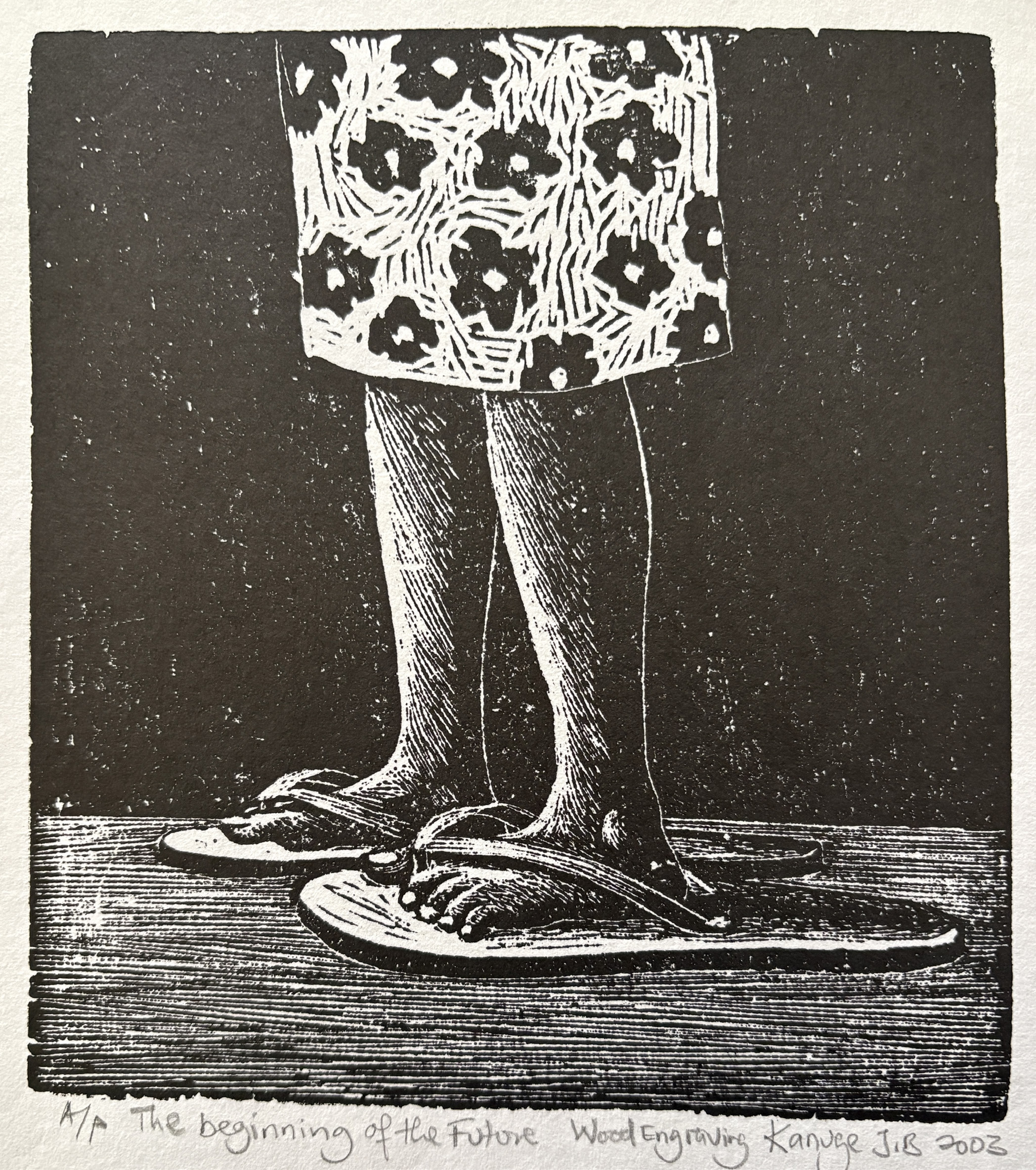
The piece appropriately titled “The Beginning of the Future,” a 2003 wood engraving that Kanuge considers his masterpiece, was provoked by the sight one day of his five-year-old daughter – now a grown woman on the verge of acquiring a degree in architecture – putting on her father’s sandals. Kanuge felt he had witnessed something profound, or at least exciting enough that he saw it as material for a work of art. “For me the piece holds that significance of reflecting what this person will be in the future,” Kanuge said.
Kanuge excelled in art at St. Henry’s College, Kitovu, the high school in Masaka that has produced some of our finest artists: Expedito Mwebe, Fabian Mpagi, Joseph Ntensibe, and others.
Kanuge joined the Margaret Trowell School of Industrial and Fine Arts at Makerere University in 1990, and he gravitated to printmaking closer to graduation in 1993. “When we reached the third year, we were a group of students who majored in printmaking,” he recalled in an interview with TWR. “We kind of were motivated by [the success of] Mutebi Fred, who was ahead of us by a year. He kind of evolved a style of printmaking that I think attracted us to this discipline. I think we can attribute our attraction to printmaking to him because, somehow, he made prints that had his own style and we wanted to emulate it.”
Although Kanuge did not graduate with a first-class degree, often a requirement for those who hoped to be retained as teachers, his work was widely seen as excellent. Kanuge was teaching art in a secondary school nearby when he received encouragement from his former lecturer, Gracie Masembe, to return to Makerere University and pursue a master’s degree. Kanuge took the advice and, even as he worked on his proposal of study, was invited by Masembe to be his assistant in the printmaking class. Eventually, after Masembe’s death, Kanuge became the principal teacher of printmaking at the art school. Kanuge’s work has been collected by the World Bank, the MoMA in New York, and others.
Kanuge said he felt fulfilled as a teacher to witness the growth and development of printmakers like Yiga. “I believe in lighting other candles,” he said, evoking an image that also seems apt to describe his own work. Indeed, light saturates Kanuge’s prints in unpredictable ways, and some of his former students, notably Mzili, have pioneered the “dark-to-light” movement in printmaking. Beloved by colleagues and students for his generosity of spirit, Kanuge is very much a purveyor of light.▪
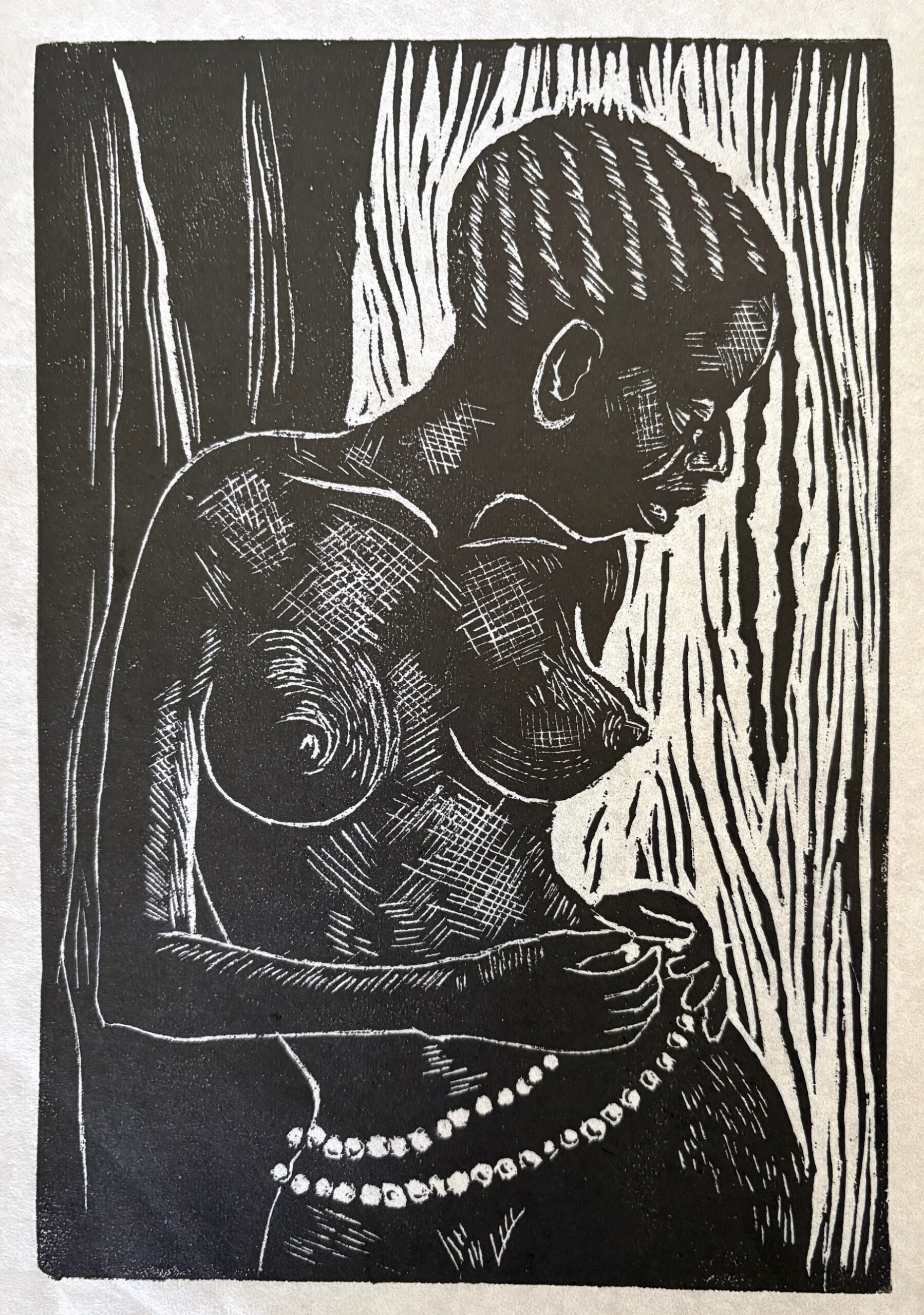
Cover image: John Bosco Kanuge, Counting the Beads, 2000, wood engraving, 24 x 17 cm