
Helen entered Mubende in a fugue state.
Swarms of wide-eyed hawkers ran frantically across the dusty road like bees drawn to honey, their eyes fixed on the passengers crammed in public buses parked on the roadside. Snaking around the buses, they clustered in faded orange aprons, lifting bottles of lukewarm Mirinda Fruity, Fanta, and Stoney, melted sachets of PK and Juicy Fruit and freshly roasted gonja and muchomo to the open windows of indifferent travelers. Their outstretched arms interlaced, forming a web of limbs that made it difficult to ascertain whose hand belonged to whom.
Suddenly, the driver ahead of her slowed to a near brake and turned on their double indicators. The incoming drivers in the opposite lane did the same. Flicking hers on, she wondered what had happened ahead. In the distance, she saw a crowd gathering in the middle of the road.
Nearing the commotion, she saw the rear of a silver Toyota speeding off before she saw the lifeless body it left in its wake. A woman had been knocked.
Ripened mangoes lay bruised around the woman’s still body. Men, women, and children, screaming and flailing their arms, slipped in and out of the haze of dust left behind by the runaway driver.
Batiire omukazi, a man shouted.
Batiire omukazi, cried another.
They knocked the woman.
They knocked the woman.
Easing her car around the crowd, Helen noticed a baby girl strapped to the woman’s back. An open gash appeared where the child’s face should have been.
A drawn-out beep startled her. She had stopped in the middle of the road, consumed by the scene. The car ahead had long vanished into the ochre veil of dust. Shouts and jeers rose from the drivers behind. Pressing her foot to the accelerator, static filled her ears.
Through her rearview mirror, Helen watched as the woman was lifted into a crowded taxi. She was awake, wailing, her dead baby in her arms. She said a prayer for the woman and her child as she turned off her double indicators. She imagined this story in tomorrow’s newspaper. The journalist would call it an accident. Say nothing about these chronically disrepaired roads.
She had long stopped calling catastrophes of this kind “accidents.” If conditions are structured to cause harm, is harm still accidental? she recalled asking Stephen during their last drive through Mubende together. It had only been a year ago. They had driven to Ibanda to spend New Year’s with her parents. Her father was strong then, his blood pressure under control, spirits cheerful. Turning into Shell, she couldn’t believe that she would never hear his laughter again.
“Ziinga, Madam?” the operator asked her as she steadied her car into the refueling bay. A toothpick bobbed idly from the side of his mouth.
She switched off the engine, opened the fuel port, and held a fifty-thousand-shilling note through the window.
Turning around, she watched as the numbers on the fuel dispenser increased rapidly before slowing to fifty-thousand. The car’s interior filled with that sweet smell of petrol she loved since she was a child. “It smells like burnt toast,” she would say, inhaling deeply to her parents’ amusement.
The operator shut the port and gestured to the car parked behind hers to move forward. Steadying her car out of the refueling bay and into a free parking spot, she decided she would go and buy some water from the petrol kiosk. Her shoulders were as hard as concrete and she felt a migraine settling in. She regretted not accepting her cousin Lucy’s offer to travel back to the city together. She could have used the company, she now thought. But, unlike Lucy, she was determined to leave immediately after her father’s funeral. It had been too much.
The humidity of the congested store made her feel like throwing up, and the smell of stale pound cakes and oily sumbusas worsened the pain she felt in her temples. She walked toward the fridges lining the back, a young attendant shadowing her with a shopping basket, and picked out a cold Rwenzori. Pressing the bottle to her right temple, she headed to the counter.
Standing in the queue, she recalled the fork of beef her father would place on her plate at supper. “That’s my gift to you,” he would chuckle. He was an immaculate man, her father. Principled. Hardworking. Generous. Helen had said as much in her speech at the funeral, to the loud applause of relatives and family friends seated under wide tents. A Cambridge graduate with a doctorate in engineering, her father belonged to the country’s early class of post-independence architects who designed many of the now-dilapidated buildings that dotted the city’s skyline. He spoke with a deep, baritone voice inflected with Anglicisms such as perhaps and might you and pardon, and religiously ate everything – even kalo – with a fork and knife. He was civilized, according to Aunt Jennifer, her mother’s sister, who saw all foreign-educated people as civilized.
Helen had known about her father’s lasciviousness since she was fourteen. Though this was not the type of thing one shared at a funeral.
“How can you allow him to keep doing this to you?” she had bellowed at her mother the third time she heard of yet another of her father’s accidents. She was sixteen then, deep into her long vac spent reading Danielle Steele novels, when one afternoon she found her mother staring idly into space with a gift bag in her hands.
“Mummy?” she had shaken her, “What’s wrong?”
She had found a pashmina scarf and letter addressed to somebody named Judy while tidying the closet. “It was at the back,” her mother had croaked. “Hidden. As though I would never find it.”
That night, she overheard her mother confront her father. As she pressed her ear to their bedroom door, she willed her father to say sorry, to finally take responsibility for his actions, to commit to changing his ways.
He didn’t. Instead, he called her mother deranged for thinking that there could be more to something so innocent. It was not the first time he had used that big word – deranged – taken from his lofty vocabulary to make her mother question her intuition, the truth she felt in her spirit.
Years later, when Helen returned from university to find Juliet, their househelp, gone, her mother said that it was because “they were doing things right under my nose.” She wanted to ask her mother what things but was distracted by how hollow her eyes had become, how sharply her collarbones jutted out from beneath her faded kitenge, how rapidly her lips moved without sound as she peeled beans for that evening’s supper, her mind faraway.
“Men are like that,” her mother would conclude each recollection. After all, she had seen her own father betray her mother. With friends and maids and young village virgins. But hearing this about her grandfather did not relieve the smouldering hatred Helen felt for her father. She threatened to confront him more than once. Sometimes, she felt a flash of desire to kill him.
Her mother took to laughing at her rage at her father’s selfishness and entitlement and arrogance, telling her to kurera lest he hear her.
“Let him hear!” she would roar into the open space of their living room. Watching her mother shake with laughter as tears streamed down her face, Helen wondered if she used laughter to mask her sorrow.
With time, Helen’s mother found that nothing she said would change her husband’s nature. She gradually came to ignore the scarves he bought for his friends and the morning texts that littered his WhatsApp. She even looked past the children that came by for school fees at the start of every term, each one varying in age, carrying her husband’s obsidian complexion and distinct features. Round eyes here. Flat feet there. A perfectly chiseled jaw. One of them, a girl, looked exactly like Helen.
“God will deal with him, Helen,” her mother often said, twisting her rosary in her hands.
Sitting in the cool of her car, gulping her water, Helen now wondered how God would deal with her. The AC was on max and sharp gusts of cold air blew out of the ventilators. She shifted in her seat, willing the chilled air to cool the hot leather that scorched her back and thighs. She had about two hours to arrive in the city.
Reaching for her phone in her handbag, she saw that Stephen still hadn’t responded to her texts. Her heart had leapt seeing him at that morning’s mass. She hadn’t been sure he would attend the funeral. He held her hand as they watched the pallbearers carry her father’s coffin out of the cathedral and into the A-Plus funeral hearse. At the burial, he greeted her mother and other in-laws, rose to help when needed, and chatted coolly with Helen’s cousins, leaving just before the speeches.
“Thank you for coming,” Helen said to him as they stood by the gate to her parents’ home. He nodded silently, the hollows of his eyes darkened with a fatigued sadness, before turning toward his car. In the nearby compound guests served themselves food as instrumental worship played over the speaker.
“Is Stephen okay?” her mother asked her when she returned to the tent. Avoiding her mother’s eyes, she nodded silently as her throat tightened and her eyes filled with saltwater.
#
“They’re just texts, Stephen,” she had stammered just a week ago.
“So what?” he had responded, gripping her phone in his hands. “Would catching you in bed together have made this worse?”
They had been preparing to go to sleep when a text came in. Helen, in the bathroom, had asked Stephen to check her phone. She assumed it was her mother with an update on her father’s health. He had been admitted to hospital that day. His blood pressure was high. By the next morning, his heart would stop beating.
“Missing you,” said the text from someone saved as J.
Stephen paced the bedroom, reading all the previous texts out loud, and pausing occasionally to look at Helen in disbelief.
Thank you for hearing me out today.
I don’t remember the last time I had such an honest conversation with someone.
Looking forward to the next time we get to talk.
“Helen. Helen. Helen.” He dropped onto their bed, deflated, and pressed his palms over his closed eyes.
Standing in the middle of their bedroom, staring back at Stephen, Helen did not know what to say.
“I just needed a contact,” she croaked eventually. “That’s all it was.”
Global foreign aid cuts had left her yet another victim of the layoffs that swept the country, her position as legal director of AfricaAid discontinued. Eight months of scouring LinkedIn and sending her CV everywhere with no success made her desperate. It was Lucy who called her one afternoon three months ago to tell her about the position that had opened up at the city council for director of legal affairs. They were hiring internally, she had said, but maybe if Helen got in touch with Jacob, an old classmate of hers, he could pull some strings for her. After all, his uncle was the outgoing director of the department.
“So you decided to prostitute yourself?” Stephen looked up. “For a contact? I mean you planned to meet at a lodge just last weekend.” His thumb scrolled rapidly through the messages as his pupils scanned the screen.
“Nothing happened, Stephen.”
“That’s not the point, Helen.” His eyes were bloodshot and his chest was heaving. She had never seen him that angry in the three years they had been married. She feared that, in his rage, he would hurl her iPhone against the wall.
Initially, Helen had indulged Jacob’s texts. Not so his invitations to lunch. He had softened over the years, taking on a charm that wasn’t there during their campus days at Mukono. “A wife and children will do that to you,” he texted her one evening after she joked that he had gone soft.
They exchanged WhatsApp messages all day – devotionals, political satire, TikToks. It was innocent, she told herself at first. Not serious enough to call a fling. His good morning messages, accompanied with several flower bouquet emojis, made her feel seen in ways long forgotten in the humdrum of marriage. One Saturday, when he sent her a photo of his daughter’s ice-cream sundae captioned Sweet like you, she ignored the butterflies that gathered in her stomach, and when he proposed lunch at Via Lodge last weekend, she shaved her legs and bought a new blouse. But a surprise thunderstorm flooded the roads to Entebbe, making lunch impossible.
“You missed my outfit,” she texted him coyly that evening.
“Can’t I get a pic?” he responded immediately.
#
“You said that you were meant to go out with Pauleen last Saturday when it rained,” Stephen said, rising from the bed. “Why lie if there was nothing to hide, Helen?”
“Stephen, it was an accident. I’m sorry.”
“An acci—? You’ve been texting him every day for the last four months, Helen.”
“Y-yes. He was helping me.”
“I’m sure he was.”
“Really, Stephen? They’re just texts for goodness’ sake.”
Ignoring her, Stephen walked to their walk-in closet and began packing clothes in a backpack.
“You don’t understand what it’s like to be a woman in this city,” she shouted, following him to their closet. “In this country. How hard it is to find work. To be taken seriously. You don’t understand. Jacob was helping me—”
“ーDid you think about his wife? In all of this, Helen, did you think about his children? Me?”
Goosebumps crept along the surface of her skin as the soft nettings blew in the evening breeze. She felt shame wash over her like a cool chill.
“You’re no different from your father,” Stephen said finally, his backpack slung over his shoulder.
His indictment came back to her now as she exited Shell and got back on the road.
You’re no different from your father.
Blinking back tears, she pressed on the accelerator. Her shoulder slammed into the window as she swerved to avoid a pothole. Her mind jerked back.
Where is your integrity, Charles?
It is her mother’s voice. Hoarse with pain. It comes to her at the top of the stairwell as she strains to hear her parents against the rumbling thunder. The living room window slams shut before she hears the slap.
She wants to run downstairs, hold her mother, smear egg-white along her cheek to cool the hand-shaped burn. But she stays where she is, hugging her knees to her chest, her heart ringing in her ears.
“I-I—I am sorry, Doris. Th-that was an accident,” her father says, moving to embrace her mother.
“I do not recognize you anymore, Charles,” her mother responds, leaving him in the darkness of their living room, the wind howling outside.
“How did you forgive him?” Helen asked her mother one evening as they prepared for her father’s funeral. They were in her parents’ bedroom, flicking through musty albums for photos of her father to use in the order of service.
“I don’t know if I ever did,” her mother responded, her vein-strewn hand shaking as she flipped through the pages. “I tried to. Ruhanga is my witness. But there comes a point when you can’t excuse what’s done intentionally and without remorse.”
Her mother let out a long sigh, closing her eyes as streams of tears ran down her face.
“Your father never said sorry. Not once. And not in any meaningful way. Instead, he acted clueless every time I fished condoms out of his pockets as though he had not put them there and feigned ignorance when yet another housegirl tottered around here pregnant. He called them accidents. Maybe because this made them easier for him to deal with. But they were choices, Helen.”
“I’m sorry, Mummy,” Helen said eventually, clasping her mother’s hand. She nodded quietly, squeezing her hand back, until she eventually opened her eyes, held up her palm to Helen, and returned to the albums.
Her mother was right, Helen now thought as she eased her car onto the tarmac. Choices are always being made. She hadn’t given in to Jacob, but she hadn’t refuted his advances entirely either. She felt a sudden desire to tear at her own skin, to exorcise the reckless genes of her father and grandfather that ran through her veins.
The Airtel billboard wished her a safe journey as she left Mubende. A soft drizzle set in, the smell of wet earth wafting into the car. She welcomed the coolness, opening the back windows of the Harrier as she sped along the freeway. Red coffee cherries sprawled across bright plastic tarpaulins hurtled past her window, as did the figures of women running to rescue clothes from the coming storm. Larger rain droplets licked her neck through the open windows and she felt her shoulders finally soften.
#
“Enyanya, Madam.”
“Ebitunguru, Mummy.”
“Carrot. Carrot. Carrot.”
Arriving in Mityana, she steadied her car near an open market by the side of the road. Women balancing basins of tomatoes, onions, and carrots on their palms filled the opened window, screaming for her attention.
She stepped out of the car into the wet humidity, focusing on one woman who led her to her section with a bright assortment of green peppers, red onions, potatoes, and eggplant. The woman was young, not more than sixteen. Her large breasts jiggled in a red cotton T-shirt with the words Ohio State emblazoned across its center.
Helen pointed out the tomatoes she wanted, stressing to the young woman that they shouldn’t be too ripe. The woman nodded absent-mindedly, her eyes now on the red-plated Land Cruiser that had pulled into the market.
“Neyanziza, Madam,” the woman said thankfully as she placed the kaveeras into the car.
Back on the road, Helen’s mind wandered back to Stephen. Would he be home?
The sun had set by the time she entered the city. At the traffic light, a roadside evangelist dressed in a gray four-piece suit stood behind a makeshift podium and blared into his microphone the endless purgatory awaiting adulterers, his mobile speaker right beside him. Hawkers shuffled past, maneuvering between cars while balancing their wares on their palms and shoulders.
Turning into her gate, she hooted twice. Nicodemus appeared, dazed, as though he had just woken up from a nap.
“Kulikayo, Madam,” he said, welcoming her back home as she drove through the gate. Opening the back door of the Harrier, Nicodemus lifted the kaveeras out of the car, the veins of his muscled arms glistening in the warm light of the car’s interior. The tomatoes had begun to smell. ▪
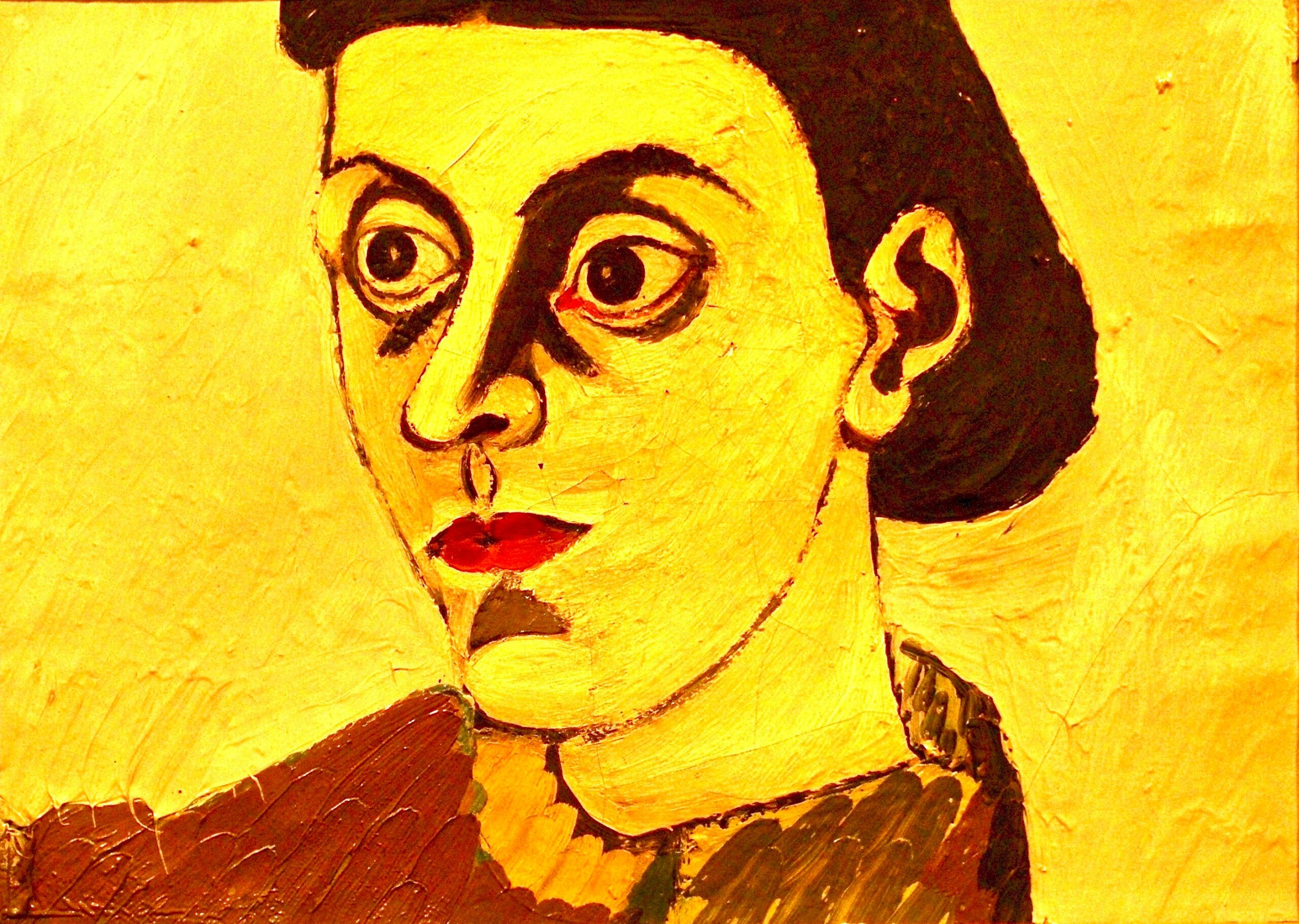
Cover image: Portrait of Vartoosh, a painting by Ashile Gorky, via Wikimedia Commons