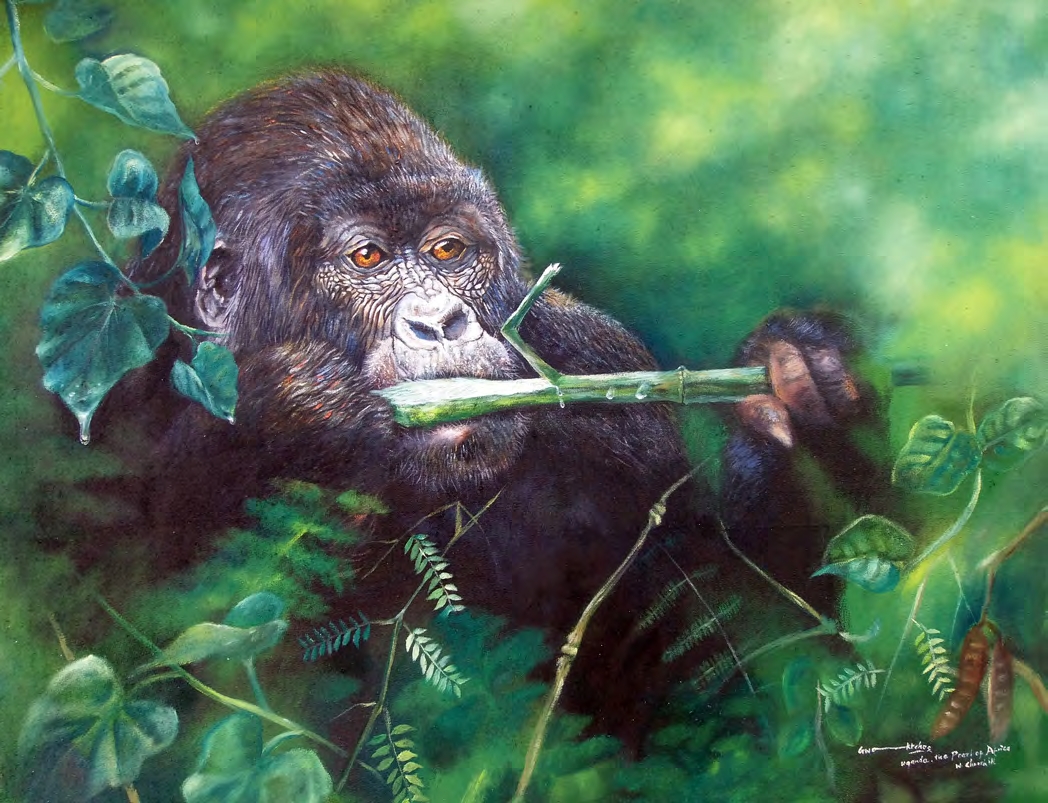
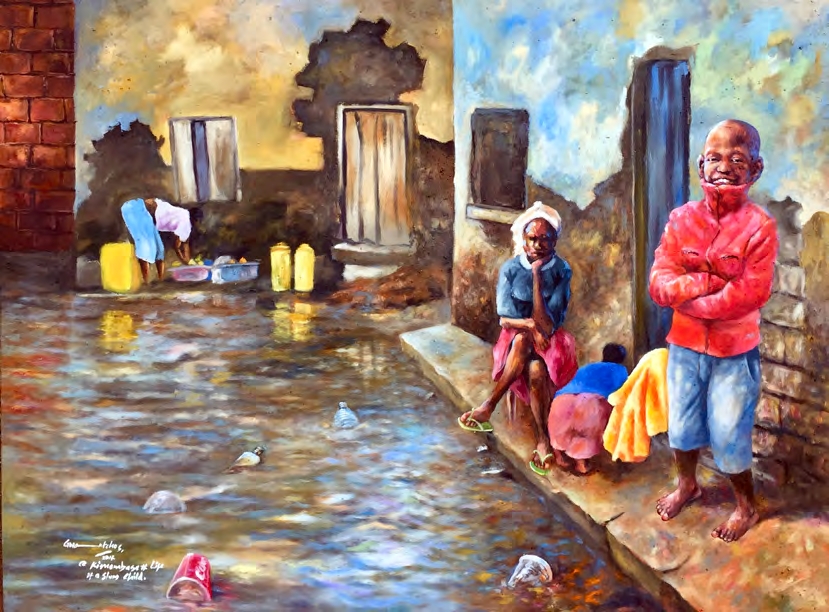
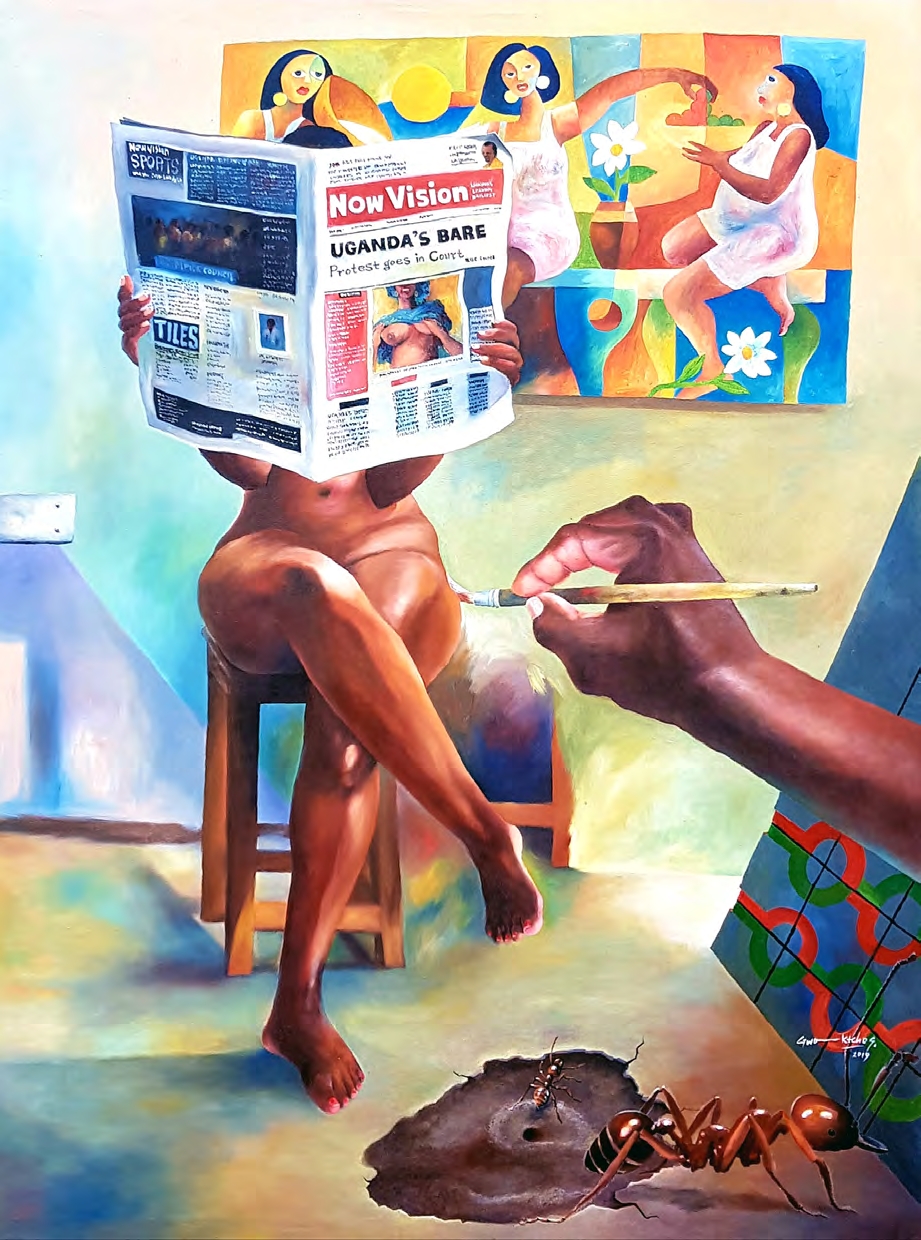
Stephen Gwoktcho, now retired from his teaching duties at the Margaret Trowell School of Industrial and Fine Arts, is as productive as ever, if not more so. In his home-based studio in Kirinnya, just outside Kampala, he is ever at work on a range of canvases at once. The productivity is matched also by a keen interest in experimentation – rare for an experienced artist – that has produced masterpieces only he could have made.
Gwoktcho’s elastic visual language in recent years has only added to his legend, which for years was based on his exquisite evocations of nature in paintings that have been widely collected. And yet, although he has been acknowledged as a Ugandan master since Afriart Gallery included his work in a 2019 show of peerless artists dubbed “Seniority First,” Gwoktcho is largely unknown to many collectors in the region.
That may be due in part to his reputation as a scholar who for years taught drawing as a primary course at Makerere University. This is the curse, so to say, of great artists all over the world who are pigeonholed as academics; they may never reach the frenzied commercial heights of others not so branded. But Gwoktcho, who is about to earn his doctorate, wears the scholar’s cap proudly, and he is in many ways an intellectual artist.
TWR is presenting a portfolio of a dozen paintings by Gwoktcho, who was born in 1962 and has been active since the 1990s. This is only a sampling of his vast oeuvre, which happens to include sculptural works, for Gwoktcho is a hands-on man: he makes, for example, lovely frames from discarded pieces of wood, including pieces ravaged by ants, and his garden is beautified by metallic and wooden sculptures he executed.
Gwoktcho works against expectations, against predictability. He rebels against precise definition – in the sense that his canvases, whatever the pictorial style or language, convey beauty and meaning in manifold ways. He is embracing spontaneity. “It could be a weakness, but personally I feel it is a strength in terms of the experiential, how much you have experienced in being a practicing artist or a studio artist,” he said. “My bias is that I don’t want to be that kind of artist where, like, if you have seen one canvas by me then you have seen them all. That used to be the approach to exhibition work. In other words, people did not move away from a particular theme – it could be of form, it could be of subject matter, it could be color. You would think that the person painted all this work with the same palette. I don’t believe in that.”
The striking painting titled “Wildebeest in Fight,” a detail of which graces the cover of this issue of TWR, underscores Gwoktcho’s unrelenting capacity for experimentation. The stylized picture of a wildebeest in flight fascinates because it captures the horrors of existence, so that one finally can imagine what the animal is trying to flee from: imminent death maybe.
Gwoktcho is a committed student of art history, able to refer widely to Old Masters in conversation. Eugène Delacroix, the French Romantic painter, figured in our conversation, as did Delacroix’s great rival Ingres, who defended academic orthodoxy in the 19th century. The intellectual battle between Ingres and Delacroix – between Neoclassism and Romanticism– marked a pivotal moment in the history of art.
For Gwoktcho, the artist must retain the ability to even surprise himself in the pursuit of higher art. He wants to be an artist “who is given to variety, who is given to new ideas, who is given to surprises,” he told TWR. “That’s the beautiful thing with art. If a literary person knows the outcome of their story, they would lose interest before they write the book… We respect those who can speak more than one language, naturally.”
Gwoktcho is a born-again Christian whose compassion is as elastic as his artistic practice. There is kindness in his manners, so that one is compelled to feel pity for the art students who will never have the opportunity to be mentored by him. ▪