
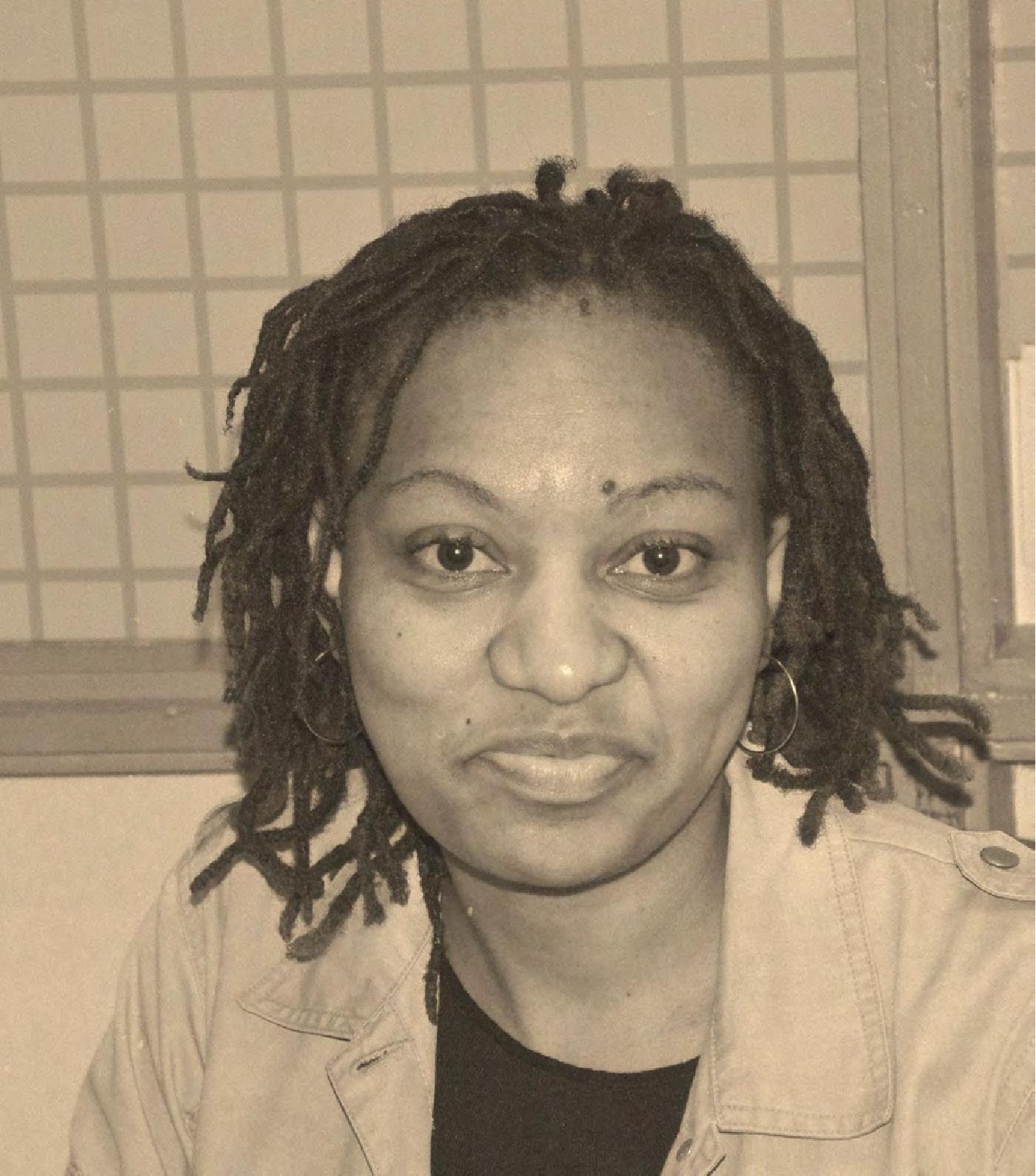
‘Sing me a calypso!’ Mona said one evening as we sat opposite each other at the Bounty
Hotel, a rather posh joint in the middle of Nairobi’s South B Estate.
‘O.K.,’ I said, taking a sip of my drink. ‘So, this one was Mighty Sparrow’s first hit. During this time, American marines stationed in Trinidad and Tobago had to leave. The island prostitutes weren’t happy but the local menfolk were because rates would come down – ’
‘Don’t explain, just sing!’
And so off I went, acapella, into Jean and Dinah. And after that, I sang Sparrow is Dead, and whatever else she wanted to hear. Singing calypsos to Mona was part of our dynamic. I’m a hip-hop head, but in the first decade of this century I entered a Caribbean phase. The only calypso song Mona knew before she met me was Good Morning Mr. Walker by Mighty Sparrow. The lyrics ‘She ugly, yes, but she wearing damn expensive dress!’ used to make her double over in laughter. I introduced her to Lord Kitchener, Young Tiger, Lord Sniper, Lord Melody, and others. I even wrote If I were a Calypsonian, a poem:
If I were a Calypsonian, like David Rudder,
I would write a love song for mi lover
And dress it up with colourful descriptions
Of her beauty and grace and sense of fashion.
Sweet lyrics I would compose for mi Significant Other;
To make she irie and forget her anger.
If I were a Calypsonian, like Mighty Sparrow,
I would compose a vibrant song for de Carnival;
Wit’ a horn section and strong African beats
That would have all de girls raising a rumpus in de streets
In their outlandish costumes and accessories.
If I were a Calypsonian, like Lord Kitchener,
I would tell a hundred tales, all in Calypso,
Of love and life and matters political,
In order to educate and entertain de listener:
I would be de poor man’s newspaper.
If I were a Calypsonian, like Lord Melody,
I would be de leader of a big steel band.
And I would sing funny songs about moms and dads,
Sons and daughters, sexy women and crooked politishians.
Mi band would tour all over Trinidad
And revive de Calypso art form throughout de Caribbean.
Mona loved music, but most of the singing she did was at karaoke joints. She was such a regular at the main karaoke spot in South B that she and the female host became fast friends. Whenever the host needed a volunteer to start off the amateur singing showcase, she would turn to Mona. Sometimes Mona and the host, who was an aspiring R&B singer, would go to different karaoke joints in town in a single night. A mutual friend called James, who also lived in South B, had once persuaded a live Congolese band to add Mona’s name into a performance, something bands often did if you slipped them a few banknotes.
‘So, I’m just chilling at the table and I suddenly hear the band going, “Oh, Mona, eeeeh,” she would later tell me, laughing out loud. It was one of the highlights of her life.
Mona was a writer and editor. She was tall, light-skinned, and had thick sensual lips and a soft voice. She came from the Akamba community of eastern Kenya but, unlike most Nairobians, she had been raised in the city. I, on the other hand, was raised in the agricultural highlands around Mount Kenya and only moved into Nairobi as an adult. At first I worked in the IT business even though my dream was to be a writer. As a matter of fact, by the time I arrived in the capital city I had a complete novel manuscript I hoped to publish. Purely by chance, in the early 2000s I bumped into Maina, a former high-school classmate, in the bustling streets of Nairobi. He was also in IT, but that was hardly surprising as being ‘computer literate’ had become essential and ‘computer technology’ was seen as the wave of the future. Maina informed me that he worked for a Christian magazine right in the heart of the city. He led me to a skyscraper near the ever-busy train station. IT being a backroom job, we passed through another office to get to his workspace. In the front office were two pretty girls in their early twenties. The taller one was called Mona, Maina said, and she was the magazine’s editor. The other girl was a marketer who later went to live in the U.K. Maina was in charge of graphic design and all IT matters, the tech guy.
In later days I’d drop in to see Maina. Naturally, I had to go past Mona’s desk and we became acquaintances. In 2004 a Dutch IT firm opened shop in suburban Nairobi. Among other things, it aimed to create an exciting network of interrelated websites offering a diverse range of services, from entertainment to spirituality to gambling. A kind of Africa-based Yahoo Inc. To achieve this, they needed web developers and content writers. I applied and got a place as a content writer, thanks to an entertaining blog that I was then running. The boss – a vivacious, balding Christian evangelist – would later say that the thirty or so of us had been chosen from over one thousand CVs sent in. He had a very high opinion of Kenya.
‘We have been to several African countries and Kenya is the most impressive,’ he would say, smiling broadly. ‘Your English is better than ours and your IT skills are world-class! Kinshasa is so far behind Nairobi – there were people hanging their laundry over the streets and such. And then we went to Somalia and there were all these women covered in black robes. And I swear I wasn’t being naughty but I did ask a local guy, Doesn’t that just make you more curious about what’s being hidden? But Kenya is different. It’s a tech hub like India, where we’re also opening another branch of our company…’
With time, a new editor joined the workforce: Mona. We hadn’t seen each other for a while, but since I was someone she knew, she inevitably hung out with me when we were not tethered to our workstations. It was here that we met James, a content writer like me and with endless stories to tell. Everyone at the company assumed Mona and I were lovers. We’d sit together in the chartered company bus, walk together, occasionally hold hands, and eat lunch together. Actually we were just really good friends. When the Dutch firm ceased its Africa operations in less than a year (probably having underestimated the sheer workforce size and budget required to fulfill its grand vision), Mona got a job as an editor with a transport magazine. She promptly got me hired as a contributor. At first I wrote news pieces mostly focusing on the city’s vibrant matatu industry, besides entertainment news. Later I began writing a humor column, inspired by Wahome Mutahi’s famous Whispers column in the Daily Nation. The new column followed the escapades of a Konkodi, a matatu conductor who is elected president of Kenya in a political sea change by citizens tired of the same old faces in government. The publisher loved the Konkodi saga so much that he gave me the title of Head Writer and later, when Mona left to become the editor of yet another Christian magazine, made me Managing Editor.

My closeness with Mona continued unabated. We would tell each other secrets, lend each other money, and recommend each other for jobs. No matter how distant we were, we always kept in touch by phone. Our phone calls were like one long conversation with occasional breaks. Salutations were not necessary. For example, she’d call, laughing, and say something like: ‘So, we’re in Mombasa for this conference, and I take a walk on the beach, and some chick starts hitting on me. Turns out that people these sides think that if you have dreadlocks you’re a lesbian. Ha! Ha!’
‘Ha! Ha!’ I joined in the merriment.
We would complain about our respective lovers to each other, because we somehow knew that we were soulmates: only death could break our invisible bond. We discussed the possibility of dating, but Mona felt that two creative people couldn’t possibly make a good match.
‘Artists are up and down, and up down,’ she’d say, sketching a wave in the air. ‘A relationship needs at least one normal, stable person.’
When Mona got pregnant and gave birth to a baby girl, I wasn’t offended. Friendship was our foundation. I even used to play with the toddler.
‘Calypso King, are you sure it’s not yours?’ James would joke.
‘Ha! Ha! Actually I thought it was yours,’ I’d counter.
It belonged to a man Mona had met in a bar in South B. She said she was drunk on Redds, a sweet reddish liquor popular with women at the time, and they ended up at her place. They tried to make the relationship work but it was doomed from the start. Mona asked one of his drinking buddies if he – the man who got her pregnant – was really single, to which her buddy said: ‘You think he can be over forty years old and not be married?’
The fact that she was already pregnant only complicated matters. Her father was furious, telling the man by phone that he had ruined his daughter’s life. One day I called Mona up and her voice sounded horrible. She said that she had been arguing with her boyfriend in a pub and he stormed off and entered his car. She followed him and tried to open the passenger door, but instead of releasing the lock he drove off, causing her to fall on the ground and injure her back. They broke up, seemingly unable to agree on anything, including their baby’s name. Mona continued living in South B with her parents for a time. She accumulated a mountain of DVDs when she was pregnant. The one that intrigued her most was an American series titled 1000 Ways to Die. She lent me a bunch of DVDs, but I knew I would never have enough time to watch them. In the meantime she helped me polish my writing and I assisted her with editing tasks. I particularly recall being a ‘which-hunter,’ ever looking for citations of which and turning them into that in her work. In what was a complicated birth, Mona had a baby girl she named Mwende (‘loved one’). But Mona’s health took a turn for the worse when she developed a liver condition, and later she told me she didn’t believe she would make it out of the hospital alive.
We had many dates that weren’t dates. We had a friendship that wasn’t a friendship. In reality, we were a real couple and all our other lovers were third wheels, extra baggage. And, inevitably, we eventually jettisoned them. We became an item. By this time Mona had moved to a place called Satellite, further away from the center of Nairobi. It was, however, very close to the NGO where I was then working, on Ngong Road, a walking distance when I took a shortcut. I became a frequent visitor at her house. On a wall in the living room was displayed a laminated copy of a Daily Nation Zuqka magazine issue that had me on the cover. She had mounted it back when we were still just friends.
Mwende was now three years old. One evening she spotted a column of ants marching over the carpet and gave me one to take home. She then asked for it and later gave it back to me, now lifeless.
‘It raineth,’ Mona said, looking out of the window. She sometimes spoke like that, probably influenced by Bible lingo from her many years of working for religious magazines. For example, she’d say something like, ‘Jameth called today. He and his new wife are moving to Kakamega.’
‘Would you like some wine?’ quoth she.
‘Always,’ sayest I.
‘What’s that in your hand?’ she asked when she returned.
‘The most unique present I have ever been given: an ant.’
I placed the glass of wine on the carpet. The tables and chairs had been pushed to the side to create space for Mwende to play, after the kid had accidentally knocked a laptop off the table when her mother was in the shower. The new space in the living room made a good ballroom for Mona and I. We’d occasionally slow-dance. Mwende would insist on dancing as well. She was so small that to dance with her I had to lift her up and support her with one arm while I held her hand with my other arm. One night I spotted Mwende in the middle of the room alone, waltzing with an invisible partner. I tip-toed to the kitchen to summon Mona so we could both giggle at the kid imitating us.
Our relationship was by no means cloudless. Mona’s most annoying habit was sometimes looking at the TV while I was talking.
‘But I’m listening,’ she’d insist.
‘If you don’t look at the person who’s talking to you, you’re not paying attention,’ I’d protest. Her listening skills never improved.
There was a bus stage right outside Mona’s gate. One could hear the touts yelling, ‘Beba! Beba!’ (‘Carry! Carry!’), especially in the mornings. I would take a green-and-yellow City Hoppa bus in the morning and be at work in a matter of minutes. If Mwende woke up and I wasn’t there, she’d ask her mother: ‘Alex go bebabeba?’ When I returned in the evening, she would break away from her playmates and run into my arms. I would scoop her up and carry her all the way into the house. The elderly landlady probably thought she was my daughter.
I should have been alarmed by Mona’s descent into hard liquor. Previously she would only drink a glass of wine or a can of Redds. Now I noticed she had switched to brown bottles and spirits. That could not have been good for her troublesome liver, which had remained alarmingly inflamed ever since her near-fatal illness. She patronized bars so much; she was once arrested, along with other drinkers and the owner of the pub, for breaking the so-called Mututho Law, the controversial legislation stipulating drinking hours in hotels and pubs.
One day Mona and Mwende left for Kitui, her ancestral hometown, suddenly and without notice. I rang and she informed me that she was checking on some family-owned investments on behalf of her ailing father. We spoke a couple more times and then mobile communication fell off completely. After a couple of weeks her sister contacted me via Facebook, asking if I knew that Mona had passed away. It was her liver again. She had drunk untreated rainwater and contracted an infection. She was hospitalized and didn’t come out alive. I was in shock. When I inquired about Mwende, I was informed she had been placed in the custody of Mona’s brother, a married man with children. But he lived in a different town. I contacted our mutual friends, one by one, to inform them about the sudden turn of events. They were just as shocked. Responses were in the vein of, ‘Gosh, what happened?’
‘She’s already buried?’ one asked.
‘I was wondering why she suddenly stopped posting on WhatsApp!’ said another.
‘Come to think of it,’ James said, downcast, ‘the last time we spoke on phone, she mentioned that she wasn’t feeling well and she was heading to hospital.’
It is said that there are five phases of grief: Denial, Anger, Negotiation, Bargaining, Depression and Acceptance. I went through all of them. The first one took the longest. I simply refused to believe that she was gone forever. Not a day would go by without me thinking about Mona. We had been besties for more than ten years. The streets we had walked together, the restaurants we had patronized, the songs we had sung all reminded me of my loss. I suffered depression for the first time since my teenage years. I couldn’t imagine my life without Mona, with Mona somewhere else. We had so many plans, including trying for a child, preferably a boy, because we already had a girl. At last I reached the Acceptance phase and conceded that everything that is born must also die one day. We can sing and we can dance. We can make merry. But our last waltz is with the Grim Reaper.
‘Alex go bebabeba?’
Yes, but I always came back. The one day that my newly minted family went bebabeba, they never came back to me.▪
Cover image: Mona Nduillu, Nderitu’s friend and lover, who died in 2016. Courtesy of Alexander Nderitu.